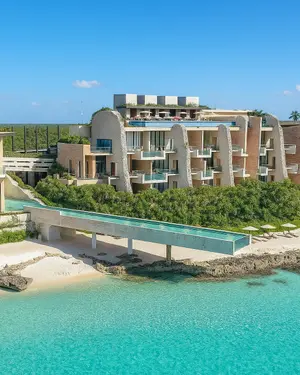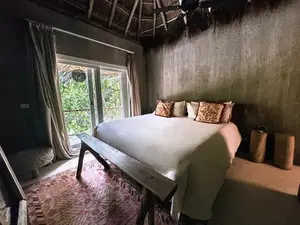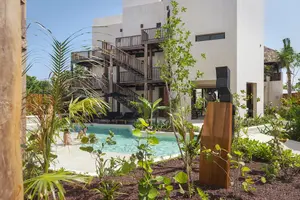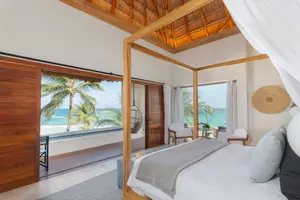
Casa Chablé Sian Ka'an Reserve
When you book Casa Chablé Sian Ka'an Reserve in Riviera Maya, Mexico, through our Leading Hotels of the World partnership, your stay includes daily breakfast. You also receive early check-in and late check-out when available. No premium credit card or membership needed: request a quote and our advisor books it at the same rate as booking direct.
Exclusive Booking Perks
These perks are included with your stay at the same rate as booking direct with the hotel.
- Daily breakfast
- VIP status
- Early check in/Late check out
Location
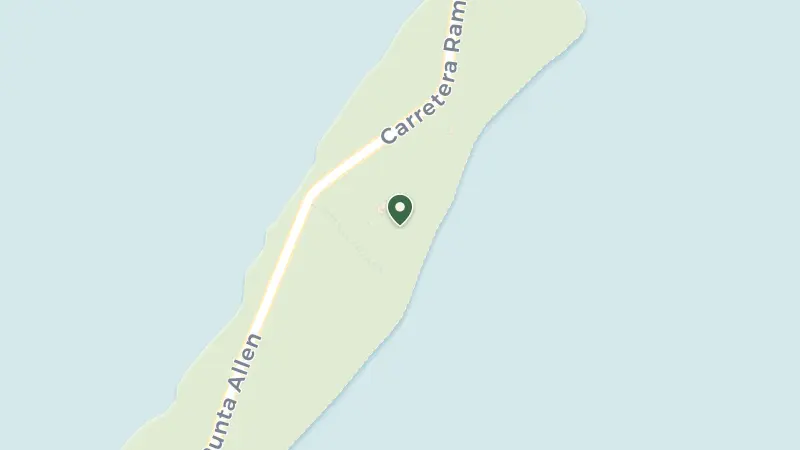
The property occupies the remote southern reaches of the Sian Ka'an Biosphere Reserve, a UNESCO-protected expanse of mangrove forest, lagoon, and coral reef where the Yucatán Peninsula's Caribbean shoreline turns wild. Punta Allen, the small Mayan fishing village that serves as the gateway, sits at the tip of the Boca Paila Peninsula, accessible only by a fifty-kilometre track of sand and limestone that winds through tangled jungle and past tidal flats. The village itself runs to just a handful of sandy streets, its rhythm dictated by a single generator that hums to life twice daily. This is not the Riviera Maya of all-inclusive corridors and beachfront development: the reserve extends inland for forty kilometres, a stillness broken only by the calls of howler monkeys and the rustle of frigatebirds overhead.
Sian Ka'an, which means "Origin of the Sky" in the language of the Maya, was inscribed as a natural World Heritage Site in 1987 for its extraordinary biodiversity and the fragile meeting of freshwater cenotes, saltwater lagoons, and reef. The nearest airport is Felipe Carrillo Puerto International, forty-two kilometres north, though most travelers route through Cancún, one hundred and forty-four kilometres up the coast.
The reserve itself is the reason to come: shallow channels choked with mangrove roots, the glassy surface of Boca Paila Lagoon where tarpon glide in the shallows, and stretches of bone-white sand that see more turtle tracks than footprints. Local guides, many of them from Punta Allen, lead fly-fishing expeditions for permit and bonefish in the flats, or snorkelling trips out to the reef where elkhorn coral and parrotfish thrive in the protected waters. The village maintains a cooperative system for guiding, ensuring that traditional knowledge shapes every outing. On windless mornings, the lagoon turns mirror-smooth, reflecting the impossible blue of the Yucatecan sky.
Cultural context here is measured in tides and catch quotas rather than monuments, though the reserve's boundaries encompass several lesser-known Maya ruins reachable only by boat or on foot through dense scrub. Book a sunrise tour through the canals to spot crocodiles and manatees before the heat sets in, or walk the beach at dusk when the light turns molten and the generator has yet to click on for the evening.
Winter, from December through March, brings the driest, mildest weather: daytime highs in the mid-twenties, nights that cool just enough to warrant a light layer, and crystalline visibility for snorkelling. The sea stays calm, the mosquitoes retreat.
April and May turn hotter, the air thickening as the peninsula tilts toward summer. By June, afternoon thunderstorms roll in off the Caribbean with sudden violence, the wettest months stretching through September. The humidity climbs, but so does the lushness of the jungle, and tarpon fishing peaks.
Autumn shoulders into winter by November, the rains tapering and the skies clearing again. This transition period offers fewer crowds and softer light, the reserve shaking off the storm season and settling back into stillness.
Frequently Asked Questions

Quotes are personally reviewed by Natasha Hardy, founder of The Uncommon Traveller
5.0 rating · 8 Google reviewsThere is no fee or markup. The hotel pays our commission.
Request a Quote 2 Bib Gourmand