Hotel Les Bories & Spa
When you book Hotel Les Bories & Spa in Provence, France, through our withIN by SLH partnership, your stay includes daily continental breakfast for two and a hotel credit of $50-$100 USD per stay. You also receive a one-category room upgrade and early check-in when available. No premium credit card or membership needed: request a quote and our advisor books it at the same rate as booking direct.
Exclusive Booking Perks
These perks are included with your stay at the same rate as booking direct with the hotel.
- A credit worth $50-$100 (USD) per room, per stay to be spent only on extras such as F&B or Spa, only on property and during the stay
- Daily Continental breakfast for two people
- Room upgrade to next room category, subject to availability at the time of check-in
- Early check-in, subject to availability at the time of check-in
- Late check-out, subject to availability
Guest feedback
9.1/10 from 580 guest reviews
By category
Guests liked
- Great location
- Friendly staff
Points to consider
- Expensive and poor quality food
- Noise issues from neighboring rooms
Location
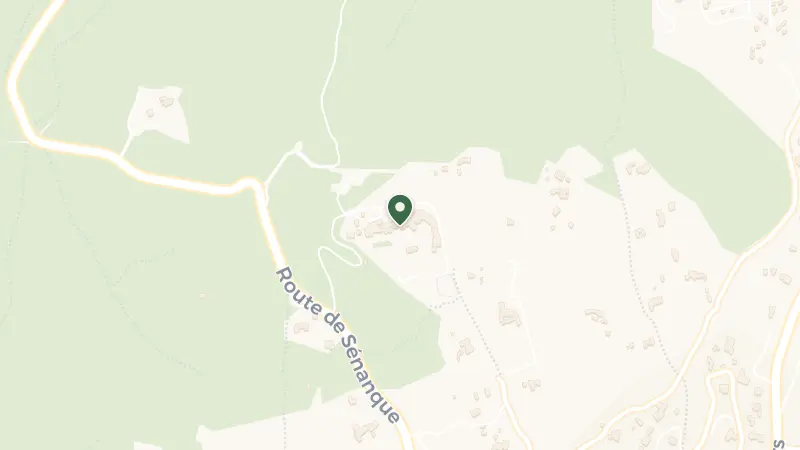
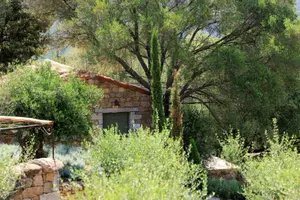
The dry-stone huts of Luberon shepherds, known locally as bories, inspired the architecture of this property on the road to Sénanque Abbey, blending rusticity with the refinement of a Provençal country estate. The surrounding landscape is textbook Luberon: vineyards stripe the hillsides, lavender fields ripple in the breeze, and the chalky ridges of the Monts de Vaucluse loom to the north like a rampart against the sky.
Gordes itself perches on the edge of the Luberon Regional Natural Park, a cluster of honey-coloured stone buildings rising in tiers from the valley floor. The village draws pilgrims to its cobbled lanes and Renaissance château, but the real pull here is the countryside. Olive groves silver in the afternoon light, farmhouses hunker into folds of rock, and the air carries the resinous scent of wild thyme and garrigue. This is Provence at its most unapologetically itself: ancient, sun-scorched, and stubbornly resistant to haste.
Avignon, the nearest major hub and former seat of the papacy, lies 31 kilometres west, reachable via Avignon Caumont airport (23 kilometres). Marseille Provence Airport, 54 kilometres south, offers wider international connections. The drive north from either reveals the Vaucluse department in slow motion: plane trees tunnelling the roads, vineyards marked by the Côtes du Luberon appellation, and hilltop villages silhouetted like sentinels.
The hotel's on-site restaurant, Les Bories, serves modern cuisine rooted in the terroir, its name a nod to the shepherds' shelters that dot these hills. Menus lean into Provençal produce: sun-ripened tomatoes, courgette flowers, local cheeses aged in stone cellars. For a higher-stakes table, head 11.7 kilometres to La Table des Amis, where Christophe Bacquié's two Michelin stars shine in a farmhouse surrounded by lavender and vines. The wine list here skews local; ask for a Luberon rosé with your first course. Further afield, L'Oustau de Baumanière (three stars, 38.4 kilometres) has held court in Les Baux-de-Provence since the mid-20th century, drawing artists and dignitaries to its theatrical Mediterranean cooking. Book a table at Baumanière if the occasion merits it; the drive through the Alpilles is half the experience.
Beyond the plate, the Luberon unfolds in layers. The wetlands of the Calavon (7.5 kilometres) attract herons and wild boar, while the Golf de Saumane (eight kilometres) offers fairways framed by cypress. Markets in nearby towns spill over with Cavaillon melons, tapenade, and bundled herbs. The Historic Centre of Avignon, a UNESCO site 31 kilometres west, preserves the Palais des Papes and its frescoed halls, a reminder of the 14th-century papacy that ruled from this southern exile.
Summer (July through August) is Provence in full throttle: temperatures near 30°C, cicadas drilling the silence, lavender in full purple bloom. The mistral wind can gust down the Rhône valley, scrubbing the sky to a hard enamel blue. Evenings cool enough for terrace dining under plane trees.
Spring (April to June) is gentler and greener, the hillsides quilted with wildflowers and young vines. Daytime highs hover around 20°C, perfect for hiking the Monts de Vaucluse or cycling past olive groves. Rain falls sporadically but clears fast, leaving the air sharp with thyme and wet stone.
Autumn (September to November) brings the grape harvest and a softening light, temperatures dropping from the mid-20s to the mid-teens. Winter (December to March) is quiet and bracing, mornings crisp, afternoons mild, the villages emptied of crowds and returned to their unhurried rhythms.
Frequently Asked Questions

Quotes are personally reviewed by Natasha Hardy, founder of The Uncommon Traveller
5.0 rating · 8 Google reviewsThere is no fee or markup. The hotel pays our commission.
Request a Quote 16 Bib Gourmand