Mondrian Singapore Duxton
When you book Mondrian Singapore Duxton through our Accor Preferred partnership, your stay includes daily breakfast for two and a $100 USD hotel credit. You also receive a room upgrade, early check-in and late check-out when available. No premium credit card or membership needed: request a quote and our advisor books it at the same rate as booking direct.
Exclusive Booking Perks
These perks are included with your stay at the same rate as booking direct with the hotel.
- Daily complimentary breakfast for 2, per room
- VIP Welcome
- $100 USD credit to be spent on property (conditions defined at check-in)
- Early check-in & late check-out (upon availability)
- Upgrade at time of check-in (upon availability)
Guest feedback
9.6/10 from 5,558 guest reviews
By category
Guests liked
- Great location
- Friendly staff
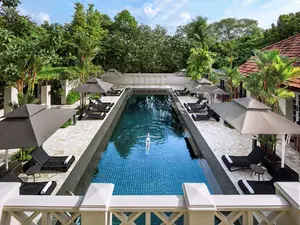
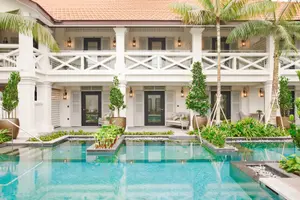
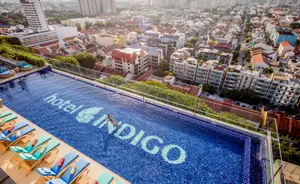
- Beautiful pool and views
Points to consider
- Small rooms
- Inconsistent service
- Lacking breakfast variety
Location
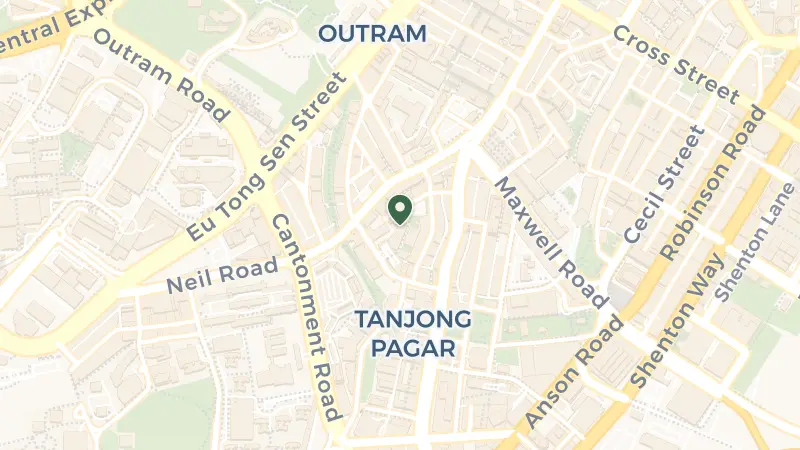
Tanjong Pagar sits where Singapore's colonial trading past meets its vertical present, a district of shophouse corridors and glass towers pressed against the southern edge of Chinatown. The streets here smell of five-spice broth and incense smoke drifting from clan association halls, punctuated by the hiss of espresso machines in converted godowns. This was once the cape of stakes, named for the fishing traps that lined the waterfront before land reclamation pushed the sea back and commerce rushed in. Stamford Raffles established Singapore as a British entrepôt in 1819, and Tanjong Pagar became one of the port's earliest settled quarters, a knot of Hokkien merchants and rickshaw pullers whose descendants now run cafes in their great-grandfathers' shopfronts.
The district retains its grid of two-storey terraces painted ochre and teal, their ornate facades protected under conservation orders, even as office blocks climb overhead. Tanjong Pagar Market and Food Centre sits two hundred metres away, a hawker nexus where breakfast means char kway teow and kaya toast under fluorescent lights. The old railway station, a 1932 Art Deco landmark that once ran trains north into Malaya, anchors the neighbourhood's southern end, now silent but still imposing.
Singapore Changi Airport lies nineteen kilometres east, connected by taxi or the Mass Rapid Transit's East-West Line. The city operates in English and runs on the Singapore dollar, its streets clean and walkable, its efficiency legendary.
The property's on-site restaurant, Araya, holds one Michelin star for its singular South Pacific vision. Chilean chefs Araya and Guerrero channel influences from Spain and Japan into dishes that layer Chilean and Japanese ingredients with striking clarity. Within walking distance, the neighbourhood's culinary density rewards exploration: Zén, a three-starred neo-Nordic restaurant with Japanese inflections, occupies a nearby shophouse just 268 metres away. Book a table at Odette, 1.6 kilometres south in the National Gallery, for chef Julien Royer's French contemporary tasting menus built around luxury ingredients and buttery sofa seating.
Beyond the table, Tanjong Pagar Market and Food Centre sits 200 metres from the property, a utilitarian hawker hub where the breakfast rush plays out over laksa and char kway teow. The Singapore Botanic Gardens, a UNESCO World Heritage Site five kilometres north, traces the evolution of a British tropical garden into a world-class scientific institution; its palms and research collections offer respite from the city's vertical ambition. Closer in, People's Park and Tiong Bahru Market provide further windows into the rhythms of everyday Singaporean life.
Singapore's equatorial position means the thermometer stays steady year-round, hovering near 28 degrees, but the rhythm of the monsoons shapes when to visit. November through January brings the heaviest rain, afternoon downpours that turn the streets glossy and send everyone under awnings, the air thick and silvered.
February through April sees drier skies and marginally warmer days, the city at its most humid but also its most walkable, with longer stretches of sun between cloudbursts. This is peak season for outdoor exploration, when the Botanic Gardens feel lush but not waterlogged.
May through October marks the southwest monsoon, a quieter wet season with scattered showers rather than relentless storms. The light during these months is softer, the air a degree cooler, and the streets less crowded. For those unbothered by occasional rain, this window offers Singapore at its most breathable.
Frequently Asked Questions

Quotes are personally reviewed by Natasha Hardy, founder of The Uncommon Traveller
5.0 rating · 8 Google reviewsThere is no fee or markup. The hotel pays our commission.
Request a Quote 97 Bib Gourmand