Park Hyatt Sydney
When you book Park Hyatt Sydney in Australia through our Hyatt Privé partnership, your stay includes daily full breakfast for up to two guests and a property credit. You also receive a priority room upgrade, early check-in and late check-out when available. You continue earning World of Hyatt points and elite night credits. No premium credit card or membership needed: request a quote and our advisor books it at the same rate as booking direct.
Exclusive Booking Perks
These perks are included with your stay at the same rate as booking direct with the hotel.
- Welcome amenity provided to guests upon arrival.
- Daily complimentary full breakfast at a hotel restaurant for up to two guests.
- Property credit (value varies by property).
- Priority for room upgrade (response within 24 hours of booking, subject to forecasted occupancy).
- Early check-in/late check-out/connecting rooms (response within 24 hours of request, subject to forecasted occupancy).
Guest feedback
9.4/10 from 694 guest reviews
Read what guests commentedBy category
Guests liked
- Magnificent location
- Outstanding service
Points to consider
- Issues with cleanliness
- Misleading room view
Location
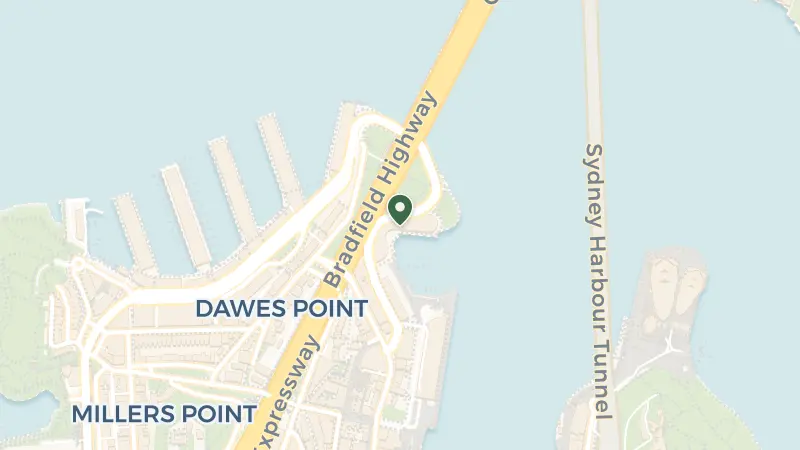
Park Hyatt brings its residential scale and curatorial eye to destinations that reward deeper exploration, and Sydney's harbour theatre demands exactly that attention. The hotel sits in The Rocks, the city's oldest quarter, where narrow sandstone lanes trace the footprint of the 1788 penal colony that became Australia's first European settlement. Aboriginal engravings and shell middens across Greater Sydney predate Cook's 1770 landfall by 30 millennia, and the traditional custodians of this harbour country, the Eora, Darug, and Dharawal clans, shaped the landscape long before convict ships dropped anchor.
The Rocks itself clings to the southern shore of Sydney Harbour, a precinct of restored warehouses and workers' cottages now humming with weekend markets and laneway galleries. Step outside and you're in the tidal pull of the harbour: ferries cutting white wakes across the blue, the Sydney Opera House's vaulted shells catching afternoon light one kilometre east across Circular Quay.
Sydney Kingsford Smith International Airport lies ten kilometres south. The train runs every ten minutes into the city, arriving at Circular Quay in under twenty minutes, or taxis trace the harbour road through eastern suburbs still dotted with Art Deco apartment blocks and fig-shaded streets. This is a city of 5.6 million, but the harbour keeps it navigable, a geography organised by water rather than grid.
The Rocks Market sets up every weekend two hundred metres from the property, where stallholders sell everything from opal jewellery to native wildflower honey. Walk the sandstone staircases that connect upper and lower streets, passing terraces where convict stonemasons carved their marks into foundations that still hold. The Museum of Contemporary Art anchors the harbour edge at Circular Quay, and the Royal Botanic Garden unfurls southward along Farm Cove, its collections spanning Wollemi pines older than the dinosaurs and glasshouses thick with equatorial orchids. Book a ferry to Manly for the thirty-minute crossing that locals call the world's most beautiful commute, or venture four kilometres north to Clifton Gardens for sheltered harbour swimming among jetty pylons and rockpools. Start with oysters at any quayside restaurant, Sydney rock or Pacific, shucked to order and served with nothing but lemon.
The harbour itself organises the rhythm here. Cruising yachts tack past headlands three kilometres east at the Cruising Yacht Club of Australia, and dive sites at Chowder Bay and Clifton Gardens, four to five kilometres north, reveal underwater walls where weedy sea dragons drift through kelp forests. Surfection, four kilometres northeast, rents boards if the ocean swell calls.
Summer (December through February) wraps the city in hot, salt-bright days, temperatures climbing to the mid-twenties, the harbour crowded with racing dinghies and swimmers claiming rockpool corners. Afternoon thunderstorms roll in from the west, dousing the sandstone and leaving the air thick with eucalyptus.
Autumn (March to May) brings the year's clearest light, temperatures settling into the low twenties by day, the jacarandas along suburban streets dropping purple carpets beneath bare branches. Winter (June to August) is mild by northern hemisphere standards, daytime highs in the mid-teens, but the southerly winds carry a knife-edge off the Tasman Sea, and locals retreat to pubs with fireplaces and harbour views.
Spring (September to November) sees the city shake off its woollens, temperatures climbing back through the teens into the low twenties, the Royal Botanic Garden erupting with wattle and banksia. Visit between September and May for the warmest water and longest days, though winter's crisp mornings and empty coastal walks have their own pull.
Frequently Asked Questions

Quotes are personally reviewed by Natasha Hardy, founder of The Uncommon Traveller
5.0 rating · 8 Google reviewsThere is no fee or markup. The hotel pays our commission.
Request a Quote