The One Barcelona GL
When you book The One Barcelona GL in Spain through our Preferred Platinum partnership, your stay includes daily breakfast for two, a $100 hotel credit per stay and a welcome amenity. You also receive a room upgrade when available. No premium credit card or membership needed: request a quote and our advisor books it at the same rate as booking direct.
Exclusive Booking Perks
These perks are included with your stay at the same rate as booking direct with the hotel.
- Breakfast for Two Daily
- $100 Hotel Credit per Stay (to be used on services such as spa, dining, or selected amenities valued at $100 or more)
- Hotel Welcome Amenity
- Room Upgrade (subject to availability)
- Priority Check-in and Check-out (subject to availability)
Guest feedback
9.6/10 from 1,600 guest reviews
By category
Guests liked
- Excellent service
- Great location
Points to consider
- Minor noise issues at night
Location
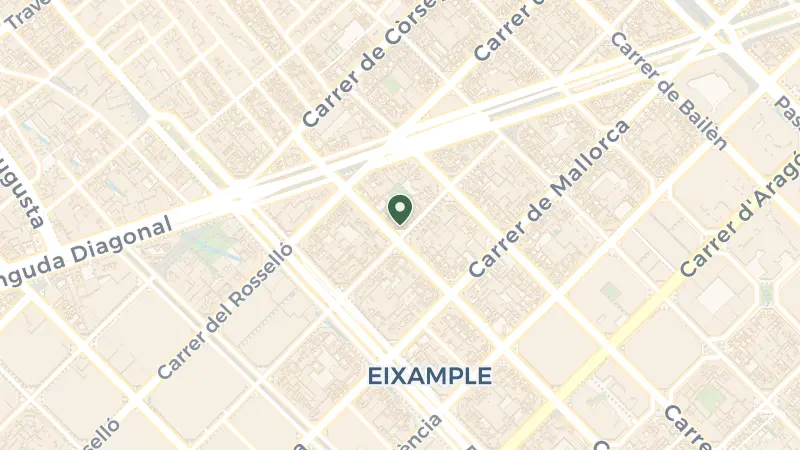
L'Eixample unfolds in orderly blocks north of the old city, its wide boulevards and chamfered corners a deliberate counterpoint to the Gothic Quarter's medieval tangle. The air here carries the hum of traffic softened by plane trees, the clatter of café chairs on broad pavements, the occasional drift of incense from a modernist doorway. This is Barcelona's 19th-century expansion, where Ildefons Cerdà's grid brought order and light to a bursting city, and where Antoni Gaudí's works punctuate the streetscape like fever dreams rendered in stone and tile.
La Pedrera, Gaudí's undulating Casa Milà, stands just metres away, its rooftop chimneys twisting against the sky. The Eixample cradles much of the city's modernist heritage: curvaceous façades, stained glass, wrought iron that seems to grow rather than bend. Walk these blocks and the architecture alone tells the story of Catalonia's industrial wealth and cultural assertion in the decades before the Spanish Civil War.
Barcelona-El Prat Airport lies 13 kilometres southwest; the Aerobús express shuttles between terminals and Plaça Catalunya in roughly 35 minutes, depositing arrivals at the edge of the old city, a short taxi ride from l'Eixample's grid. The city's origins reach back to Phoenician or Carthaginian traders; by the Middle Ages it was capital of the County of Barcelona, then the Crown of Aragon's economic heart, before centuries of Castilian overshadowing. That tension, between Catalan identity and Spanish state, still pulses through the language, the flags, the street names.
Lasarte, 285 metres from the property, holds three Michelin stars under Paolo Casagrande, who trained with Martín Berasategui before establishing this Barcelona outpost of creative Basque-influenced cuisine. The tasting menu changes with the seasons but maintains an exacting standard that justifies the waiting list. For a different expression of avant-garde cooking, Disfrutar stands 1.2 kilometres away, where three El Bulli alumni, Eduard Xatruch, Oriol Castro, and Mateu Casañas, apply molecular techniques to Mediterranean ingredients with three stars and a sense of playful invention. Book weeks ahead. Cocina Hermanos Torres, 2.2 kilometres distant with three stars, occupies a former industrial space where the Torres brothers compose delicate, time-suspended plates that feel like edible theatre.
Beyond dining, the neighbourhood rewards wandering. Mercat de la Concepció, half a kilometre away, fills its 1888 iron-and-glass structure with cut flowers and seasonal produce every morning. The Tàpies Museum, established in 1984, displays the abstract works of Antoni Tàpies in a Modernista building crowned with the artist's tangled wire sculpture. On Sundays, the Eixample's streets empty out as locals retreat to family lunches, leaving the pavements to visitors who suddenly have Gaudí's creations nearly to themselves. Don't miss the Museu Frederic Marès for its eccentric collection of everyday objects that trace Barcelona's social history from the 12th century forward.
Summer arrives fierce and bright. July and August push temperatures near 28°C, the streets slowing to siesta pace by mid-afternoon, the light turning honey-thick over stone façades. Evening brings relief and crowds spilling onto terraces until well past midnight. This is peak season; expect queues at museums and a city swollen with visitors.
Spring and autumn offer the most generous conditions: April through June and September through October balance warmth with movement, temperatures in the high teens to low twenties, the city's rhythm less frantic. October sees the most rain, but showers tend to blow through quickly, leaving the air scrubbed clean and the light sharp.
Winter is mild by northern European standards, daytime highs around 13°C in December and January, but the Mediterranean wind can bite. The city feels more like itself in these months, its museums and restaurants reclaimed by locals, the pace slower, the light slanting low and golden across empty plazas.
Frequently Asked Questions

Quotes are personally reviewed by Natasha Hardy, founder of The Uncommon Traveller
5.0 rating · 8 Google reviewsThere is no fee or markup. The hotel pays our commission.
Request a Quote 17 Bib Gourmand