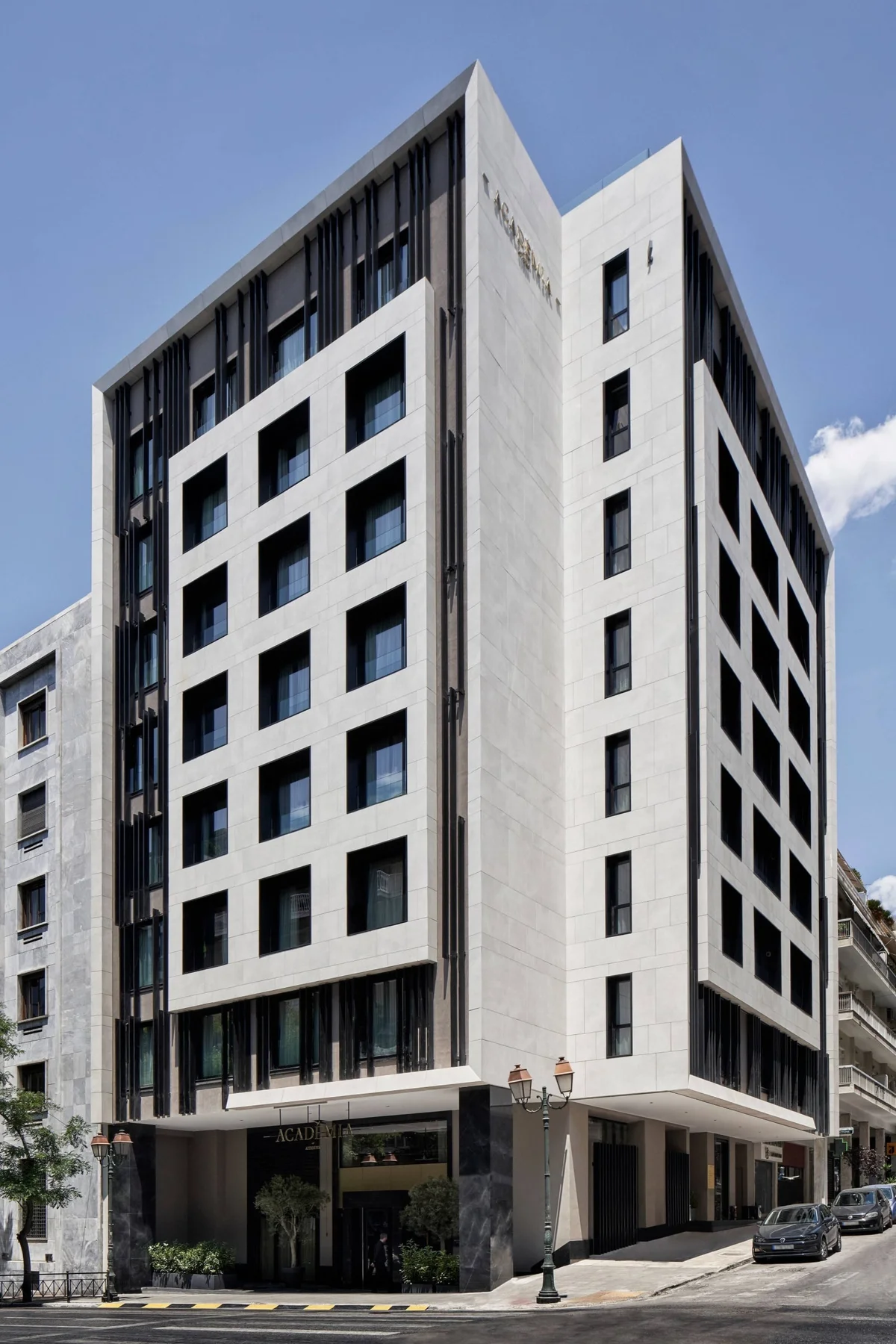
Academias Hotel, Autograph Collection
When you book Academias Hotel, Autograph Collection in Athens, Greece, through our Marriott Luminous partnership, your stay includes daily breakfast for two and a welcome amenity. You also receive a room upgrade, early check-in and late check-out when available. No premium credit card or membership needed: request a quote and our advisor books it at the same rate as booking direct.
Exclusive Booking Perks
These perks are included with your stay at the same rate as booking direct with the hotel.
- Welcome amenity
- Complimentary breakfast daily for two guests per room
- Early check-in and late check-out (when available)
- Complimentary upgrade (if available at check-in)
Guest feedback
9.0/10 from 238 guest reviews
Read what guests commentedBy category
Guests liked
- Exceptional service
- Luxurious accommodations
- Great location
Points to consider
- Slightly away from the shopping district
Location
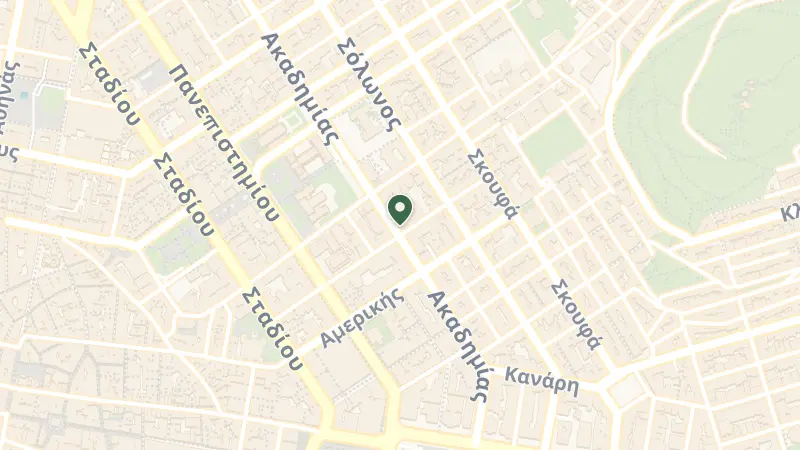
Academias Hotel occupies a commanding position in Kolonaki, Athens' most refined neighbourhood where the southern slopes of Mount Lycabettus meet streets lined with neoclassical mansions and contemporary galleries. The district takes its name from a two-metre column that marked this ground long before the area's urbanization, a fitting emblem for a quarter that has always drawn those who value both heritage and sophistication. Here, the rhythms of modern Athens unfold at a cultivated pace: the morning clink of coffee cups on marble café tables, the rustle of international newspapers, the murmur of Greek and several other languages drifting from under plane trees in the central square.
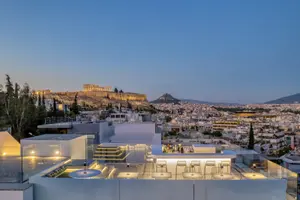
Kolonaki places you at the gravitational centre of classical and contemporary Athens alike. The Acropolis rises just over a kilometre southwest, its Parthenon columns visible from higher vantage points, a UNESCO World Heritage monument that has defined Western architectural thinking for 2,500 years. Wander downhill and you reach Syntagma Square and the Parliament; wander east and you're climbing towards Lycabettus itself, the limestone peak that offers the city's most panoramic perspective. The neighbourhood's boutiques, antiquarian bookshops, and galleries occupy buildings where Athenian families have lived for generations, their balconies draped with bougainvillea even in winter.
Athens Eleftherios Venizelos International Airport lies 19 kilometres east, connected by metro, express bus, and taxi. Arriving in Kolonaki feels less like entering a hotel district and more like being received into the living quarters of the city's cultural memory.
The Michelin-starred Tudor Hall sits just 400 metres from the property, where a rooftop terrace delivers modern creative cuisine against the backdrop of the Acropolis; book ahead for an evening table when the monuments are illuminated and a pianist sets the mood. Seven hundred metres northeast, The Zillers Rooftop Gastronomy occupies the former residence of Ernst Zillers, the German architect who shaped much of 19th-century Athens, its contemporary Greek cooking framed by the city's neoclassical silhouette. For a more ambitious culinary journey, Delta holds two Michelin stars six kilometres away inside the Stavros Niarchos Foundation Cultural Centre, where creative Greek cuisine meets avant-garde architecture. The Varvakios Market, 700 metres northwest, sprawls with fishmongers, butchers, and spice vendors in a cast-iron hall that has anchored Athens' food trade since the 1880s; arrive early when the marble counters glisten with octopus and red mullet hauled in that morning.
Walk a kilometre southwest to the Acropolis itself, where the Parthenon and Erechtheion stand on their sacred outcrop, or explore the Agora's ruins below, where Socrates once debated beneath the reconstructed Stoa of Attalos. The Monastiraki Flea Market, just over a kilometre away, sprawls through narrow lanes every Sunday, a chaotic tangle of antique copper, Byzantine icons, and bric-a-brac that rewards patient browsing. For a breath of coastal air, the beaches at Alimos and Agios Kosmas lie eight to ten kilometres south, their organized stretches offering umbrellas and tavernas where grilled sardines come with lemon and coarse salt.
Spring arrives early in Athens, with March bringing almond blossoms and temperatures climbing into the high teens. By May the city shifts into a sun-drenched rhythm, cafés spilling onto pavements as locals linger over iced coffee and the light turns honeyed in the late afternoon. Summer is relentless: July and August see daytime highs above 30 degrees, the marble of the Acropolis radiating heat, the city emptying toward island ferries while those who remain retreat indoors during the midday hours.
Autumn is arguably the finest season to visit. September holds onto summer's warmth without its intensity, the sea still swimmable, the tourist throngs dispersed. October cools into the low twenties, ideal for exploring archaeological sites without the scorching glare. The city's cultural calendar resumes in earnest, galleries reopening, outdoor cinemas screening under clear skies.
Winter is mild by northern European standards, though December and January can surprise with sharp mornings and occasional rain. The Acropolis under grey skies carries a different gravitas, fewer visitors allowing you to stand alone among the columns as mist drifts over the Aegean.
Frequently Asked Questions

Quotes are personally reviewed by Natasha Hardy, founder of The Uncommon Traveller
5.0 rating · 8 Google reviewsThere is no fee or markup. The hotel pays our commission.
Request a Quote 5 Bib Gourmand