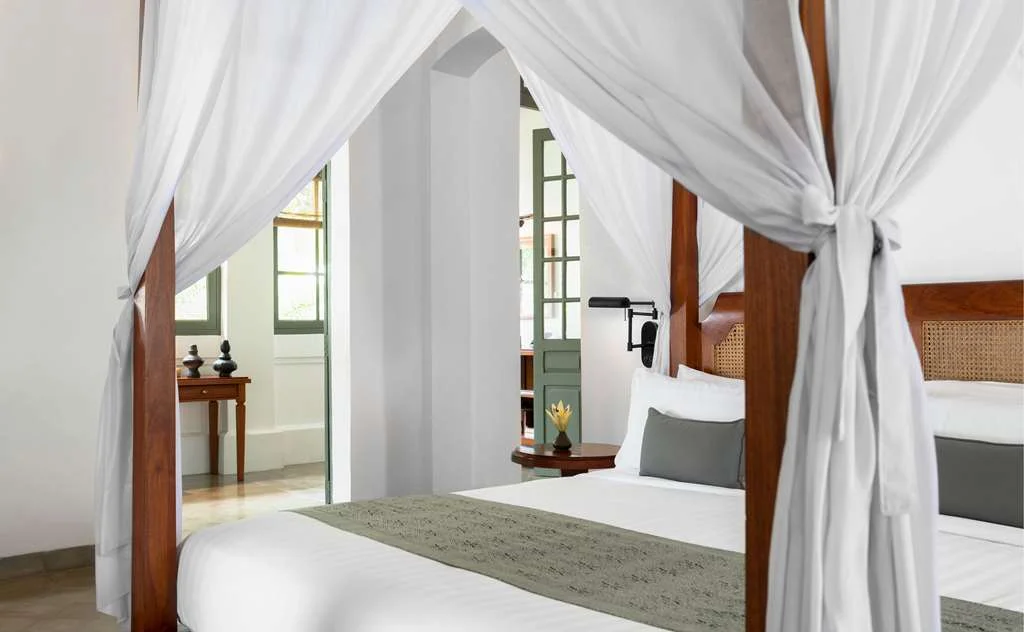
Amantaka
When you book Amantaka in Luang Prabang, Laos, through our Virtuoso partnership, your stay includes daily breakfast for up to two guests and a $100 USD resort or hotel credit. You also receive a room upgrade, early check-in and late check-out when available. No premium credit card or membership needed: request a quote and our advisor books it at the same rate as booking direct.
Special Offer: 3rd night free
+ 3rd night free + Round-trip transfers from Luang Prabang International Airport (LPQ) with fast-track security on arrival + Daily breakfast + Daily choice of lunch or dinner inclusive of selected non-alcoholic beverages + Daily afternoon tea + Use of bicycles, tuk-tuk and car transportation within Luang Prabang + Use of hydrotherapy areas including steam room and sauna facilities with hot and cold plunge pool + Laundry service (excluding dry cleaning)
Exclusive Booking Perks
These perks are included with your stay at the same rate as booking direct with the hotel.
- Upgrade on arrival, subject to availability
- Daily breakfast for up to two guests per bedroom, served in the restaurant (already included in property rates)
- $100 USD equivalent Resort or Hotel credit to be utilized during stay (not combinable, not valid on room rate, no cash value if not redeemed in full)
- Early Check-In / Late Check-Out, subject to availability
Location
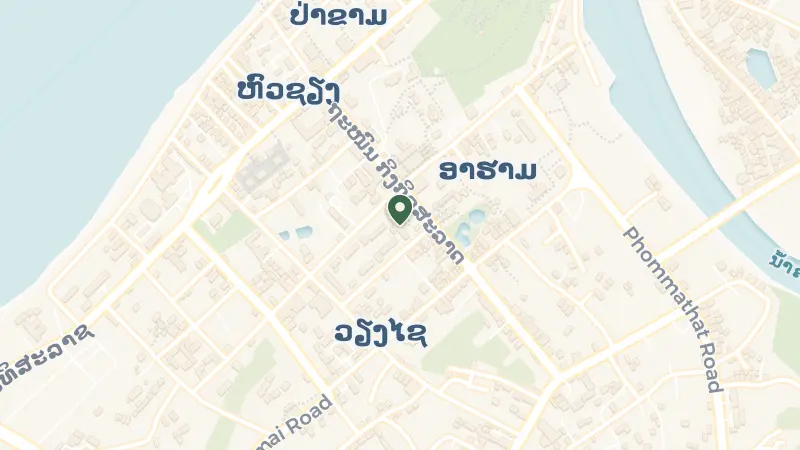
Amantaka occupies a former French colonial hospital and outlying villas in the heart of the UNESCO-protected old town, a rare instance of Aman restraint that honors the quiet rhythm of a place rather than imposing grandeur upon it. The property threads through the historic quarter, its low-slung courtyards and tamarind-shaded pavilions blending seamlessly with the saffron-robed monks and Lao timber shophouses that define this peninsula between the Mekong and Nam Khan rivers.
Luang Prabang itself unfolds as a living museum of 19th-century Franco-Lao architecture, its 33 protected villages punctuated by over 30 working temples. Gilded temple roofs catch the first light at dawn when monks emerge for tak bat, the silent alms procession that winds through lanes still fragrant with incense and sticky rice. Wat Xieng Thong, a 16th-century masterpiece of triple-tiered roofs and mosaic façades, stands a short walk west. The night market sprawls along Sisavangvong Road, stalls piled with handwoven silk and mulberry paper lanterns. Mount Phousi rises from the town center, its stupas visible from most streets.
The nearest airport lies four kilometres north, a ten-minute drive through rice paddies and rural villages. The city's compact scale rewards walking; everything from the Royal Palace Museum to the confluence viewpoint at the peninsula's tip unfolds within a few streets.
The morning food market, a five-minute stroll from the property, opens before dawn with fishmongers hauling Mekong catfish onto wooden carts and vendors grilling sai oua, the lemongrass-laced sausage that defines northern Lao cuisine. The night food market transforms Sisavangvong Road each evening into a warren of trestle tables serving tam mak hoong (green papaya salad spiked with fermented fish) and khao piak sen, a silky rice noodle soup fragrant with ginger and black cardamom. Book an alms-giving participation with a local guide who explains the protocol, the reverence that keeps this ritual from devolving into spectacle.
Tad Sae Waterfall, ten kilometres south along the Nam Khan, tumbles over limestone tiers into turquoise pools where elephants bathe at midday. Kuang Si, a 60-metre cascade deeper into the jungle, offers swim holes fringed by calcified travertine. The Luang Prabang Golf Club lies five kilometres northwest, a valley course hemmed by karst peaks and teak forest. Wat Wisunalat, the oldest temple in continuous use since 1513, shelters the gilded Phra Bang statue that gave the city its name.
November through February delivers the clearest skies, mornings cool enough for temple walks before the mercury climbs to the mid-twenties by noon. Mists lift from the rivers at dawn, and the light takes on a golden clarity that flatters both the gilded temple spires and the frangipani blossoms littering monastery courtyards.
March and April turn oppressively hot, temperatures pushing past 34 degrees and the air heavy with pre-monsoon haze from slash-and-burn agriculture in the hills. May inaugurates the rains, sudden afternoon downpours that green the rice terraces and swell the Mekong to its muddy seasonal flood.
The monsoon peaks in July and August, when travel slows and the town empties of tourists. October marks the transition back to clarity, cooler mornings, and the boat races that coincide with the end of Buddhist Lent. Aim for late October through early March when the weather favors long walks and the rivers run low enough to reveal their sandy banks.
Frequently Asked Questions

Quotes are personally reviewed by Natasha Hardy, founder of The Uncommon Traveller
5.0 rating · 8 Google reviewsThere is no fee or markup. The hotel pays our commission.
Request a Quote