Banyan Tree Macau
When you book Banyan Tree Macau in China through our Accor Hera partnership, your stay includes daily breakfast for two and a $100 USD hotel credit. You also receive a room upgrade, early check-in and late check-out when available. No premium credit card or membership needed: request a quote and our advisor books it at the same rate as booking direct.
Exclusive Booking Perks
These perks are included with your stay at the same rate as booking direct with the hotel.
- Daily complimentary breakfast for 2, per room
- $100 USD credit to be spent on property (conditions defined at check-in)
- Early check-in & late check-out (upon availability)
- Upgrade at time of check-in (upon availability)
Location
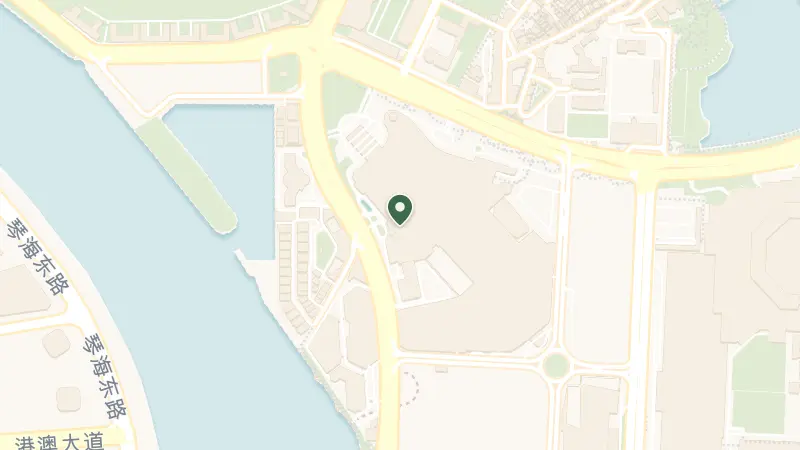
Banyan Tree brings its Southeast Asian villa heritage and conservation-minded hospitality to Macau, a city where Portuguese colonial façades meet neon-lit casino corridors. The property rises in Taipa, once a fishing village and now a district that balances old shophouse lanes with integrated resort complexes. From here, the skyline fractures into gold-glass towers and the pearl-grey curve of Cotai reclaimed land, while pockets of banyan-shaded streets and incense-filled temples hold fast to older rhythms.
Taipa Old Village sits less than a kilometre away, its pastel buildings packed with almond cookie bakeries, Portuguese taverns serving bacalhau, and temple courtyards where copal smoke drifts over terracotta roofs. The neighbourhood's low-rise scale and tree-canopied alleys feel worlds apart from the resort strip, though both are part of Macau's double identity as a UNESCO-listed historic centre and Asia's highest-grossing gaming hub. Five kilometres north, the Historic Centre of Macao preserves four centuries of Sino-Portuguese architecture, including the Ruins of St. Paul's and cobbled Senado Square.
Macau International Airport lies four kilometres east, connecting the city to regional hubs across Asia. Ferries from Hong Kong and Shenzhen also dock nearby, threading the Pearl River Delta's web of crossings.
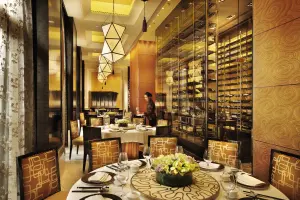
Saffron, the property's Thai restaurant, now occupies the 31st floor and commands sweeping views over the Cotai Strip and South China Sea. Start with the som tam, shredded green papaya balanced against dried shrimp and lime. Four kilometres northeast, Robuchon au Dôme crowns the Grand Lisboa with three Michelin stars and intricate French plates that shift with the seasons, each dish a study in restraint and intensity. Closer still, Jade Dragon holds three stars for Cantonese mastery; the dining room gleams with jade panels and crystal chandeliers, but the twice-cooked pork belly and abalone preparations outshine the décor.
Taipa Market, a short walk from the hotel, fills morning stalls with glistening cuts of pork, bundles of morning glory, and salt-crusted fish hauled from offshore waters. Beyond dining, nature reserves fringe the hotel: the Cotai Ecological Conservation Zone shelters mangrove wetlands where herons stalk the shallows, and Hác Sá Beach stretches along the southern coast three kilometres away, its black sand and pine-backed shoreline a quieter counterpoint to the city's density.
Winter, from December through February, brings the coolest and driest stretch, with daytime temperatures in the high teens and skies that stay mostly clear. The light turns sharp and crystalline, ideal for walking the Historic Centre's cobbled lanes without the humid weight of summer. Spring warms gradually through March and April, though rainfall begins to climb as the season tilts toward May's first monsoon pulses.
Summer, June to August, is a season of thunderstorms and humidity that clings to skin the moment you step outdoors. Temperatures hover near thirty degrees, and sudden downpours rattle awnings in the afternoon. Autumn begins in September with lingering warmth but drier air, then mellows into October and November's golden weeks.
The best window runs October through early December, when humidity drops, skies clear, and walking between temples and markets feels effortless rather than punishing. Spring's March and April also offer pleasant conditions before the rains arrive in earnest.
Frequently Asked Questions

Quotes are personally reviewed by Natasha Hardy, founder of The Uncommon Traveller
5.0 rating · 8 Google reviewsThere is no fee or markup. The hotel pays our commission.
Request a Quote 13 Bib Gourmand