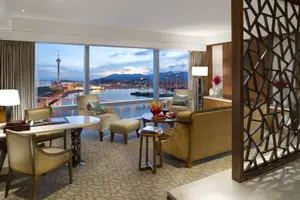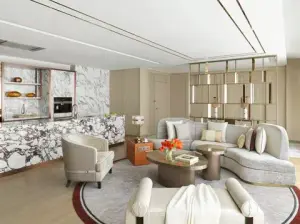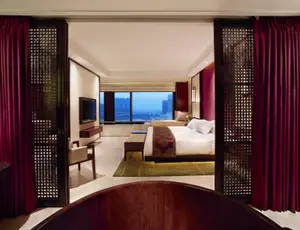
The St. Regis Macao
When you book The St. Regis Macao in Macau, China, through our Marriott STARS partnership, your stay includes daily breakfast for two and a $100 USD hotel credit once per stay. You also receive a room upgrade when available. You continue earning Marriott Bonvoy points and elite night credits. No premium credit card or membership needed: request a quote and our advisor books it at the same rate as booking direct.
Exclusive Booking Perks
These perks are included with your stay at the same rate as booking direct with the hotel.
- Personalized and customized amenity
- Complimentary breakfast daily for two guests per room
- All STARS hotels offer a hotel credit valued at $100 USD (once per stay)
- Early check-in and late check-out (when available)
- Complimentary upgrade (if available at check-in)
Location
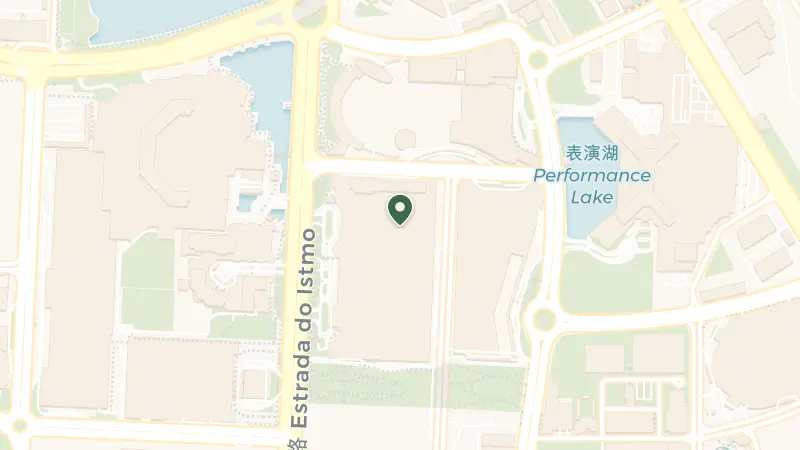
St. Regis has maintained a singular approach since John Jacob Astor IV opened the first property in 1904: dedicated butler service, interiors that draw from local heritage, and a formal refinement that feels deliberately removed from prevailing trends. At the Macao property, that philosophy translates to a setting where Portuguese colonial history and contemporary Asian luxury coexist without friction.
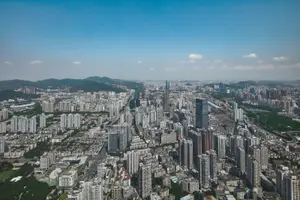
Macau itself occupies a threshold position. The territory spent four centuries under Portuguese administration before returning to Chinese sovereignty in 1999, and that long entanglement left a layered identity visible in cobbled lanes, baroque church facades, and the Cantonese-Portuguese patois still spoken in older neighbourhoods. The Baía de Nossa Senhora da Esperança sits on reclaimed land between Taipa and Coloane, where wetland conservation zones press against resort corridors. Across the bay, the mangrove channels of the Shizimen estuary filter tidal water, while seabirds trace the shoreline at dawn.
Macau International Airport lies three kilometres south. Hong Kong International is forty kilometres across the Pearl River Delta, accessible by high-speed ferry or bridge. The historic centre, a UNESCO World Heritage Site inscribed in 2005, unfolds six kilometres northwest in the original peninsula settlement.
Jade Dragon, three Michelin stars and under 300 metres from the property, sets Chinese art, ebony, crystal, jade, gold and silver against Cantonese technique that justifies the lavish surroundings. The kitchen treats bird's nest and abalone with reverence earned over generations. Book a table at Robuchon au Dôme, 5.3 kilometres away atop the Grand Lisboa Hotel, where contemporary French cuisine unfolds against views that sweep across the Pearl River Delta, the dishes intricate and intense in flavour. The Huaiyang Garden, two stars and practically next door at 118 metres, reinterprets Jiangnan garden design with perforated screens mimicking Suzhou architecture, while the kitchen delivers the delicate, mildly sweet flavours of Huaiyang tradition: shredded tofu, vinegar-braised fish, hand-pulled noodles served in bone broth.
Beyond dining, the wetlands of Cotai Ecological Conservation Zone I stretch 1.3 kilometres south, wooden boardwalks threading through preserved marshland where egrets stalk the shallows. Hác Sá Beach, 2.9 kilometres distant, offers black sand and relative quiet, a rarity in this density. The Historic Centre, six kilometres north, deserves a half-day: Ruins of St. Paul's baroque facade, A-Ma Temple's incense coils, the pastel symmetry of Senado Square where Portuguese pavement meets southern Chinese commerce. Start with the Leal Senado building to understand how a European municipal chamber adapted its operations to Cantonese custom for four centuries.
January through March brings cooler, drier air. Mornings start crisp, often in the mid-teens, and afternoons warm to the low twenties. The light feels clean, visibility stretches across the delta, and outdoor walking becomes manageable without the weight of humidity.
Summer arrives in May and holds through September. Temperatures climb above thirty degrees, the air thickens, and afternoon storms roll in from the South China Sea with sudden intensity. Streets empty during midday heat, then revive after sunset when the Portuguese-tiled plazas cool and outdoor tables fill.
October and November offer the most agreeable conditions: warm days in the mid-twenties, lower humidity, and stable skies. December edges cooler but stays mild, the city moving at a slower rhythm as year-end approaches and the fishing boats return early from the bay.
Frequently Asked Questions

Quotes are personally reviewed by Natasha Hardy, founder of The Uncommon Traveller
5.0 rating · 8 Google reviewsThere is no fee or markup. The hotel pays our commission.
Request a Quote 13 Bib Gourmand