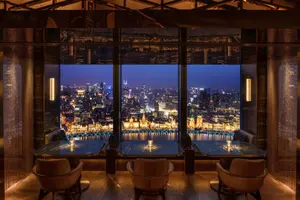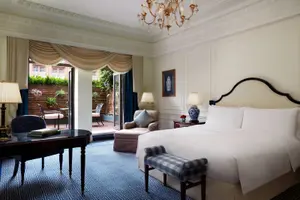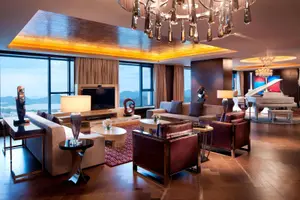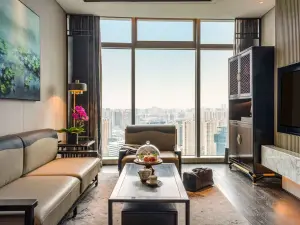
The Azure Qiantang
When you book The Azure Qiantang in Hangzhou, China, through our Marriott STARS partnership, your stay includes daily breakfast for two, a $100 USD hotel credit once per stay and a personalized amenity. You also receive a room upgrade, early check-in and late check-out when available. No premium credit card or membership needed: request a quote and our advisor books it at the same rate as booking direct.
Exclusive Booking Perks
These perks are included with your stay at the same rate as booking direct with the hotel.
- Personalized and customized amenity
- Complimentary breakfast daily for two guests per room
- All STARS hotels offer a hotel credit valued at $100 USD (once per stay)
- Early check-in and late check-out (when available)
- Complimentary upgrade (if available at check-in)
Guest feedback
10.0/10 from 112 guest reviews
By category
Guests liked
- Clean room
- Comfortable bed
- Polite staff
Points to consider
- Location far from city center
- Beds a bit uncomfortable
Location
The Azure Qiantang opens onto Hangzhou, a city where imperial poets once gathered on West Lake's shores to watch mist rise over pagoda-dotted hills. This is the capital of Zhejiang province, a place where Tang dynasty literati perfected the art of leisure and Song emperors established a southern court renowned for silk, tea, and refined aesthetics. The rhythm here remains contemplative despite modern prosperity: early mornings bring tai chi practitioners to lakeside pavilions, teahouses fill with locals debating the merits of Longjing green tea harvested from nearby hills, and evening light catches the curves of arched stone bridges that have spanned canals for centuries.
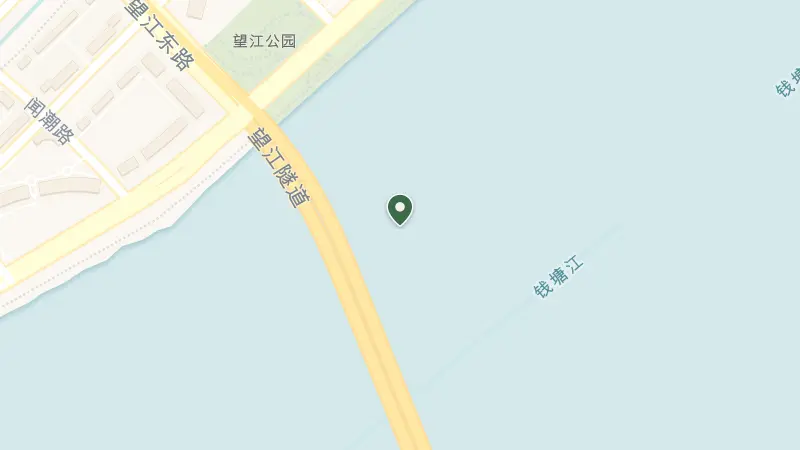
The property sits in eastern Hangzhou, where the Qiantang River curves through the city before widening into its famous estuary. West Lake, a UNESCO World Heritage landscape that has inspired Chinese artists for over a millennium, lies six kilometres to the west. Closer still, the riverfront promenades offer views of the tidal bore that occasionally surges upstream, a natural phenomenon celebrated in local lore.
Hangzhou Xiaoshan International Airport sits 22 kilometres south, connected by metro and expressway. The city's high-speed rail network links to Shanghai in under an hour, positioning Hangzhou as both a historical treasure and a modern gateway to the Yangtze River Delta.
On-site dining channels Hangzhou's culinary heritage, though the city's true gastronomic theatre unfolds beyond the property. Two kilometres north, Wild Yeast earned its Michelin star by showcasing seafood from Taizhou, the chef's hometown, in a sleekly lit space where every table faces the open kitchen. For a deeper exploration of regional tradition, Ru Yuan sits 8.4 kilometres away with two Michelin stars, reimagining Xihu fish in vinegar sauce and Longjing tea-leaf shrimp with meticulous precision amid lush garden surroundings. Book a table at Yu Zhi Lan, 5.7 kilometres distant, where Sichuan cooking from Chengdu meets Hangzhou subtlety in a restored 1930s Shikumen residence. The set menus honour natural flavours without the fire typically associated with western Chinese cuisine.
West Lake's cultural landscape, inscribed as a UNESCO site in 2011, lies six kilometres west. Walk the Su Causeway at dawn when willows trail into still water and the Three Pools Mirroring the Moon appear as ink-brush strokes. Xixi National Wetland Park, 13.7 kilometres northwest, offers a quieter communion with nature: pole through reed channels in a wooden boat, past water villages where families still harvest lotus roots and dry persimmons under eaves. The Archaeological Ruins of Liangzhu City, 27 kilometres north, reveal a 5,000-year-old jade culture that predates written Chinese history.
Spring arrives in March with plum blossoms along West Lake's shores, though April showers drench the city beneath low clouds. Temperatures climb from the mid-teens into the low twenties, and the air carries the green scent of new tea leaves unfurling on Longjing hillsides. This is peak season for witnessing the annual harvest.
Summer turns thick and humid by June, when monsoon rains swell the Qiantang and temperatures push past 30°C. July and August shimmer with heat that sends locals to shaded teahouses and evening riverfront breezes. Autumn transforms Hangzhou into its most celebrated season: September through November brings crystalline skies, comfortable warmth descending into crisp coolness, and the golden light that once inspired imperial painters.
Winter is spare and contemplative. December through February sees temperatures dip near freezing at night, though days often reach the high single digits. Occasional snow dusts pagoda roofs, and mist clings to the lake until mid-morning, creating the monochrome landscapes that anchor Chinese aesthetic tradition.
Frequently Asked Questions

Quotes are personally reviewed by Natasha Hardy, founder of The Uncommon Traveller
5.0 rating · 8 Google reviewsThere is no fee or markup. The hotel pays our commission.
Request a Quote 33 Bib Gourmand