Cape Grace, A Fairmont Managed Hotel
When you book Cape Grace, A Fairmont Managed Hotel in Cape Town, South Africa, through our Virtuoso partnership, your stay includes daily breakfast for up to two guests and a $100 USD food and beverage credit. You also receive a room upgrade when available. No premium credit card or membership needed: request a quote and our advisor books it at the same rate as booking direct.
Exclusive Booking Perks
These perks are included with your stay at the same rate as booking direct with the hotel.
- Upgrade on arrival, subject to availability
- Daily breakfast for up to two guests per bedroom, served in the restaurant and via in-room dining (already included in property rates)
- $100 USD equivalent Food & Beverage credit to be utilized during stay (not combinable, no cash value if not redeemed in full)
- Bookings in our Suites will receive an additional $100 Food & Beverage credit (for a total of $200 during stay)
- Early Check-In / Late Check-Out, subject to availability
Guest feedback
Based on 115 guest reviews
By category
Guests liked
- Excellent location
- Great staff
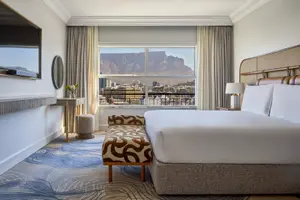
- Beautiful views
Points to consider
- Small pool area
- Limited outside space
Location
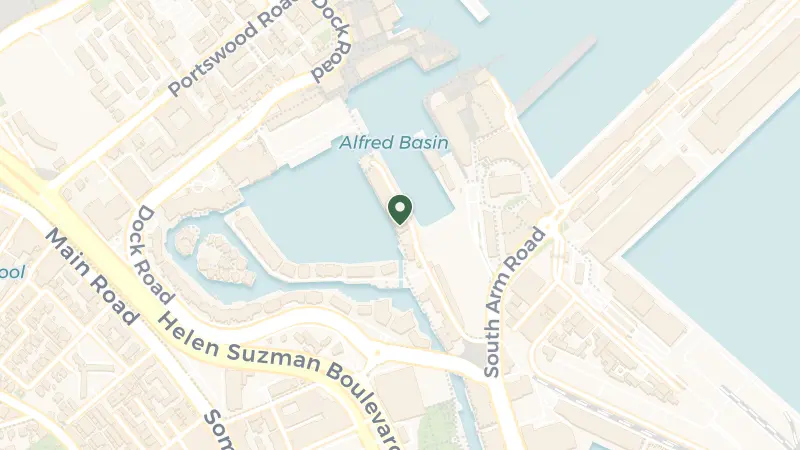
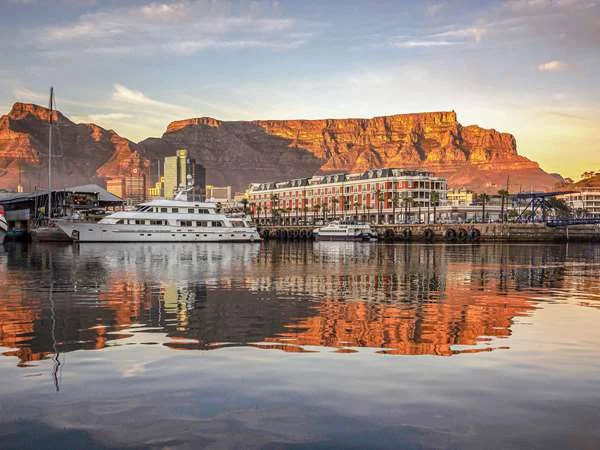
Cape Grace stands within the Fairmont portfolio as a property where maritime heritage meets contemporary luxury, overlooking the working harbour where Table Bay meets the Atlantic. The hotel occupies a prime position along the V&A Waterfront, a district that balances commercial vitality with historical resonance, built on land reclaimed from the sea in the 19th century. The Foreshore neighbourhood pulses with the rhythm of a modern port city, while the waterfront itself has evolved into one of the continent's most successful urban regeneration projects, preserving Victorian dock architecture alongside contemporary cultural spaces.
The setting is unmistakably Cape Town: Table Mountain rises behind the city bowl with geological drama that defined this peninsula long before Dutch settlers arrived in 1652. The mountain's flat summit catches light differently through each season, from the golden clarity of summer to winter's brooding cloud cover that locals call the tablecloth. Sea air carries the mineral tang of kelp forests and the occasional cry of gulls working the fishing boats.
The V&A Waterfront places you within walking distance of the historic clock tower that once guided ships into harbour, while Makers Landing along the quayside showcases regional food culture just 400 metres from the hotel. Cape Town International Airport lies 18 kilometres east, connected by highway through the Cape Flats.
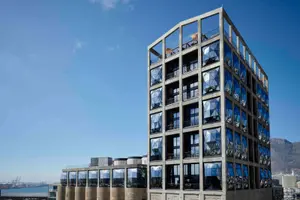
The waterfront location provides immediate access to maritime history and contemporary culture in equal measure. Robben Island, the UNESCO-listed site where Nelson Mandela spent 18 of his 27 years in prison, sits 13 kilometres offshore; ferries depart from the Nelson Mandela Gateway at the waterfront several times daily, returning visitors with a deeper understanding of South Africa's path from apartheid to democracy. The Two Oceans Aquarium on the quayside brings together species from the cold Atlantic and warmer Indian Ocean currents that meet at Cape Point, while the Zeitz Museum of Contemporary Art Africa occupies a carved-out grain silo with one of the world's most significant collections of 21st-century African art.
Beyond the immediate precinct, Cape Town's wine routes beckon. Groot Constantia, the Cape's oldest wine estate at 13.5 kilometres south, produces muscadel in the same cellars that supplied European courts in the 18th century. Book a tasting at Constantia Glen, 11.9 kilometres away in the valley below Table Mountain's eastern slopes, where sauvignon blanc takes on a mineral character from decomposed granite soils. Kirstenbosch National Botanical Garden displays five of South Africa's six biomes across 36 hectares of cultivated gardens and conserved fynbos, with the Silverstream Waterfall marking the start of trails into Table Mountain National Park just 5.5 kilometres from the city.
Summer arrives with the southeaster, the Cape Doctor wind that sweeps Table Bay clean and holds temperatures in the low twenties through December, January, and February. The light turns crystalline, vineyards ripen under long days, and the city moves outdoors. This is peak season for both crowds and rates.
Autumn stretches warm and still through March and April before the first winter fronts arrive. May through August brings the bulk of the year's rainfall, when the Cape Floral Region explodes into bloom and the mountain wears its cloud tablecloth most afternoons. Temperatures rarely drop below ten degrees, and the cold Atlantic keeps conditions mild.
Spring from September onwards sees fynbos flowering across the peninsula and whale season along False Bay. October and November offer the year's most stable weather, with temperatures climbing back into the high teens and early twenties before the southeaster returns.
Frequently Asked Questions

Quotes are personally reviewed by Natasha Hardy, founder of The Uncommon Traveller
5.0 rating · 8 Google reviewsThere is no fee or markup. The hotel pays our commission.
Request a Quote