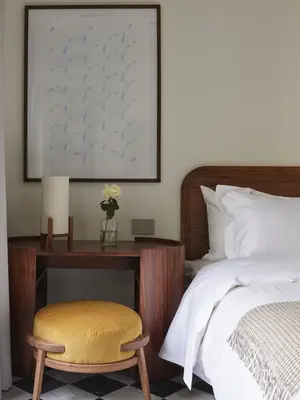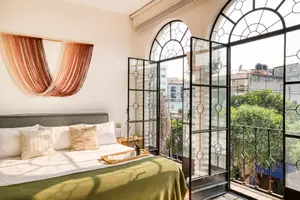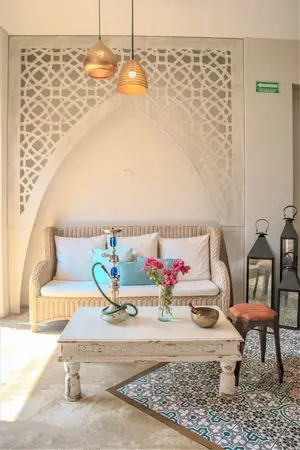
Casa Goliana La Roma
When you book Casa Goliana La Roma in Mexico City, Mexico, through our Tablet Plus partnership, your stay includes a one-category room upgrade and late check-out when available. No premium credit card or membership needed: request a quote and our advisor books it at the same rate as booking direct.
Exclusive Booking Perks
These perks are included with your stay at the same rate as booking direct with the hotel.
- Upgrade to next room category, based upon availability at check-in
- Guaranteed 2pm late check-out
- Complimentary bottle of wine in room on arrival
- Welcome fruit plate in room on arrival
Guest feedback
9.6/10 from 97 guest reviews
By category
Guests liked
- Wonderful breakfast
- Amazing staff
- Comfortable beds
Points to consider
- Room was a bit dark
- Water temperature issues
Location
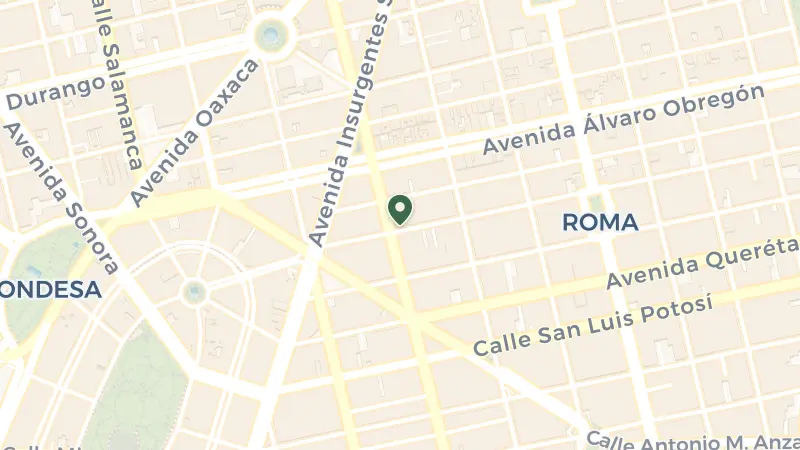
Roma Norte unfolds as a laboratory of Mexico City's evolving identity, where Porfirian mansions share tree-lined streets with third-wave coffee roasters and mezcal bars. This is the neighbourhood that earned the moniker "Williamsburg of Mexico City," though that comparison sells short its century of architectural depth. Art Nouveau facades curve along Avenida Álvaro Obregón, while the Sunday antiques market at Plaza Luis Cabrera draws collectors and browsers beneath jacaranda canopies. The area recovered its nerve after the 1985 earthquake knocked confidence from its middle-class bones, and gentrification has brought both restoration and complication.
The Historic Centre lies three kilometres east, where the Spanish built their colonial capital atop the ruins of Tenochtitlan. Closer still, the Luis Barragán House and Studio stands as a 2004 UNESCO site, the architect's 1948 masterwork of colour and light in the suburbs. The valley's 2,240-metre elevation keeps the air thin and the light crystalline.
Benito Juárez International Airport sits ten kilometres southeast, a twenty-minute drive when traffic cooperates (a crucial qualifier in a city of nine million). The newer Felipe Ángeles terminal opened forty kilometres north as an overflow valve.
Em, the Michelin-starred contemporary Mexican restaurant, operates just 200 metres from the property. Start your evening upstairs at 686 Bar before descending to Chef Lucho Martinez's tasting menu, where pre-Hispanic ingredients meet current technique. For higher-wattage dining, Quintonil holds two stars 3.4 kilometres north in Polanco, Chef Jorge Vallejo transforming Oaxacan herbs into dishes that captivate without posturing. Pujol, Enrique Olvera's two-star flagship, sits 3.7 kilometres away, its mole madre aged for over a thousand days. Book months ahead for either.
The Mercado de Artesanías de La Ciudadela, 2.2 kilometres south, gathers textile weavers and ceramic makers under one vast roof. Closer, Valkirias Bazar offers vintage clothing and midcentury furniture within a kilometre's walk. Chapultepec Castle commands the heights of the city's largest park, its 1944 conversion to museum preserving murals and the memory of Emperor Maximilian's brief, doomed reign. The Polyforum Cultural Siqueiros, built in 1971, wraps visitors in the artist's largest mural work.
Winter arrives dry and mild, mornings crisp at seven degrees, afternoons warming to the low twenties. January and February see barely a dozen millimetres of rain, the light sharp against the mountains ringing the valley. This is the season for rooftop terraces and long walks through Bosque de Chapultepec.
The rainy season builds through May and breaks properly in June, when afternoon thunderstorms drench the city and cool the air to the low twenties. July through September bring the heaviest downpours, over 150 millimetres monthly, though mornings often start clear. The streets smell of wet stone and street corn.
October marks the retreat toward dryness, Day of the Dead altars appearing as the rains diminish. November and December return to the dry pattern, temperatures dropping but rarely uncomfortable, the city's cultural calendar at full tilt through year's end.
Frequently Asked Questions

Quotes are personally reviewed by Natasha Hardy, founder of The Uncommon Traveller
5.0 rating · 8 Google reviewsThere is no fee or markup. The hotel pays our commission.
Request a Quote 26 Bib Gourmand