Casa Seis Siete
When you book Casa Seis Siete in Mexico City, Mexico, through our Tablet Plus partnership, your stay includes daily à la carte breakfast for up to two guests. Your stay also includes a 25 USD food and beverage credit per stay. You also receive a one-category room upgrade when available. No premium credit card or membership needed: request a quote and our advisor books it at the same rate as booking direct.
Exclusive Booking Perks
These perks are included with your stay at the same rate as booking direct with the hotel.
- Upgrade to next room category, based upon availability at check-in
- Complimentary daily a la carte breakfast (max 2 guests)
- Welcome treat in room on arrival
- 25 USD food and beverage credit per room, per stay
Guest feedback
9.7/10 from 43 guest reviews
By category
Guests liked
- Incredible service
- Beautiful property
- Great location
Points to consider
- Would have liked a bar with drinks/wine
Location
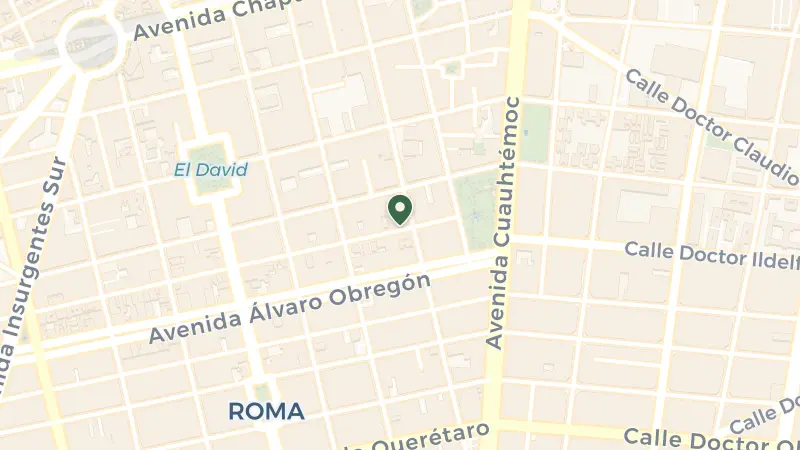
Casa Seis Siete plants you in the heart of Roma Norte, the tree-lined colonia that has become Mexico City's most compelling argument for extended stays. Originally conceived as a Porfirian-era neighborhood for the capital's elite, Roma spent decades in genteel decline before the 2000s brought a wave of restoration that transformed its eclectic architecture and leafy avenues into the city's creative nucleus. The streets here feel lived-in rather than polished, with art deco apartment buildings and neocolonial facades housing third-wave coffee roasters, independent bookshops, and design studios. Mercado de Artesanías de La Ciudadela sits just over a kilometre south, its colonial-era arcade sheltering Oaxacan textiles and Michoacán pottery.
The neighbourhood's character derives from its position as a pedestrian-friendly island of human scale in a sprawling metropolis. Two kilometres east, the Historic Centre of Mexico City and Xochimilco (a UNESCO World Heritage Site built atop Aztec Tenochtitlan) anchors the city's layered identity, while four kilometres northwest, the Luis Barragán House and Studio stands as a pilgrimage site for anyone who cares about light, colour, and the marriage of modernism with Mexican vernacular. Roma Norte itself rewards aimless walking: plazas shaded by jacarandas, corner cantinas with swinging doors, bookstores that stay open late.
Mexico City Benito Juárez International Airport lies nine kilometres southeast, connected by metro and taxi in under thirty minutes depending on traffic.
Start at Máximo, the Michelin-starred restaurant two hundred metres from the hotel. Chef Eduardo García's cooking draws on pre-Hispanic ingredients and live-fire techniques; the mesquite-grilled squash with chicatana ants and the aguachile verde are textbook examples of contemporary Mexican cuisine rooted in indigenous tradition. The dining room occupies a converted workshop, all whitewashed brick and soaring ceilings, and reservations vanish weeks ahead. Further afield, Quintonil (two Michelin stars, 3.9 kilometres northeast in Polanco) showcases Chef Jorge Vallejo's seasonal vegetable-forward tasting menus, while Pujol (two stars, 4.3 kilometres) remains the city's most famous table, where Enrique Olvera's mole madre has aged continuously for more than a thousand days. Book both months in advance.
Within walking distance, Mi Mercado Hidalgo (1.3 kilometres) offers stalls piled with chapulines, amaranth, and dried chiles; Mercado de Artesanías de La Ciudadela (1.4 kilometres) is the place for oaxacan textiles and talavera ceramics. The Centro Histórico, two kilometres east, holds the National Palace with Diego Rivera's sweeping murals and the Templo Mayor archaeological zone, where Aztec monoliths rise beside colonial arcades. Don't miss the Academy of San Carlos, founded in 1781 as the continent's first fine arts academy, or the Aztec sun stone at the National Museum of Anthropology, carved in 1510 and among the most powerful artifacts of Mesoamerican cosmology.
Winter (December through February) brings crisp mornings that warm into brilliant afternoons, the high plateau light clarifying distant volcanoes when the city's haze lifts. Daytime highs hover around twenty-one degrees, evenings cool enough for jackets and outdoor café seating.
Spring arrives with jacarandas purpling the streets in April and May, temperatures rising to twenty-five degrees before afternoon thunderstorms begin their summer pattern. June through September defines the rainy season, when daily downpours arrive with clockwork regularity in late afternoon, leaving mornings clear and streets steaming.
October and November offer the year's gentlest weather, rain tapering off as temperatures settle into the low twenties and street vendors pile their carts with cempasúchil marigolds for Día de Muertos. This is prime touring season, when the city feels most itself.
Frequently Asked Questions

Quotes are personally reviewed by Natasha Hardy, founder of The Uncommon Traveller
5.0 rating · 8 Google reviewsThere is no fee or markup. The hotel pays our commission.
Request a Quote 26 Bib Gourmand