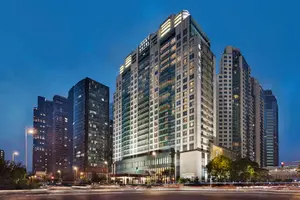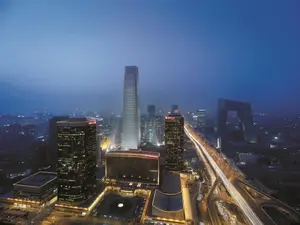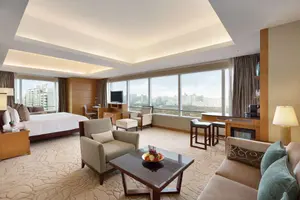
China World Hotel, Beijing
When you book China World Hotel, Beijing in China, through our Shangri-La Luxury Circle partnership, your stay includes full breakfast for two and a hotel credit of USD $50 or $100 once per stay. You also receive a one-category room upgrade, early check-in and late check-out when available. No premium credit card or membership needed: request a quote and our advisor books it at the same rate as booking direct.
Exclusive Booking Perks
These perks are included with your stay at the same rate as booking direct with the hotel.
- Upgrade to the next room type category at the time of booking, subject to availability
- Hotel credit of USD $50 or $100 (once per stay)
- Complimentary full breakfast for two, including in-room dining
- A VIP Welcome Amenity
- Early check-in and late check-out, subject to availability
Guest feedback
9.8/10 from 329 guest reviews
By category
Guests liked
- Excellent location
- Friendly staff
- Clean and comfortable rooms
Points to consider
- Limited breakfast variety
- Communication issues with some staff
Location
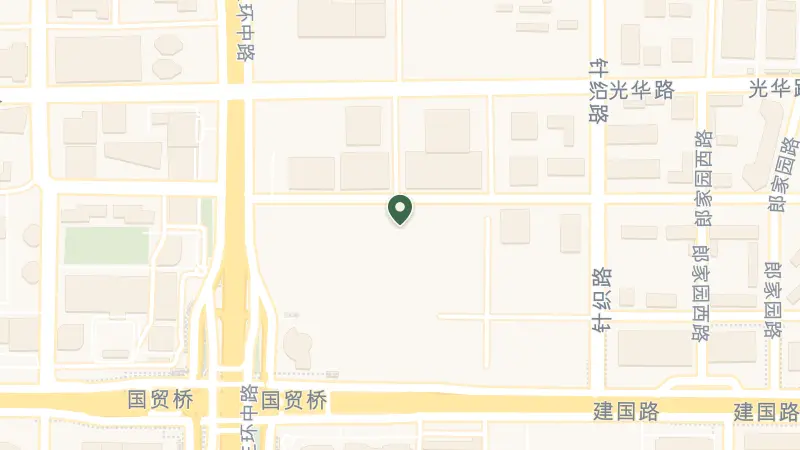
This property sits in Jianwai Subdistrict, a name derived from Jianguomenwai, the district outside Jianguomen and the former Beijing city wall that once encircled the imperial capital. The location places guests at the western edge of Chaoyang District, where the old city's eastern boundaries dissolved into what is now the central business district. The neighbourhood carries the energy of modern Beijing: wide avenues, glass towers reflecting afternoon light, and the hum of a city moving at speed.
Walk north and you reach the old hutongs that survived demolition, where courtyard homes hide behind grey walls and bicycle bells echo off stone. To the west, the vast Imperial City begins its march toward the Forbidden City's red gates. Six kilometres north, the newly inscribed Beijing Central Axis stretches through the heart of historical Beijing, a north-south alignment of former imperial palaces, sacrificial structures, and ceremonial buildings that once embodied the cosmic order of the Chinese capital.
Beijing Capital International Airport lies 22 kilometres northeast, connected by expressway and the Airport Express rail line. The newer Daxing International Airport, 46 kilometres south, opened in 2019 as one of the world's largest terminals and serves as an alternate gateway.
Chao Shang Chao, 300 metres from the property, holds three Michelin stars for its refined Chaozhou cooking. Chef Cheung, who honed his craft in Hong Kong and Shanghai, reimagines classics from China's eastern Guangdong coast with sophistication. The hallway greets you with expensive dried fish maws, a signal of the luxuries ahead. Book a table and order the double-boiled soups, delicate broths that simmer for hours. Lu Shang Lu, 200 metres away, specialises in Shandong cuisine, particularly Confucius dishes and sea cucumber flown in daily from Jiaodong peninsula. The two-star kitchen knows the province's repertoire inside out.
Four kilometres north, Xin Rong Ji on Xinyuan South Road interprets Taizhou cooking with fish from the East China Sea, earning three stars for its modern Chinese dining room. The Temple of Heaven, seven kilometres south, was founded in the first half of the 15th century as an imperial sacrificial altar, its circular prayer halls rising from gardens ringed by historic pine woods. Sanyuanli Market, four and a half kilometres away, remains one of Beijing's best sources for fresh produce, spices, and the everyday rhythm of neighbourhood commerce.
Winter arrives sharp and dry, with January temperatures plunging below freezing and the city wrapped in crystalline air. The light is low and golden, the northern sky a pale blue. Spring warms quickly from March, with dust storms occasionally blowing in from the Gobi, but by May the city blooms and outdoor exploration becomes comfortable.
Summer brings heat and the bulk of the year's rain, July and August turning humid with afternoon thunderstorms that clear the smog and leave the streets steaming. The rainy season peaks in July, when the city slows under heavy skies. September cools into autumn, the finest season to visit.
October delivers perfect conditions: mild days, crisp nights, and the ginkgo trees along Beijing's avenues turning a luminous gold. By November the cold returns, but the dry air and fewer crowds make this an ideal time for palace visits and long walks along the old city walls.
Frequently Asked Questions

Quotes are personally reviewed by Natasha Hardy, founder of The Uncommon Traveller
5.0 rating · 8 Google reviewsThere is no fee or markup. The hotel pays our commission.
Request a Quote 26 Bib Gourmand