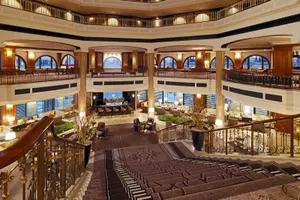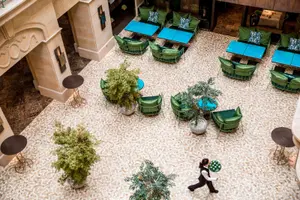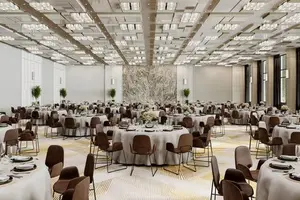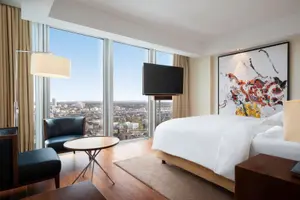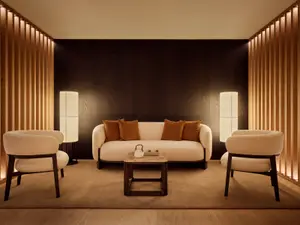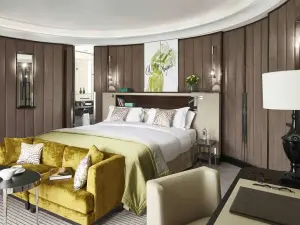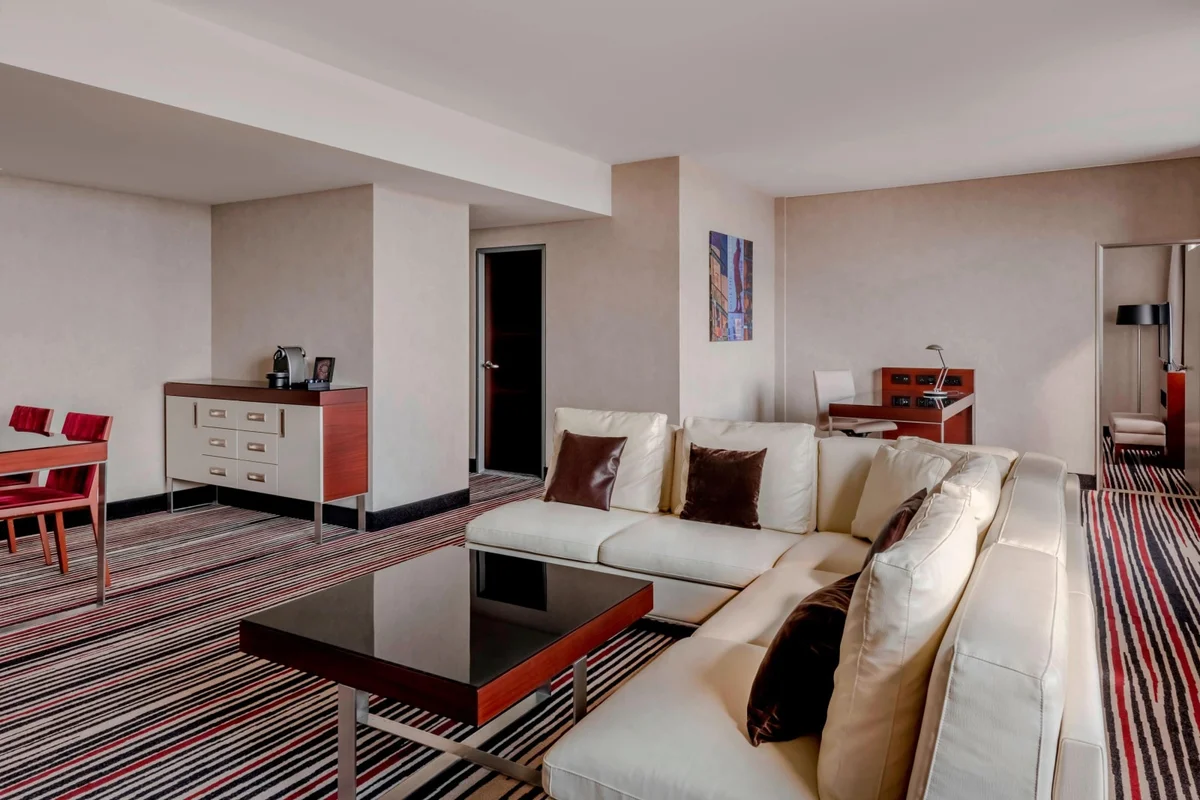
Frankfurt Marriott Hotel
When you book Frankfurt Marriott Hotel in Germany through our Marriott Luminous partnership, your stay includes daily breakfast for two and a welcome amenity. You also receive a room upgrade, early check-in and late check-out when available. No premium credit card or membership needed: request a quote and our advisor books it at the same rate as booking direct.
Exclusive Booking Perks
These perks are included with your stay at the same rate as booking direct with the hotel.
- Welcome amenity
- Complimentary breakfast daily for two guests per room
- Early check-in and late check-out (when available)
- Complimentary upgrade (if available at check-in)
Location
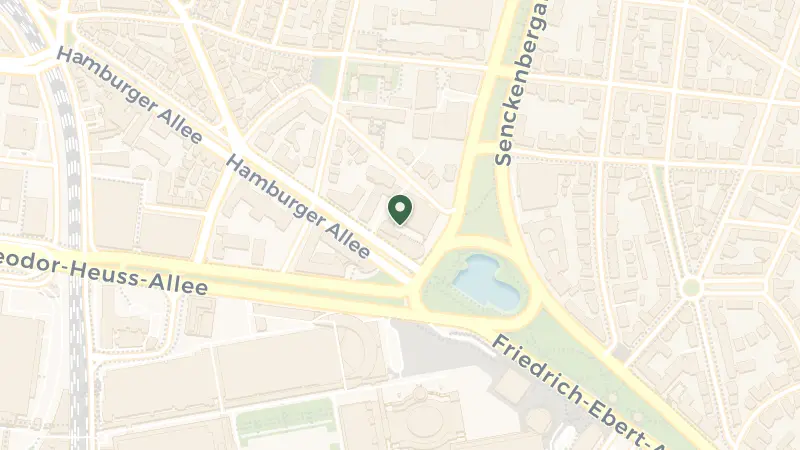
Marriott properties bring reliable polish and consistent service standards to cities across the globe, and the Frankfurt Marriott Hotel places that assurance in the Westend Süd, a leafy, villa-lined district where residential grace meets proximity to the financial pulse. Frankfurt itself straddles the Main River with a layered identity: it has been an imperial city since 1372, a site of Holy Roman Empire coronations, and today serves as home to the European Central Bank and one of four institutional seats of the European Union. The skyline bristles with glass and steel, yet the cultural bedrock runs deep, from the Städel Museum (founded 1816) to the preserved Judengasse quarter, where the medieval Jewish ghetto stood from 1462.
Westend Süd unfolds as a district of broad avenues and Gründerzeit townhouses, quieter than the banking towers clustered along the Main but still close enough to walk to museums, the Palmengarten botanical garden, and the Alte Oper concert hall. The Westend-Synagoge, a grand 1910 structure, anchors the neighbourhood's cultural memory. Trams glide past bookshops and corner bakeries; the air carries a mix of German precision and cosmopolitan hum, with half the city's population claiming migrant backgrounds.
Frankfurt Airport lies twelve kilometres southeast, linked by S-Bahn trains that reach the city centre in eleven minutes, a rare European convenience that makes this one of the continent's most accessible hubs.
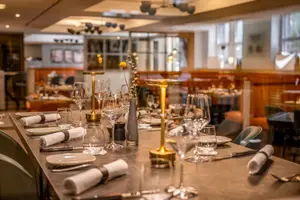
On-property dining follows the Marriott Luminous standard, while the surrounding district offers a more rarefied table. Lafleur, two Michelin stars, occupies the Palmenhaus adjacent to the Palmengarten less than a kilometre west; Andreas Krolik's modern French kitchen builds complex layers around Wagyu short ribs and autumn truffles, each dish calibrated for balance and surprise. Book a table well ahead. Just over a kilometre north, Erno's Bistro (one star) serves Valéry Mathis's seasonally driven French cuisine with a savoir-vivre polish that has anchored the city's fine dining scene for years. For a longer evening, Restaurant Villa Merton (one star) sits 1.4 kilometres southwest in an elegant villa, where Philippe Giar's modern classic repertoire draws connoisseurs to André Großfeld's gracious dining room.
Cultural anchors cluster within walking or short tram reach: the Städel Museum, one of Germany's great art collections, the Liebieghaus sculpture museum (1909), and the Museum der Weltkulturen (1904), which explores global ethnography with a Frankfurt lens. The Palmengarten itself spreads across subtropical glasshouses and rose gardens, a green lung in the western city. For a taste of the city's market life, the Bücher-Flohmarkt book flea market sets up less than a kilometre away, where secondhand volumes and prints sprawl across trestle tables.
Winter (December through February) brings crisp mornings, bare linden branches, and occasional frost, temperatures hovering just above freezing. The city slows slightly; museum halls warm and beckon. Spring arrives in March with tentative warmth and blossoms along the Main, though April showers persist and evenings still require a jacket.
Summer (June through August) settles into comfortable warmth, rarely oppressive, with long daylight stretching past nine in the evening. Locals fill the Palmengarten lawns; café tables spill onto pavements. This is the season for river walks and open-air concerts.
Autumn transforms the Westend's tree-lined streets into tunnels of gold and rust, while September holds onto summer's mildness. By November, rain returns and the city turns inward, though the festive glow of the Christmas market (one of Germany's oldest) begins to pierce the early dusk. May through September remains the prime window for extended daylight and easy exploration.
Frequently Asked Questions

Quotes are personally reviewed by Natasha Hardy, founder of The Uncommon Traveller
5.0 rating · 8 Google reviewsThere is no fee or markup. The hotel pays our commission.
Request a Quote 4 Bib Gourmand