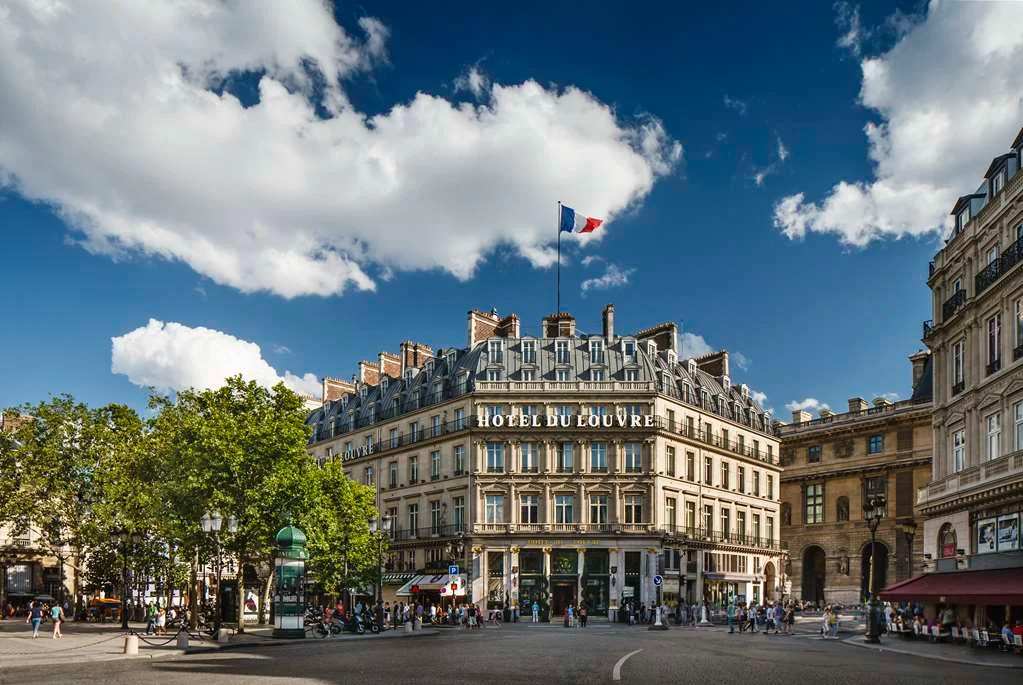
Hôtel du Louvre, in The Unbound Collection by Hyatt
When you book Hôtel du Louvre, in The Unbound Collection by Hyatt in Paris, France, through our Hyatt Privé partnership, your stay includes daily full breakfast for up to two guests and a property credit. You also receive a priority room upgrade when available. No premium credit card or membership needed: request a quote and our advisor books it at the same rate as booking direct.
Exclusive Booking Perks
These perks are included with your stay at the same rate as booking direct with the hotel.
- Welcome amenity provided to guests upon arrival.
- Daily complimentary full breakfast at a hotel restaurant for up to two guests.
- Property credit (value varies by property).
- Priority for room upgrade (response within 24 hours of booking, subject to forecasted occupancy).
- Early check-in/late check-out/connecting rooms (response within 24 hours of request, subject to forecasted occupancy).
Guest feedback
9.1/10 from 1,164 guest reviews
Read what guests commentedBy category
Guests liked
- Great service
- Excellent location
- Comfortable rooms
Points to consider
- Shower issues
- Reputation of being overpriced
Location
Hyatt's portfolio reaches across service tiers and continents, anchoring travellers in properties that range from urban landmarks to remote retreats. At the upper end, the company's collection includes historic conversions and contemporary flagships bound by a commitment to loyalty rewards and consistent recognition of returning guests.
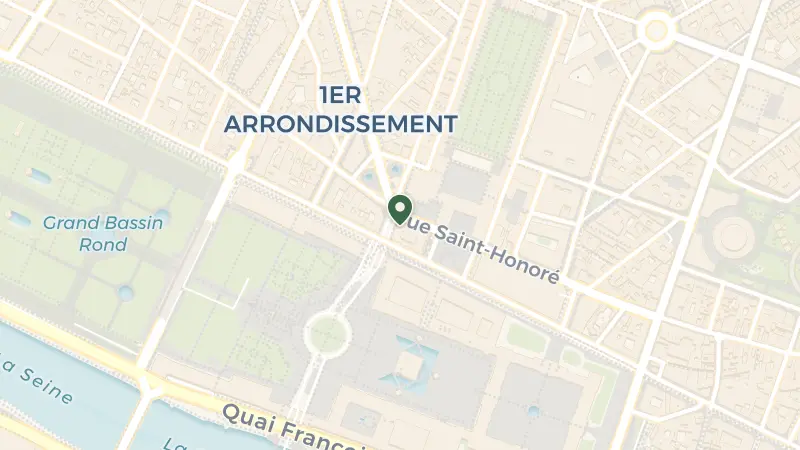
The 1st arrondissement unfolds along the Right Bank of the Seine, a district where sovereign power and artistic patronage have left their mark for centuries. The Louvre palace dominates the quarter, its courtyards and galleries drawing millions each year, while the arcaded Rue de Rivoli runs east toward the Jardin des Tuileries, a formal garden laid out by André Le Nôtre in the 17th century. Within a short walk, the Palais Royal's colonnaded galleries shelter discreet boutiques and Buren's striped columns, and the neoclassical Comédie-Française still stages Molière and Racine. The Seine flows past stone quays inscribed as a UNESCO World Heritage Site in 1991, a ribbon that threads together monuments from medieval to Belle Époque.
The property sits at the hinge of all this, steps from Place André Malraux, where Art Nouveau Métro entrances curl above tunnels connecting the city. Charles de Gaulle Airport lies 23 kilometres northeast, linked by RER B and taxi; Orly is 15 kilometres south. The rhythm here is unhurried luxury, the kind that lets you slip out for morning coffee at a zinc bar and return before the crowds arrive.
Within 700 metres, three-star dining defines the neighbourhood's culinary ambitions. Kei Kobayashi's eponymous restaurant, 498 metres away, translates his training under Gilles Goujon and Alain Ducasse into Modern Cuisine that bridges Nagano and Paris with uncommon precision. Book a table at Plénitude inside the Cheval Blanc Paris at La Samaritaine, 663 metres distant, where Arnaud Donckele (also three-starred at La Vague d'Or in St Tropez) works in a more Creative register within the revamped 1920s department store. Alléno Paris au Pavillon Ledoyen, 1.4 kilometres toward the Champs-Élysées, occupies an elegant pavilion in the Jardins des Champs-Élysées with three stars and views across the avenue.
The covered Marché Saint-Honoré, 600 metres west, anchors the neighbourhood's daily rhythm with vendors selling produce, cheese, and charcuterie under a contemporary glass canopy. The Musée Picasso, opened in 1985 in the Marais, holds the world's largest collection of the artist's work in the 17th-century Hôtel Salé. The Musée de l'Orangerie, across the Tuileries, displays Monet's Nymphéas in purpose-built oval rooms flooded with natural light. Start with a morning walk along the Seine's right bank, where bouquinistes sell vintage posters and rare books from green metal stalls unchanged since the 19th century.
July and August bring temperatures that peak near 24°C, when Parisians decamp for the coast and museums breathe easier. The light turns golden in early evening, stretching until nearly ten, and café terraces fill with Aperol and conversation. August especially sees the city slow, shops shuttered for congés annuels, lending the arrondissement an almost conspiratorial quiet.
Spring (April through June) and early autumn (September into October) deliver the classic Parisian postcard: chestnuts in bloom along the Seine, temperatures hovering in the mid-teens to low twenties, and a softness in the air that makes walking the default mode. May can be damp, but the parks shake off winter with tulip beds and freshly rolled gravel. September is the sweet spot, when galleries reopen after summer and the city snaps back to its working rhythm without the crush of high season.
Winter (December through February) skews gray and damp, highs in the single digits, but the lack of snow means museums and markets remain accessible. The city trades sun for atmosphere: chestnuts roasting near the Louvre arcades, wine bars steaming with pot-au-feu, and an intimacy that
Frequently Asked Questions

Quotes are personally reviewed by Natasha Hardy, founder of The Uncommon Traveller
5.0 rating · 8 Google reviewsThere is no fee or markup. The hotel pays our commission.
Request a Quote 47 Bib Gourmand