Hotel Regina Louvre
When you book Hotel Regina Louvre in Paris, France, through our Preferred Platinum partnership, your stay includes daily breakfast for two, a $100 hotel credit per stay and a welcome amenity. You also receive a room upgrade when available. No premium credit card or membership needed: request a quote and our advisor books it at the same rate as booking direct.
Exclusive Booking Perks
These perks are included with your stay at the same rate as booking direct with the hotel.
- Breakfast for Two Daily
- $100 Hotel Credit per Stay (to be used on services such as spa, dining, or selected amenities valued at $100 or more)
- Hotel Welcome Amenity
- Room Upgrade (subject to availability)
- Priority Check-in and Check-out (subject to availability)
Guest feedback
9.0/10 from 1,441 guest reviews
By category
Guests liked
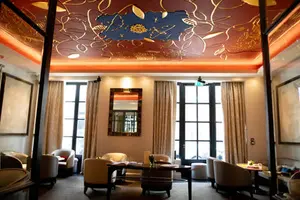
- Beautiful lobby and bar
- Central location
- Charming Art Deco style
Points to consider
- Rooms too small for the price
- Hotel is a bit outdated
- Busy tourist area
Location
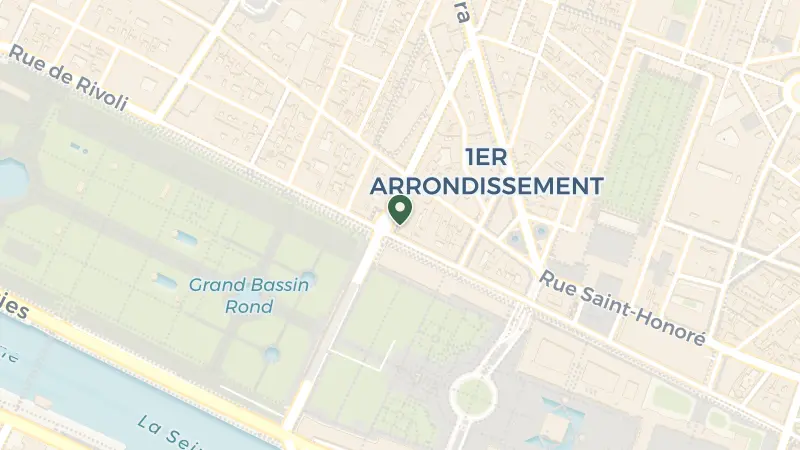
The 1st Arrondissement belongs to the oldest layer of Paris, where Roman foundations meet 17th-century ambition. Rue Saint-Honoré cuts through this quartier with the weight of centuries: royal processions once passed these windows, and the street still hums with that sense of proximity to power. The Louvre's western galleries stand a few minutes' walk away, their collections spanning civilizations. The Tuileries Gardens stretch green and formal to the south, anchored by octagonal pools and gravel paths worn smooth by generations of flâneurs. Across the Seine, the Left Bank's intellectual salons and bookshops feel close enough to touch.
This is Paris at its most composed, where Haussmann's boulevards frame 18th-century hôtels particuliers and the Palais Royal's arcades shelter discreet galleries. The neighbourhood moves at a deliberate pace, befitting its role as the city's historic heart.
Charles de Gaulle Airport lies 23 kilometres northeast, Orly 15 kilometres south; both connect by train and taxi to the city centre, depositing arrivals into streets that have absorbed twenty-three centuries of transformation without surrendering their essential character.
The 1st arrondissement concentrates an extraordinary density of three-Michelin-starred dining within walking distance. Kei, 700 metres away, showcases chef Kei Kobayashi's synthesis of French technique and Japanese precision in dishes that might pair Breton langoustine with yuzu or Burgundy snails with shiso. At Plénitude inside the revamped Samaritaine, Arnaud Donckele brings the same exacting standards that earned three stars at La Vague d'Or to creative plates in a hushed dining room overlooking the Seine. Book far ahead for either. Alléno Paris au Pavillon Ledoyen, set in the Jardins des Champs-Élysées 1.2 kilometres away, occupies an elegant pavilion with vast windows framing the avenue's plane trees, where Yannick Alléno's sauce-forward cooking reaches its apex in dishes like veal sweetbreads with sauce génevoise.
Morning markets anchor neighbourhood life. Marché Saint-Honoré, 400 metres from the property, fills its covered hall with produce vendors and ready-to-eat stands. Marché Saint-Eustache-Les Halles, occupying the site of the old central market, brings organic vegetables and rotisserie chickens to the edge of the 1st. The Musée de l'Orangerie, in the Tuileries, houses Monet's water lily murals in purpose-built oval rooms where natural light shifts across the massive canvases throughout the day.
Winter settles cold and grey over Paris, temperatures hovering near freezing as light fades early over zinc rooftops and bare chestnuts line the boulevards. January and February bring the city's introspective season, when museums feel warmer than the streets. Spring arrives hesitantly in March, gaining conviction through April and May as café terraces reopen and the Tuileries bloom in strict geometric beds.
Summer, particularly July and August, wraps the city in warmth that climbs past 20°C, though Parisians traditionally abandon the capital for coastal escapes, leaving museums and monuments less crowded. September extends summer's gold light while residents return, making early autumn the ideal marriage of weather and vitality.
October cools quickly, and by November the abbreviated days and frequent rain foreshadow winter's return.
Frequently Asked Questions

Quotes are personally reviewed by Natasha Hardy, founder of The Uncommon Traveller
5.0 rating · 8 Google reviewsThere is no fee or markup. The hotel pays our commission.
Request a Quote 47 Bib Gourmand