Hotel Sacher Wien
When you book Hotel Sacher Wien in Vienna, Austria, through our Virtuoso partnership, your stay includes daily buffet breakfast for up to two guests. You also receive a room upgrade, early check-in and late check-out when available. No premium credit card or membership needed: request a quote and our advisor books it at the same rate as booking direct.
Exclusive Booking Perks
These perks are included with your stay at the same rate as booking direct with the hotel.
- Upgrade on arrival, subject to availability
- Daily Buffet Breakfast for up to two guests per bedroom, served in the hotel restaurant
- $100 USD equivalent Hotel credit to be utilized during stay, valid at Sacher Boutique Spa and Food & Beverage outlets (not combinable, not valid on room rate, no cash value if not redeemed in full)
- Two complimentary First Class one-way train tickets per room from/to Vienna to/from Salzburg when booking both Sacher Hotels during the same trip
- Early Check-In / Late Check-Out, subject to availability
Guest feedback
9.5/10 from 1,555 guest reviews
Read what guests commentedBy category
Guests liked
- Location
- Staff
- Room Quality
Points to consider
- Cleanliness issues
- Need for renovation
Location
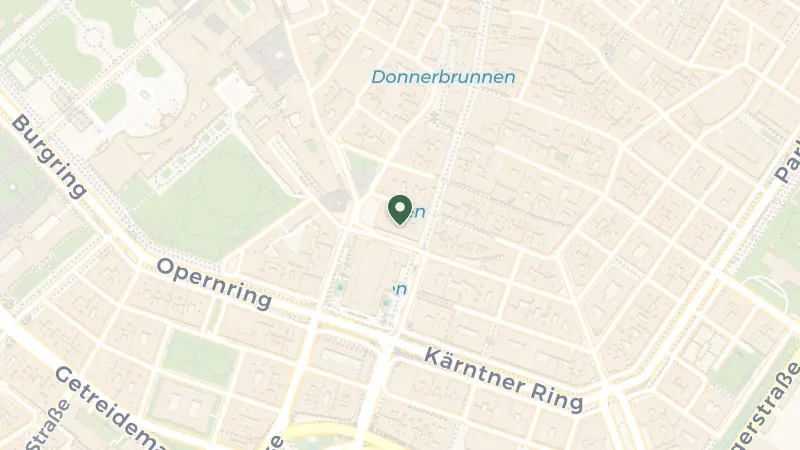
Hotel Sacher Wien carries the weight of Viennese history with quiet authority. This is where the original Sacher-Torte was created in 1832, and the property has remained in family hands ever since, preserving a sense of continuity that newer luxury cannot replicate. The hotel occupies a building steeped in the city's Imperial past, a touchstone for visitors seeking Vienna as it was imagined: refined, cultured, unapologetically grand.
The Innere Stadt unfolds in concentric circles around you here. Across the street, the Staatsoper anchors the neighbourhood with its neo-Renaissance façade; the Ringstraße curves just beyond, tracing the line of the old city walls. This is the Kärntner Viertel, the southeast quadrant of Vienna's historic core, where cobblestones meet tram tracks and the air smells faintly of roasted chestnuts in cooler months. The UNESCO-listed Historic Centre of Vienna begins at your doorstep, a palimpsest of Roman foundations, medieval guildhalls, and Baroque palaces layered across two millennia.
Vienna International Airport lies eighteen kilometres east. The City Airport Train departs every thirty minutes and reaches Wien Mitte in sixteen minutes; taxis follow the A4 motorway in similar time when traffic permits.
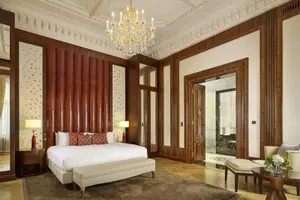
Start at the property's Rote Bar, where the striking red interior and crystal chandeliers create the atmosphere of dining in a piece of Viennese history, the menu rooted in Austrian tradition. The Grüne Bar offers classic cuisine in equally luxurious surroundings, both restaurants embodying the same impeccable hospitality that defines the hotel. For a culinary departure, book a table at Steirereck im Stadtpark, less than a kilometre away in the manicured greenery of the Stadtpark. The modern steel-and-glass building houses Heinz Reitbauer's three-Michelin-starred kitchen, where creative technique meets Austrian ingredients in dishes that justify the accolades and the transparent view into the kitchen as you enter.
The Historic Centre of Vienna, a UNESCO World Heritage site, extends in every direction from the hotel's front door. The Mozarthaus Vienna preserves the composer's residence where he wrote The Marriage of Figaro. The Austrian National Library's State Hall, completed in 1726, overwhelms with its frescoed dome and leather-bound volumes stacked to baroque heights. Walk east to the Belvedere's Upper Palace for Gustav Klimt's The Kiss, or north to the Academy of Fine Arts Vienna, where the collection spans six centuries. The Globe Museum displays centuries of cartographic ambition in spherical form, a curiosity worth an hour on a rainy afternoon.
Winter drapes the city in low grey light, temperatures hovering just above freezing by day and dipping well below at night. Snow dusts the Ringstraße by December, and the Christkindlmarkt stalls glow warm against the cold. This is concert season: the Staatsoper and Musikverein reach their zenith, and the air inside coffeehouses steams with condensation.
Spring arrives late but decisively. By April, chestnut trees unfurl along the boulevards, and café tables reappear on the pavements. May brings sudden warmth and afternoon showers; the parks turn lush, and the city shakes off its winter formality.
Summer is brief and intense, temperatures climbing past twenty-five degrees. July and August see locals flee to the lakes, leaving the city quieter and the museums blissfully uncrowded. Evenings stretch long, the light turning amber over the Danube. September is ideal: temperate, dry, and timed with the opera season's return.
Frequently Asked Questions

Quotes are personally reviewed by Natasha Hardy, founder of The Uncommon Traveller
5.0 rating · 8 Google reviewsThere is no fee or markup. The hotel pays our commission.
Request a Quote 16 Bib Gourmand