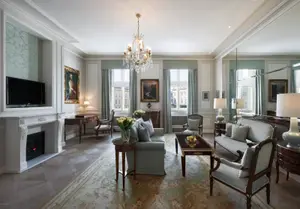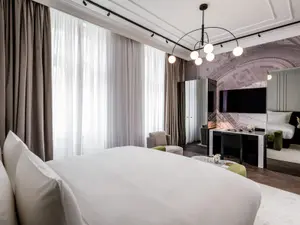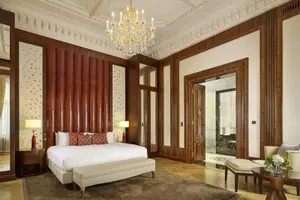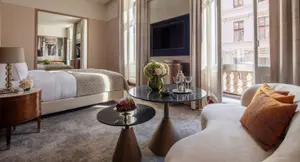
Rosewood Vienna
When you book Rosewood Vienna in Austria through our Virtuoso partnership, your stay includes daily full breakfast for up to two guests and a $100 USD food and beverage credit. You also receive a room upgrade, early check-in and late check-out when available. No premium credit card or membership needed: request a quote and our advisor books it at the same rate as booking direct.
Special Offer
+ Plan ahead and enjoy up to 25% off our flexible rate for a Vienna getaway + 100€ equivalent credit per stay to redeem in our Food and Beverage Outlets or for Spa services + VIP amenities + Early check-in & + Late check-out subject to availability + Inclusive à la carte breakfast daily in our Neue Hoheit Restaurant + Upgrade subject to availability upon arrival (up to St. Stephen' Suite)
Exclusive Booking Perks
These perks are included with your stay at the same rate as booking direct with the hotel.
- Upgrade on arrival, subject to availability
- Daily Full breakfast for up to two guests per bedroom, served in the restaurant
- $100 USD equivalent in local currency Food & Beverage credit to be utilized during stay (not combinable, not valid on room rate, no cash value if not redeemed in full)
- Early Check-In / Late Check-Out, subject to availability
Guest feedback
9.4/10 from 701 guest reviews
Read what guests commentedBy category
Guests liked
- Location
- Friendly staff
- Excellent breakfast
Points to consider
- Flies in room
- Dirty towels
- Small gym
Location
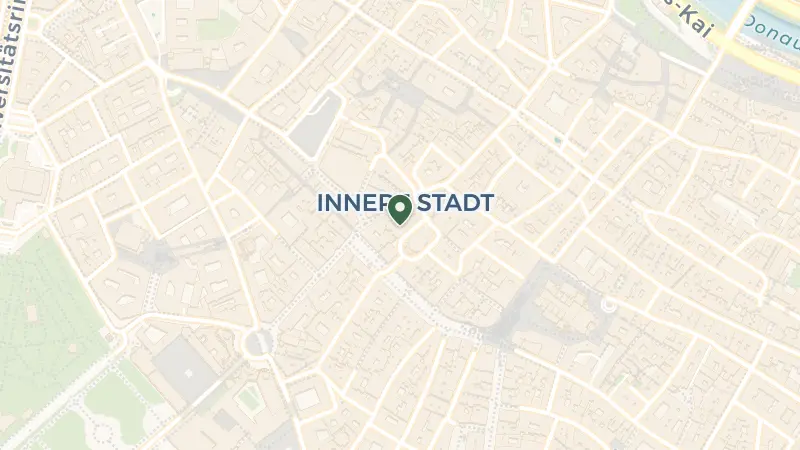
Rosewood properties function as cultural landmarks, each guided by a philosophy of place that draws on local heritage for architecture, art, and culinary direction. The approach is residential rather than transactional, with an emphasis on restrained luxury and Asaya wellness programmes that integrate the property into its surrounding city rather than isolating guests from it.
Vienna's Innere Stadt is the Habsburg heart of the capital, a UNESCO World Heritage Site where Baroque façades line cobbled streets that trace the route of the old city walls. The Ringstraße encircles the district like a horseshoe, its broad boulevards planted with linden trees and punctuated by imperial institutions: the Hofburg, the Opera, the twin museums that face each other across Maria-Theresien-Platz. Within the ring, the Widmerviertel quarter unfolds in a tangle of pedestrian lanes where sgraffito-decorated townhouses press against Gothic churches and vaulted passageways open onto hidden courtyards. The air here carries the scent of roasting coffee and Sachertorte, and the sound of street musicians playing Mozart in the shadow of St. Stephen's Cathedral, its tiled roof glinting in the pale northern light.
Vienna International Airport sits nineteen kilometres southeast, connected to the city centre by the CAT express train (sixteen minutes) and the S-Bahn (twenty-five minutes). Bratislava lies fifty kilometres to the east, accessible by hydrofoil along the Danube.
The Innere Stadt unfolds as a walkable anthology of imperial taste and contemporary vigour. The Belvedere palace, completed in 1714, holds Klimt's golden masterworks in rooms designed for aristocratic pleasure. The Imperial Treasury displays centuries of Habsburg regalia, crowns heavy with history. For market life, walk to Naschmarkt, a kilometre and a half southwest, where vendors sell spice-dusted vegetables and Balkan pastries beneath wrought-iron canopies. The Karmelitermarkt, a kilometre north across the Danube Canal, draws locals for morning cheese and weekend vinyl records.
Vienna's three-star dining anchors serious culinary ambition. Steirereck im Stadtpark, just over a kilometre east in its glass-and-steel pavilion, transforms Austrian tradition through creative technique. Amador, five kilometres out on the Hajszan Neumann estate, pairs Fritz Wieninger's wines with avant-garde cooking beneath brick vaults. Closer in, Silvio Nickol Gourmet Restaurant at Palais Coburg, 685 metres away, delivers two-star refinement with views into the barrel cellar. Book a table at Silvio Nickol for meticulously considered combinations that showcase executive chef Nickol's highly creative hand.
Winter settles over Vienna with a mineral cold, temperatures dropping below freezing from December through February. The light turns slant and silvery, and the Christmas markets fill the Rathausplatz and Schönbrunn forecourt with the scent of Glühwein and roasted chestnuts. Snow dusts the Ringstraße's statues and softens the edges of the Hofburg's colonnades.
Spring arrives late, with temperatures climbing into the mid-teens by April and the chestnuts along the boulevards unfurling pale green leaves. May brings the warmest rains of the year and the opening of the Stadtpark's rose gardens. Summer peaks in July, with highs around twenty-six degrees and long evenings that stretch past nine o'clock. The opera season closes and the city empties slightly as Viennese escape to the lakes.
Autumn is the most rewarding season for visitors, with temperatures in the high teens through September and the new wine taverns (Heurigen) opening in the Vienna Woods villages to pour the year's first Sturm. The light turns amber, the Staatsoper and Musikverein resume their schedules, and the streets regain the cultural intensity that defines the city. October cools quickly, but the museums and concert halls offer refuge as the season turns.
Frequently Asked Questions

Quotes are personally reviewed by Natasha Hardy, founder of The Uncommon Traveller
5.0 rating · 8 Google reviewsThere is no fee or markup. The hotel pays our commission.
Request a Quote 16 Bib Gourmand