InterContinental Wellington by IHG
Wellington New Zealand Oceania
When you book InterContinental Wellington by IHG in New Zealand through our IHG Destined partnership, your stay includes daily breakfast for two and a $100 USD hotel credit per stay. You also receive a room upgrade when available. You continue earning IHG One Rewards points and elite night credits. No premium credit card or membership needed: request a quote and our advisor books it at the same rate as booking direct.
Exclusive Booking Perks
These perks are included with your stay at the same rate as booking direct with the hotel.
- $100 USD (or local currency equivalent) hotel credit per stay
- Daily complimentary breakfast for 2 guests (full or continental, depending on the hotel)
- Complimentary room upgrade (subject to availability)
- Local welcome amenity
- Early check-in / late check-out (subject to availability)
Location
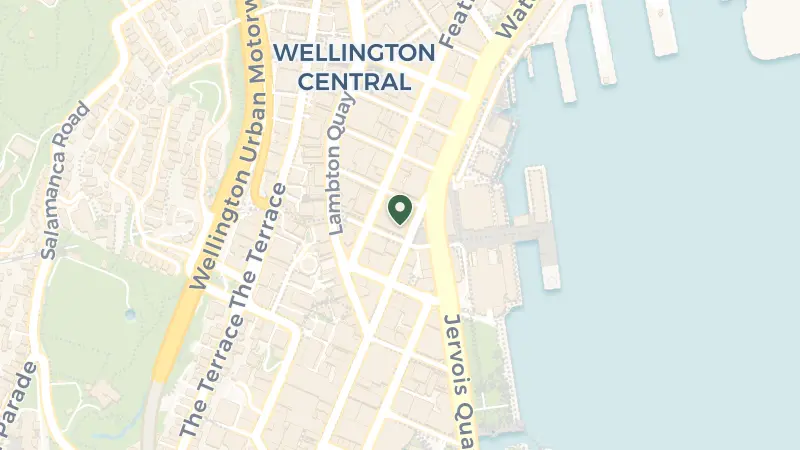
InterContinental's Insider Experiences programme finds one of its most compelling expressions in New Zealand's capital, where the brand's commitment to local culture meets a city that wears its identity with uncommon confidence. Wellington occupies the southwestern tip of the North Island, pressed between the Remutaka Range and Cook Strait, its compact waterfront core shaped by Captain William Mein Smith's 1840 grid plan (which famously ignored the topography altogether, leaving the city to climb the surrounding hills in defiant terraces). Māori oral tradition places Kupe's arrival here in the 10th century; by the early 19th century, Te Āti Awa had established dominance after the disruptions of the Musket Wars displaced earlier iwi including Rangitāne and Muaūpoko.
The property anchors itself in Lambton, the northern reach of Wellington Central, where the capital's financial district meets the working harbour. The neighbourhood hums with the particular energy of a governmental and cultural nerve centre: parliamentary staffers stride past art galleries, and the wind, Wellington's defining meteorological feature, funnels through the streets with enough consistency to earn the city its reputation as the world's windiest capital.
Wellington International Airport sits five kilometres from the city centre, a remarkably close approach that delivers arriving passengers directly into the compact urban fabric. The drive in follows the coast, offering immediate immersion in the waterfront character that shapes daily life here.
The nearby Michelin constellation reveals Wellington's culinary ambition. Logan Brown, a kilometre north in the domed grandeur of a 1920s bank building, holds one star for contemporary New Zealand cuisine that balances architectural theatre with nuanced, meticulous detail. Jano Bistro, also one star, tucks into a historic cottage serving French technique inflected with herbs and edible flowers from its own garden. For seafood, Ortega's blue-walled dining room one and a half kilometres away applies European and Latin American preparations to the day's catch. Book a table at any of these to understand how this compact capital punches above its weight.
Cultural layers accumulate within a short walk. The Enjoy Public Art Gallery, established in 2000, anchors the contemporary art scene, while Te Aro Wine offers a tasting room feel just over a kilometre west. For nature, slip into Wāhi Tūpuna reserve less than a kilometre away, or climb to Te Ahumairangi Reserve for views across the harbour. Weekend mornings belong to the Harbourside Market, where local producers sell everything from smoked fish to stone fruit. The dive site at Taranaki Street Wharf draws cold-water divers, while Freyberg Beach and Oriental Beach offer rare calm sand on a coast better known for its swell.
Summer arrives with surprising gentleness. January and February hover around 18°C, the warmest months softened by the ever-present breeze that keeps the air mobile and the light sharp. This is Wellington at its most welcoming: the harbour glitters, outdoor tables fill, and the city sheds its buttoned-up governmental formality.
Autumn stretches long through March and April, temperatures sliding gradually toward the mid-teens while the wind begins its more assertive winter behaviour. The shoulder months offer clear days and fewer visitors, though rain becomes more frequent as winter approaches. Winter proper, June through August, settles into the low teens by day, dipping below 10°C at night; the wind cuts harder now, and Wellingtonians retreat indoors to the cafes and galleries that anchor the cultural calendar.
Spring emerges tentatively, September's chill giving way to November's 15°C afternoons and longer light. The city feels most itself in these changeable months, when sun and squall alternate hourly and the wind reminds everyone of Wellington's exposed geography. October through December offers the best balance of weather and cultural programming, though the wind never truly relents.
Frequently Asked Questions

Quotes are personally reviewed by Natasha Hardy, founder of The Uncommon Traveller
5.0 rating · 8 Google reviewsThere is no fee or markup. The hotel pays our commission.
Request a Quote 4 Bib Gourmand