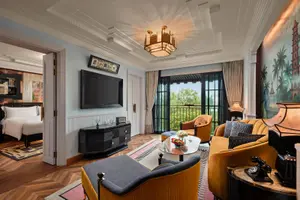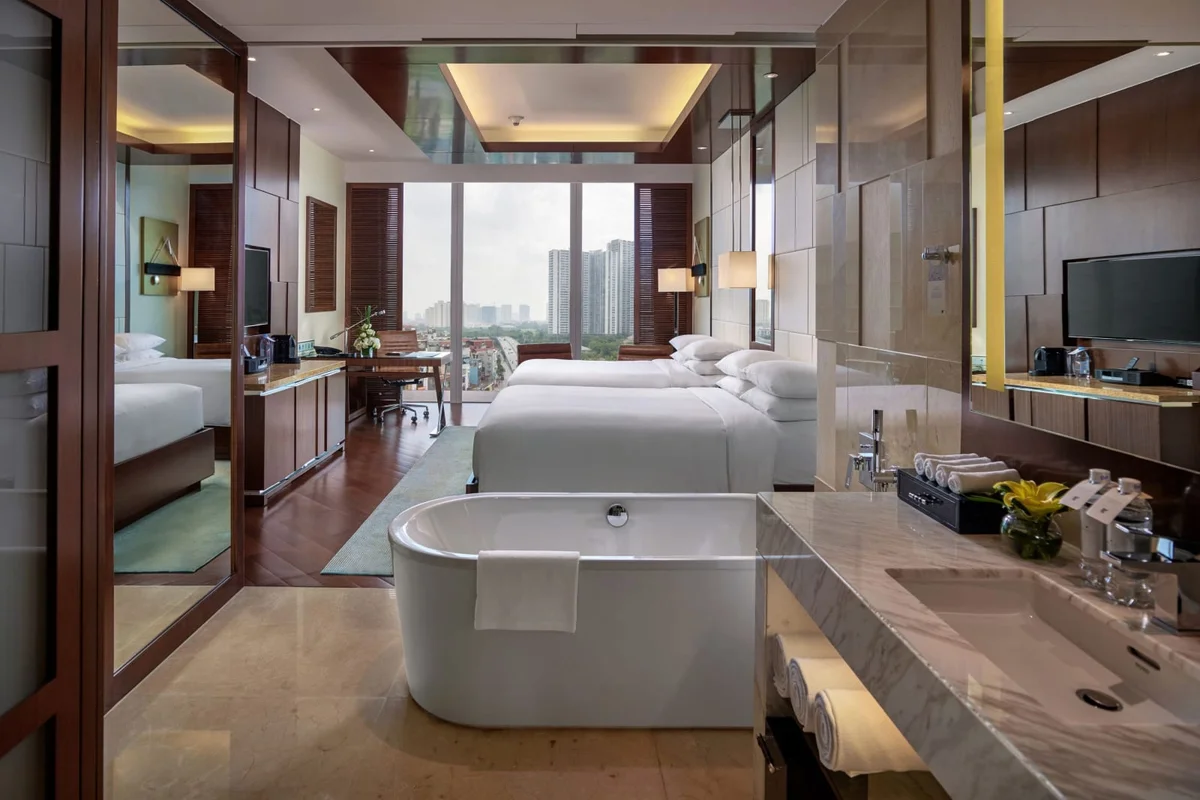
JW Marriott Hotel Hanoi
When you book JW Marriott Hotel Hanoi in Vietnam through our Marriott Luminous partnership, your stay includes daily breakfast for two and a welcome amenity. You also receive a room upgrade, early check-in and late check-out when available. No premium credit card or membership needed: request a quote and our advisor books it at the same rate as booking direct.
Exclusive Booking Perks
These perks are included with your stay at the same rate as booking direct with the hotel.
- Welcome amenity
- Complimentary breakfast daily for two guests per room
- Early check-in and late check-out (when available)
- Complimentary upgrade (if available at check-in)
Location
Hanoi unfolds along the Red River with a layered identity forged over a millennium. King Lý Thái Tổ named it Thăng Long, ascending dragon, when he moved the capital here in 1010, and the city has carried that sense of imperial ambition through French colonialism, revolution, and rapid modern growth. The Old Quarter still hums with motorbike traffic threading through narrow tube houses, while French colonial villas stand pale and shuttered in the shade of tamarind trees. The air smells of phở broth simmering before dawn, of incense from corner shrines, of petrol and jasmine in equal measure. The Imperial Citadel of Thăng Long sits seven kilometres from the hotel, its excavated foundations revealing layers of Chinese, Vietnamese, and French military history spanning centuries.
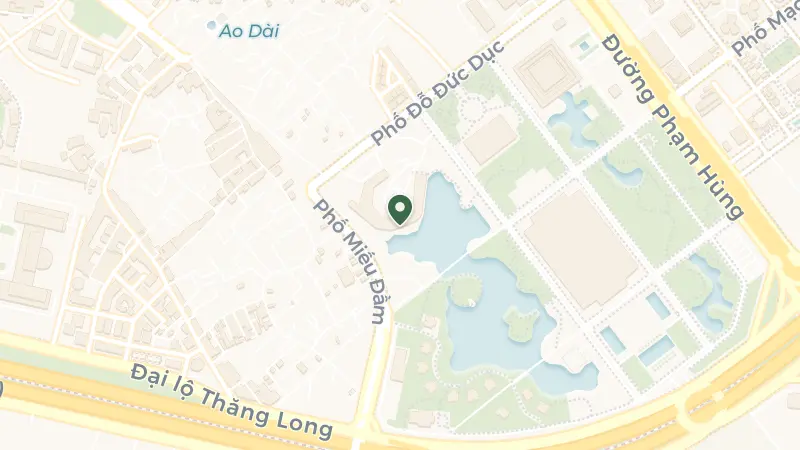
The property occupies the Me Tri Thuong area in Tu Liem Ward, a developing district west of the historic centre. Chợ Mễ Trì market lies just over half a kilometre away, selling produce, textiles, and prepared foods in the early morning crush that defines daily rhythm here. The neighbourhood lacks the colonial architecture of the French Quarter but offers a glimpse of contemporary Hanoi, where glass towers rise beside low-slung shophouses and families gather on plastic stools for evening meals.
Noi Bai International Airport sits 24 kilometres north, connected by highway and taxi. Most visitors arrive to find Hanoi's dissonance immediately legible: loudspeakers broadcasting neighbourhood announcements, the clatter of bia hơi glasses on pavement tables, the quiet hush inside pagodas where incense coils hang from rafters like suspended smoke.
French Grill operates on-site with counter seating facing the open kitchen, where chefs work over flame and steel in a sleek dining room built for celebration. The menu leans toward French contemporary techniques applied to local ingredients, and the atmosphere carries the formal polish of a hotel restaurant without tipping into stiffness. Six kilometres southeast, Gia earned its Michelin star with a menu rooted in chef Sam Tran's nostalGia for Vietnam, the dishes informed by years abroad and a return to roots. The dining room faces the Temple of Literature, and the cooking mines family memory for inspiration. Book a table at Tầm Vị, another one-star restaurant slightly farther into the city, where a two-storey vintage tea house serves North Vietnamese classics in a space filled with antique furniture and lacquered wood. The photo menu eases navigation, and the courtyard offers relief from the street heat.
The Imperial Citadel of Thăng Long, seven kilometres east, reveals archaeological layers from the 11th-century Lý dynasty onward, including remnants of Chinese fortifications and colonial-era barracks. Hỏa Lò Prison, built by the French in 1896 and later used to hold American POWs, sits in the Old Quarter and tells Hanoi's colonial and wartime history without sentimentality. Saint Joseph Cathedral, completed in 1886, anchors the surrounding streets of cafés and silk shops. The Vietnam Museum of Ethnology offers context on the country's 54 ethnic groups through textiles, architecture, and ritual objects displayed in open-air pavilions.
January and February bring cool, overcast skies, with temperatures dipping to twelve degrees at night and rarely climbing past twenty during the day. The light turns soft and grey, and locals wear jackets as they navigate the morning chill. This is the quietest season for rain and the most comfortable for walking the Old Quarter's crowded lanes.
May through August define the wet season, with afternoon downpours arriving like clockwork and humidity thick enough to cling. Temperatures hover in the low thirties, and the streets steam after each storm. September and October offer a reprieve, the air drying out and daytime warmth lingering without the oppressive weight of summer.
March, April, November, and December present the most balanced conditions: warm days, cooler evenings, moderate rainfall. Spring sees the city's flame trees blossom red along wide boulevards, while autumn brings clearer skies and a crispness that makes evening strolls around Hoàn Kiếm Lake particularly inviting. Plan accordingly, as Hanoi's seasonal extremes shape the experience as much as the itinerary.
Frequently Asked Questions

Quotes are personally reviewed by Natasha Hardy, founder of The Uncommon Traveller
5.0 rating · 8 Google reviewsThere is no fee or markup. The hotel pays our commission.
Request a Quote 22 Bib Gourmand