Lapa Rios Lodge
When you book Lapa Rios Lodge in Provincia de Puntarenas, Costa Rica, through our Fora Reserve partnership, your stay includes daily breakfast and a $50 spa credit. You also receive a room upgrade, early check-in and late check-out when available. No premium credit card or membership needed: request a quote and our advisor books it at the same rate as booking direct.
Exclusive Booking Perks
These perks are included with your stay at the same rate as booking direct with the hotel.
- $50 Spa credit per room
- Shot of Lapa Rios Lodge crafted beer
- Private Dinner set up with candles (subject to weather conditions)
- Upgrade subject to availability at check in
- Early/late check in/out (subject to availability)
- Complimentary daily breakfast (included in the rates)
Location
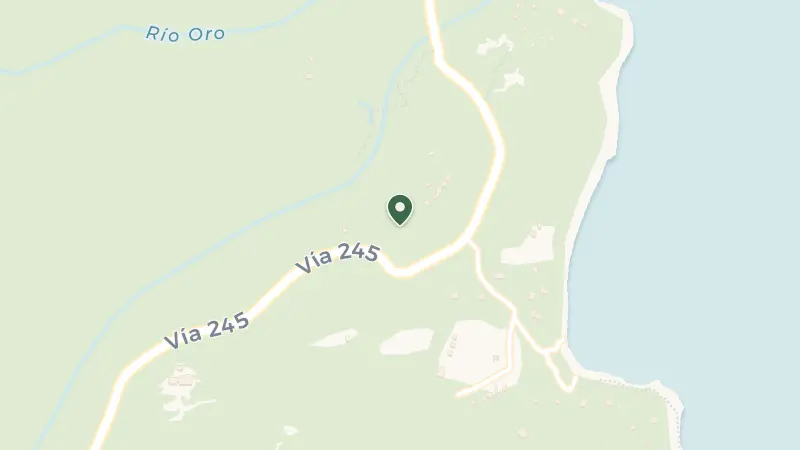
Lapa Rios sits on a private 400-hectare rainforest reserve above the Pacific surf of the Osa Peninsula, where Costa Rica narrows to a wild, roadless finger of jungle between ocean and gulf. The lodge occupies one of the most biodiverse corners of the planet, a corridor between Corcovado National Park and the Golfo Dulce that sustains scarlet macaws, four species of monkey, and an outsized portion of the country's flora and fauna. This is not resort Costa Rica. The approach from Puerto Jiménez, a frontier town fifteen kilometres north serving as the main gateway to Corcovado, winds through palm plantations and coastal forest before climbing into the canopy-draped hills of Matapalo. The air here is thick, layered with bird calls and the distant crash of waves breaking on black sand.
The property overlooks a curve of coastline where jungle meets the sea. Playa Pan Dulce lies half a kilometre below, a quiet stretch reachable by trail through primary forest. Playa Matapalo, three kilometres east, draws surfers to its reef breaks and tidal pools. Between the lodge and the national park, the land remains largely unbroken, a humid expanse where tapirs still move through the understory and jaguars leave tracks in the mud.
Puerto Jimenez Airport sits fifteen kilometres to the northeast, a single-runway strip serving charter flights from San José. Overland access from the capital takes six hours via the coastal highway, crossing the Río Térraba by ferry and following the Pacific edge of the peninsula. Golfito, thirty kilometres northwest across the Golfo Dulce, offers an alternate air connection.
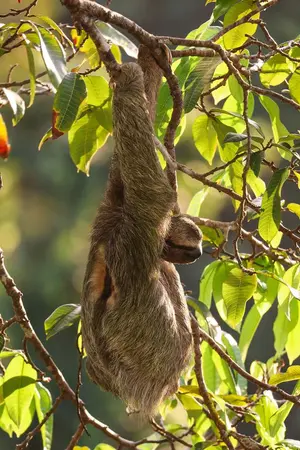
The reserve itself is the primary draw. Guided trails thread through the property's 400 hectares, with naturalists pointing out poison dart frogs, three-toed sloths, and the brilliant flash of morpho butterflies. Early morning walks often yield sightings of scarlet macaws, the lodge's namesake (lapa in local Spanish), as they patrol the canopy in pairs. A waterfall trail leads two kilometres to Cascada King Luis, where a curtain of water drops into a mossy pool. The Refugio Nacional de Vida Silvestre Osa, six kilometres south, extends the habitat into protected coastal wetlands.
Corcovado National Park lies thirty-six kilometres southwest, accessible by boat from Puerto Jiménez or rough road depending on conditions. The park's Sirena station anchors one of the most wildlife-dense zones in Central America. Closer to the property, kayak excursions explore mangrove channels in the Golfo Dulce, where dolphins surface in the calm water. Book a naturalist-led night walk to catch the movements of kinkajous and glass frogs that emerge after dark. Playa Piro, five kilometres down the coast, remains undeveloped, a sweep of sand where olive ridley turtles nest during arribada season.
The dry season stretches from late December through April, when morning light slants hard through the canopy and trails dry to passable dust. February and March bring the clearest skies, though humidity remains constant and afternoon heat builds into the low thirties Celsius. This is high season for wildlife watching, when animals concentrate around water sources and visibility improves.
May through November is the green season, when daily rains arrive in the afternoon and the forest erupts in growth. Rivers swell, waterfalls thunder, and wildlife activity peaks. October sees the heaviest downpours, with more than 700 millimetres falling on average, but mornings often break clear and the jungle pulses with life. The shoulder months of May and November split the difference, offering lighter crowds and dramatic cloudscapes.
Temperatures hold steady year-round, hovering near twenty-nine degrees by day and rarely dipping below twenty-three at night. The Pacific moderates extremes, and elevation brings no real relief. The question is not whether it will be warm, but whether you prefer your rainforest dry or drenched.
Frequently Asked Questions

Quotes are personally reviewed by Natasha Hardy, founder of The Uncommon Traveller
5.0 rating · 8 Google reviewsThere is no fee or markup. The hotel pays our commission.
Request a Quote