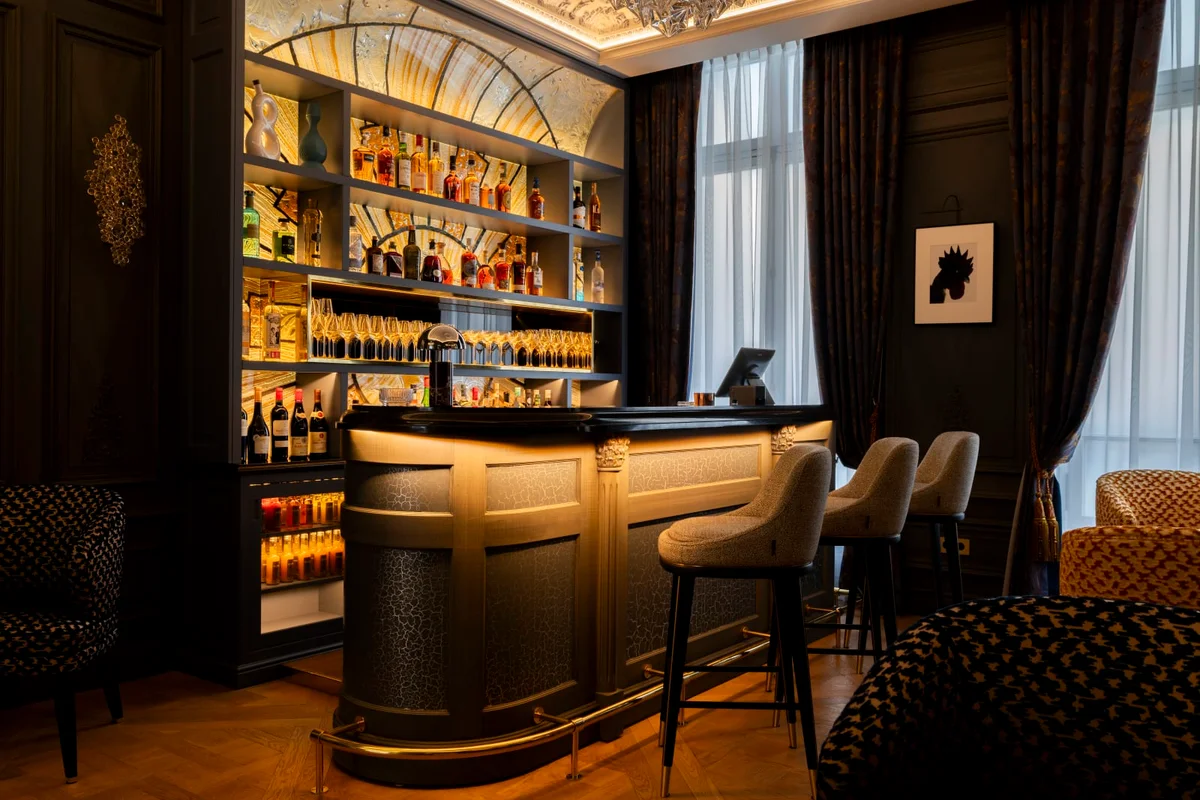
Maison Bauchart
When you book Maison Bauchart in Paris, France, through our Fora Reserve partnership, your stay includes breakfast for two and a food and beverage credit of USD 100 per stay. You also receive early check-in and late check-out when available. No premium credit card or membership needed: request a quote and our advisor books it at the same rate as booking direct.
Exclusive Booking Perks
These perks are included with your stay at the same rate as booking direct with the hotel.
- Early check-in / late check-out (upon availability)
- Complimentary welcome drink upon arrival
- Bauchart breakfast for two, once per stay
- USD 100 F&B credit per stay
Location
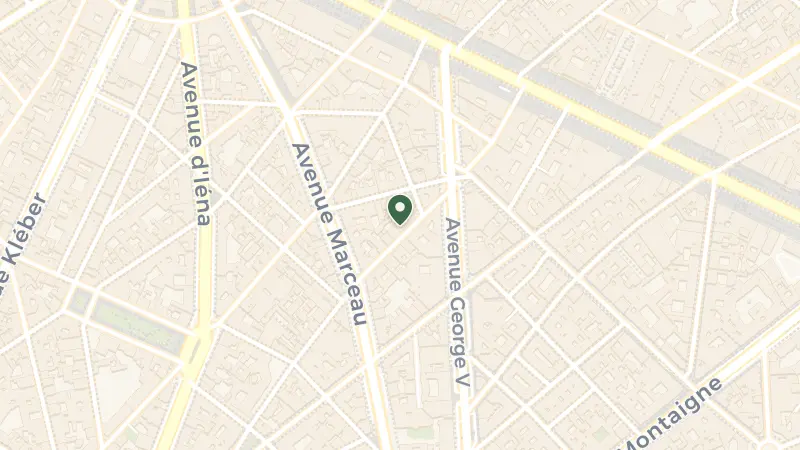
The 8th arrondissement hums with a particular Parisian self-assurance, where the wide Haussmannian boulevards meet the quiet side streets lined with honeyed limestone façades. This is the quartier that gave the world haute couture and the grand café, where the air still carries a faint trace of perfume from the fashion houses clustered around Rue du Faubourg Saint-Honoré. The neighbourhood unfolds from the Champs-Élysées, less than a kilometre west, that great ceremonial axis running from Place de la Concorde to the Arc de Triomphe. Footsteps echo differently here than in the Latin Quarter: more measured, more assured.
Walk five minutes in any direction and you'll find yourself at a tableau that has defined Paris for centuries. The Seine curves two kilometres south, its banks a UNESCO World Heritage corridor stretching from the Louvre to the Eiffel Tower, inscribed for the way the river itself tells the story of the city's evolution. Place de la Concorde spreads to the southeast, its Egyptian obelisk rising from the spot where the guillotine once stood during the Revolution.
The neighbourhood's nineteenth-century bones, courtesy of Baron Haussmann's surgical renovation, make orientation instinctive: straight sightlines, pocket parks appearing at precise intervals, the Métro's Art Nouveau entrances surfacing like iron flowers. Charles de Gaulle Airport lies 24 kilometres northeast, accessible via the RER B line, while closer Orly sits 16 kilometres south.
Le Cinq commands the nearby Four Seasons George V, a hundred metres from the hotel, where Christian Le Squer's three-starred modern cuisine unfolds beneath ornate mouldings and tall flower arrangements, the dining room bathed in soft light from an interior garden. Pierre Gagnaire's eponymous three-starred restaurant sits 430 metres away, its creative plates served against a charcoal bestiary by Adel Abdessemed, an urban cave painting that anchors the dining room's aesthetic. Le Gabriel at La Réserve Paris, another three-starred table, is a kilometre southwest in a Napoleon III mansion, Jacques Garcia's swanky interiors framing the kitchen's inventive work. Book a table early; these rooms fill weeks ahead.
Marché Président Wilson spreads its Tuesday and Saturday stalls half a kilometre south, vendors piling heirloom tomatoes and farm cheeses under canvas awnings. The Seine's UNESCO-listed banks begin two kilometres east, where the evolution of Paris etches itself in stone: the Louvre's classical wings, the Place de la Concorde's obelisk, Notre-Dame's Gothic skeleton still rising from scaffolding after the 2019 fire. The Musée de l'Orangerie holds Monet's water lilies in purpose-built oval rooms, natural light washing over the canvases as the painter intended. Versailles sits 15 kilometres southwest, its Hall of Mirrors and André Le Nôtre gardens a half-day excursion by RER C.
Summer stretches from June through August, when temperatures climb into the low twenties and the city empties for les vacances, leaving the wide boulevards quieter than usual. July and August see the least rain of the year, though brief thunderstorms can sweep in on humid afternoons. The light turns golden and diffuse, perfect for long evenings at sidewalk tables.
Spring arrives tentatively in March and builds through May, when the chestnut trees along the avenues burst into white blooms and temperatures settle into the mid-teens. Rain falls steadily but never torrentially, the kind that sends Parisians into their favourite cafés rather than indoors. Autumn mirrors spring's mild rhythm, with September holding onto summer's warmth before the November clouds descend.
Winter, from December through February, turns Paris steely and intimate, temperatures hovering just above freezing. The city takes on a different character: fewer crowds at the museums, shorter queues at the boulangeries, that particular slant of low winter light that makes the limestone façades glow pale gold at four in the afternoon.
Frequently Asked Questions

Quotes are personally reviewed by Natasha Hardy, founder of The Uncommon Traveller
5.0 rating · 8 Google reviewsThere is no fee or markup. The hotel pays our commission.
Request a Quote 47 Bib Gourmand