Qasr Al Sarab Desert Resort by Anantara
When you book Qasr Al Sarab Desert Resort by Anantara in Abu Dhabi, UAE, through our Anantara Journeys partnership, your stay includes daily breakfast for up to two guests and a welcome amenity. You also receive a room upgrade when available. No premium credit card or membership needed: request a quote and our advisor books it at the same rate as booking direct.
Exclusive Booking Perks
These perks are included with your stay at the same rate as booking direct with the hotel.
- Upgrade on arrival, subject to availability
- Daily breakfast for up to two guests per bedroom, served in the restaurant
- Welcome amenity
- One complimentary local experience, exclusive to Anantara Journeys guests
- VIP status with a dedicated property contact and personalized welcome amenities
- 24-hour check-in / check-out, subject to availability
Guest feedback
9.6/10 from 103 guest reviews
Read what guests commentedBy category
Guests liked
- Amazing location
- Incredible friendly and competent staff
Location
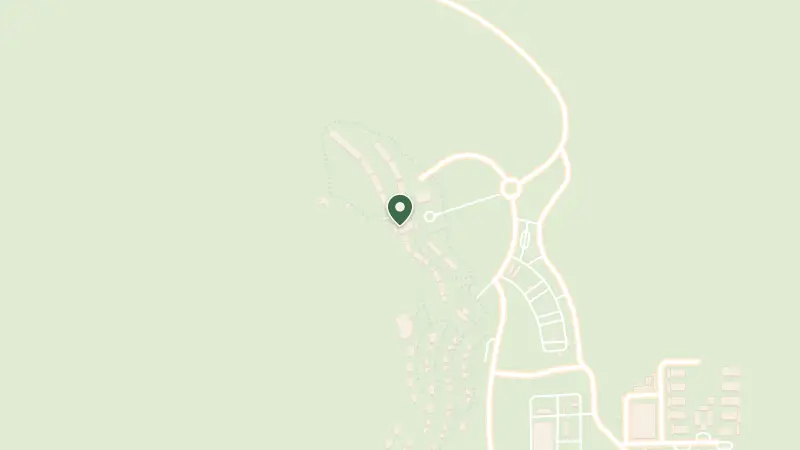
Anantara's philosophy of immersive cultural experiences finds extraordinary expression in the Rub' al Khali, the Empty Quarter, where towering dunes rise like frozen waves beneath an endless sky. Qasr Al Sarab stands two hours south of Abu Dhabi, deep in the world's largest uninterrupted sand desert, where the silence is absolute and the landscape shifts with every wind. This is Arabia as it has existed for millennia: ochre ridges stretching to the horizon, camel tracks threading through the sand, a sense of scale that humbles and exhilarates in equal measure.
The property sits within the Qaser Al Sarab Protected Area, six kilometres of protected desert where Arabian oryx wander and the night sky blazes with stars invisible from any city. The broader Arabian Oryx Protected Area extends for thousands of square kilometres to the south, a UNESCO site that shelters gazelle, sand cats, and the region's reintroduced oryx herds. This is not a desert viewed from a distance but one that surrounds you completely.
Access is via Zayed International Airport, 174 kilometres north in Abu Dhabi, with the drive unfolding from coastal modernity into the deep desert interior. The final approach cuts through dunes that ripple unbroken to every compass point.
The desert itself is the main event. Sunrise camel treks cross ridges where the sand glows rose and gold, while guided nature walks reveal tracks, desert flora, and the surprising resilience of life in the Empty Quarter. Falconry demonstrations connect guests with Bedouin hunting traditions, the birds stooping low over the dunes. Drive forty minutes to witness wild oryx herds in their protected habitat, one of conservation's quiet triumphs. After dark, the sky becomes a planetarium: the Milky Way arcs overhead, and the silence feels sacred.
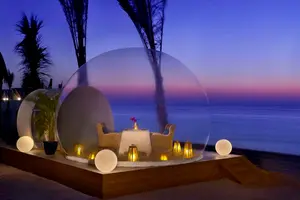
The property's dining draws on Levantine, Arabian, and Indian traditions, with menus that shift between slow-roasted lamb, coastal seafood, and spice-driven curries. Book a private dinner on the dunes at sunset, where low tables are set among lanterns and the horizon bleeds through a dozen shades of amber. The spa offers hammam rituals and treatments using frankincense and rose, a welcome counterpoint to the heat. This is a place to disconnect completely, where the rhythms of the desert replace everything else.
October through March brings the cooler season, with daytime temperatures in the mid-twenties to low thirties and nights that dip pleasantly cool. The light in winter is crystalline, the air dry and comfortable for trekking or riding. This is prime time for desert travel.
April and May see temperatures climbing past forty degrees, the heat building toward summer's intensity. June through September is scorching, with highs above forty and little relief even after sunset. The landscape shimmers, and outdoor activity becomes impractical for all but the most heat-tolerant.
Late autumn, from November onward, strikes the balance: warm days, cool evenings, and skies that deepen to cobalt as the sun sets. The desert feels vast but approachable, the conditions ideal for immersion in the Empty Quarter's stark beauty.
Frequently Asked Questions

Quotes are personally reviewed by Natasha Hardy, founder of The Uncommon Traveller
5.0 rating · 8 Google reviewsThere is no fee or markup. The hotel pays our commission.
Request a Quote