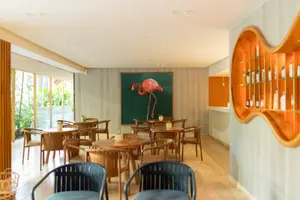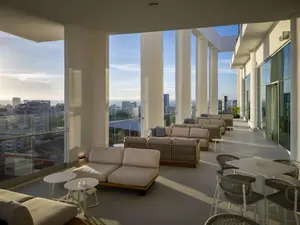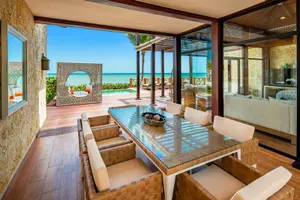
Renaissance Santo Domingo Jaragua Hotel & Casino
When you book Renaissance Santo Domingo Jaragua Hotel & Casino in the Dominican Republic through our Marriott Luminous partnership, your stay includes daily breakfast for two and a welcome amenity. You also receive a room upgrade, early check-in and late check-out when available. No premium credit card or membership needed: request a quote and our advisor books it at the same rate as booking direct.
Exclusive Booking Perks
These perks are included with your stay at the same rate as booking direct with the hotel.
- Welcome amenity
- Complimentary breakfast daily for two guests per room
- Early check-in and late check-out (when available)
- Complimentary upgrade (if available at check-in)
Location
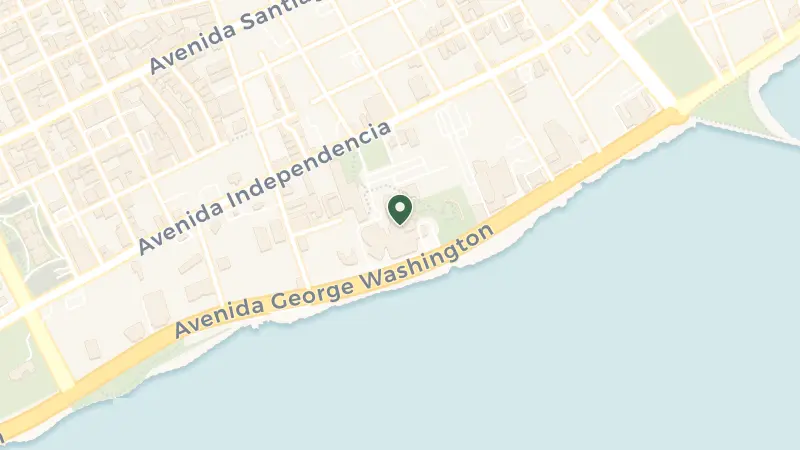
Santo Domingo carries the weight of five centuries with remarkable ease. Founded in 1496, it is the oldest continuously inhabited European settlement in the Americas, where the cobblestones of the Zona Colonial still echo with the footsteps of conquistadors and where the first cathedral, university, and fortress in the New World remain standing. The property sits at the edge of this UNESCO World Heritage district, where colonial architecture in ochre and terracotta unfolds along the west bank of the Ozama River. Walk a few blocks and you are among the landmarks that defined an empire: Fortaleza Ozama, the stone fortress that guarded the Spanish Main, and Alcázar de Colón, Diego Columbus's palace overlooking the water.
Beyond the walled perimeter, the city pulses as the Caribbean's largest metropolis and the Dominican Republic's cultural and financial heart. The Caribbean Sea stretches south, its presence felt in the humidity that softens the air and the breeze that stirs the palms along the Malecón. This is a city where history is not preserved behind velvet ropes but lived in, where baroque facades house contemporary galleries and where the rhythms of merengue spill from open doorways after dark.
Las Américas International Airport lies twenty-five kilometres east; the drive threads through neighbourhoods that shift from colonial grandeur to mid-century sprawl, revealing a city in constant conversation with its past.
The Zona Colonial rewards wandering on foot. Start at the Catedral de Santa María la Menor, the hemisphere's oldest cathedral, where Gothic arches meet Caribbean light. The Museo de las Casas Reales, a 1973 adaptation of colonial-era administrative palaces, offers context on Spanish rule through maps, armour, and the kind of detail that brings the 16th century into sharp focus. For contemporary art, Museo Bellapart, established in 1999, holds a private collection spanning Dominican modernism to the present, a quiet counterpoint to the colonial narrative.
Playa de Güibia, just six hundred metres south, offers a pocket of sand where locals gather at sunset, while Playa de las Tortugas lies nine hundred metres away for a slightly longer stretch. The markets near Plaza Malecon Center and El Parquecito, both just over a kilometre from the property, brim with fruit vendors, artisan stalls, and the kind of improvised commerce that defines Caribbean urban life. Book a table at one of the Colonial Zone's open-air restaurants for sancocho, the seven-meat stew that anchors Dominican Sunday lunches, or mofongo, mashed plantains with garlic and chicharrón. Six kilometres southeast, Parque Nacional Los Tres Ojos descends into a series of limestone caverns and lagoons, their turquoise water filtered through centuries of stone.
Winter and early spring, from December through March, bring the city's coolest and driest weather, with temperatures in the mid-to-high twenties and scant rainfall. The light turns sharp and golden, ideal for walking the Colonial Zone without the haze of humidity.
April through June marks the humid build-up, with temperatures climbing into the low thirties and afternoon thunderstorms that arrive suddenly and depart just as fast, leaving the streets steaming. The rain brings bursts of green to the plazas and a slower rhythm to the afternoons.
July through November sees the warmest temperatures, peaking above thirty degrees, and the heaviest rains, particularly in October. This is hurricane season, though direct strikes are rare. The air feels thick, the city slower, but the colours deepen: the ochre walls glow against storm clouds, and the Caribbean takes on shades of pewter and jade.
Frequently Asked Questions

Quotes are personally reviewed by Natasha Hardy, founder of The Uncommon Traveller
5.0 rating · 8 Google reviewsThere is no fee or markup. The hotel pays our commission.
Request a Quote