Sugar Beach, A Viceroy Resort
When you book Sugar Beach, A Viceroy Resort in Saint Lucia, through our Virtuoso partnership, your stay includes daily buffet breakfast for up to two guests and a $100 USD resort or hotel credit. You also receive a room upgrade, early check-in and late check-out when available. No premium credit card or membership needed: request a quote and our advisor books it at the same rate as booking direct.
Exclusive Booking Perks
These perks are included with your stay at the same rate as booking direct with the hotel.
- Upgrade on arrival, subject to availability
- Daily Buffet breakfast for up to two guests per bedroom, served in the restaurant
- $100 USD equivalent Resort or Hotel credit to be utilized during stay (not combinable, not valid on room rate, no cash value if not redeemed in full),
- Early Check-In / Late Check-Out subject to availability
Guest feedback
9.2/10 from 382 guest reviews
Read what guests commentedBy category
Guests liked
- Stunning location between the Pitons
- Beautiful views
- Very friendly and attentive staff (butlers noted)
Points to consider
- Food and buffet perceived as expensive
- Value for money questioned by several guests
- Beach described by one guest as not fully paradisiacal for the price
Location
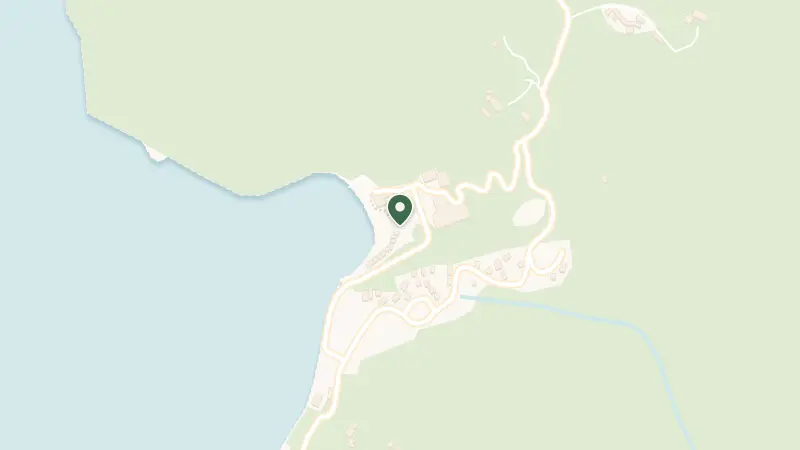
The property sits on the southwestern coast of Saint Lucia, in the shadow of the island's most dramatic natural landmark: the Pitons. These twin volcanic spires rise directly from the Caribbean Sea, their forested slopes dominating the horizon. The wider Pitons Management Area, a UNESCO World Heritage Site since 2004, protects nearly three thousand hectares of marine and terrestrial ecosystems, from coral reefs to volcanic vents. Saint Lucia itself carries the remnants of centuries of colonial rivalry, control passing between France and Britain fourteen times before British rule settled in 1814. That history lingers in place names, Creole patois, and the island's nickname: Helen of the West, after the face that launched a thousand ships.
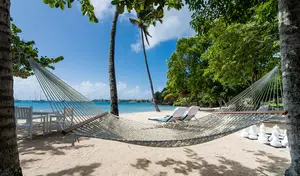
The hotel occupies a narrow valley between Gros Piton and Petit Piton, on a stretch of coast once known for its wild, difficult-to-reach beauty. The beach here is a pale crescent of sand framed by jungle and volcanic rock. Soufrière, the nearest town three kilometres north, is a fishing port and historic capital with a Saturday market and colonial-era architecture.
Hewanorra International Airport lies sixteen kilometres south along the coast road, a drive that winds through rainforest and coastal villages. George F. L. Charles Airport, twenty-three kilometres north in Castries, serves regional flights.
The immediate landscape is an outdoor catalogue: Sugar Beach stretches a hundred metres from the property, while Malgretoute Beach lies under two kilometres south. Waterfalls thread through the interior, Piton Falls and Sapphire Waterfall both within a short drive inland, their pools fed by volcanic springs. The Tet Paul Nature Trail, just over a kilometre away, climbs to ridge-top views across both Pitons and the southern coastline. Soufrière's Saturday vegetable market brings farmers down from the interior with dasheen, christophene, and fresh cocoa pods. Book a guide for the hike up Gros Piton if you want the full ascent, or stay low and explore the dive sites along Anse Chastanet, where coral walls drop into open water four kilometres north.
The Pitons Management Area protects not only the spires themselves but the marine reserve surrounding them, rich with tarpon, sea turtles, and black coral. Diamond Falls, three kilometres inland, runs through gardens planted with hibiscus and heliconia, the water tinted ochre by mineral deposits. Toraille Falls, slightly farther, is less cultivated, a curtain of water you can stand beneath. The town of Soufrière retains wooden Creole houses and a working fishing harbour, the kind of place where boats come in at dawn with marlin and mahi-mahi still on deck.
January through April is the dry season, when the Pitons stand sharp against cloudless skies and the air carries less weight. Temperatures hold steady near twenty-eight degrees, the water calm enough for snorkelling without chop. This is high season, when North American winter drives visitors south.
May through August brings warmer days, the thermometer edging toward thirty degrees, and afternoon showers that blow through fast. The island turns a deeper green. Rain peaks in September and October, when tropical systems track across the Caribbean and humidity thickens.
November and December ease back into drier conditions, the landscape still lush from the wet months but the skies clearing. Light slants lower in the afternoons, softening the volcanic ridges. This is when the island feels less crowded, though temperatures remain warm enough for open-water swimming.
Frequently Asked Questions

Quotes are personally reviewed by Natasha Hardy, founder of The Uncommon Traveller
5.0 rating · 8 Google reviewsThere is no fee or markup. The hotel pays our commission.
Request a Quote