The Glasshouse
When you book The Glasshouse in Edinburgh, Scotland, through our Marriott Luminous partnership, your stay includes daily breakfast for two and a welcome amenity. You also receive a room upgrade, early check-in and late check-out when available. No premium credit card or membership needed: request a quote and our advisor books it at the same rate as booking direct.
Exclusive Booking Perks
These perks are included with your stay at the same rate as booking direct with the hotel.
- Welcome amenity
- Complimentary breakfast daily for two guests per room
- Early check-in and late check-out (when available)
- Complimentary upgrade (if available at check-in)
Location
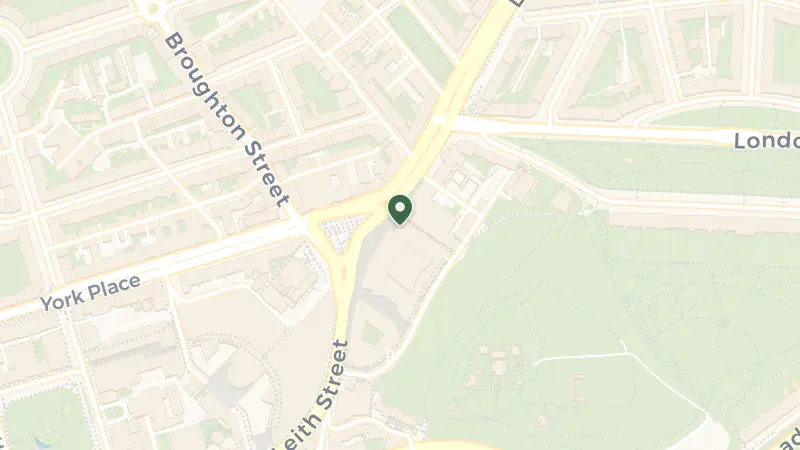
The Glasshouse occupies a distinctive perch at the edge of Edinburgh's Broughton district, where the Georgian civility of the New Town begins to soften into the bohemian texture of this historically working-class neighbourhood. Once a feudal barony outside the city walls, Broughton was folded into Edinburgh's fabric during the 18th-century expansion that made the Scottish capital what it is today: a city of two faces, medieval and neoclassical, pressed together on a volcanic ridge. The surrounding streets hold independent galleries, vintage shops, and the kind of corner pubs where conversations spill onto cobbled pavements on summer evenings. The property sits within easy reach of Calton Hill's monuments and panoramic views, while the Royal Mile and Old Town's medieval closes lie just beyond.
Greenside Row, the hotel's address, traces the former boundary between planned elegance and organic sprawl. Walk south and you cross into the UNESCO-listed New Town, its crescents and circuses designed by James Craig in the 1760s. Walk north and you find Broughton's lived-in vitality, the Edinburgh Museums collection centre, and the Glasite meeting house, remnant of an 18th-century Christian sect. Edinburgh Airport lies twelve kilometres west, connected by express tram and bus services that deliver visitors to the city centre in under half an hour.
The property's immediate surroundings reward exploration on foot, with LYLA three hundred metres away on a Georgian terrace, where the kitchen's dedication to Scottish seafood has earned a Michelin star. Crab from Orkney, langoustines from the Minch, and razor clams handled with restraint and precision. A kilometre south, AVERY brings American chef Rodney Wages' creative approach to local produce in a dining room that reflects his decision to transplant his entire operation from across the Atlantic. Timberyard, housed in a converted warehouse one and a half kilometres away, centres its menu on seasonality and minimal intervention, letting Highlands game and Fife vegetables speak without embellishment. Book a table at any of these well ahead.
Beyond the plate, the city arranges itself for walking. The Old and New Towns UNESCO site begins two kilometres south, its medieval closes and neoclassical squares telling the story of Scotland's capital in stone. Stockbridge Market, just over a kilometre northwest, fills Sunday mornings with artisan bread, smoked salmon, and the kind of unhurried browsing that defines the neighbourhood. Portobello Beach lies nearly five kilometres east, a stretch of sand where Victorian holidaymakers once promenaded and contemporary Edinburghers still swim year-round in the Firth of Forth's bracing water.
Winter brings short days and pewter skies, temperatures hovering just above freezing. The city takes on a compressed, almost medieval quality in January and February, smoke rising from chimneys, stone buildings glowing amber under street lamps. Spring arrives incrementally, daffodils pushing through Princes Street Gardens in March, café tables reappearing by April as daylight stretches.
Summer never quite shakes Edinburgh's northern temperament. July and August see highs in the mid-teens, perfect for walking the Royal Mile without the sweat, though the Edinburgh Festival fills August with a carnival energy that transforms every available venue into a stage. Autumn is the secret season, September's lingering warmth and October's rust-coloured parks offering clarity before the tourist crush.
December through February tests resolve with wind funnelling off the North Sea, but the Hogmanay celebrations offer compensation: torchlight processions, street parties, the kind of collective revelry that makes cold feet irrelevant. Late spring through early autumn remains ideal, May to October balancing temperate days with the extended northern twilight that turns ten o'clock into a reasonable hour for dinner.
Frequently Asked Questions

Quotes are personally reviewed by Natasha Hardy, founder of The Uncommon Traveller
5.0 rating · 8 Google reviewsThere is no fee or markup. The hotel pays our commission.
Request a Quote 5 Bib Gourmand