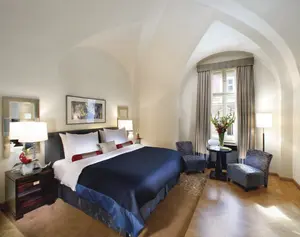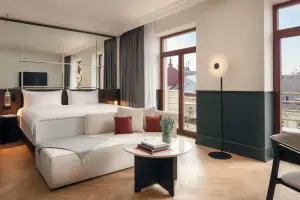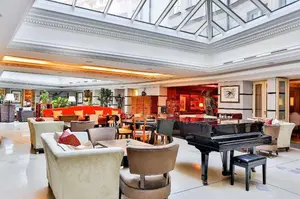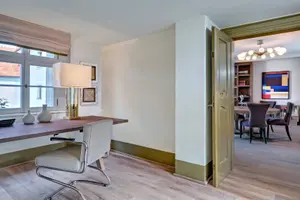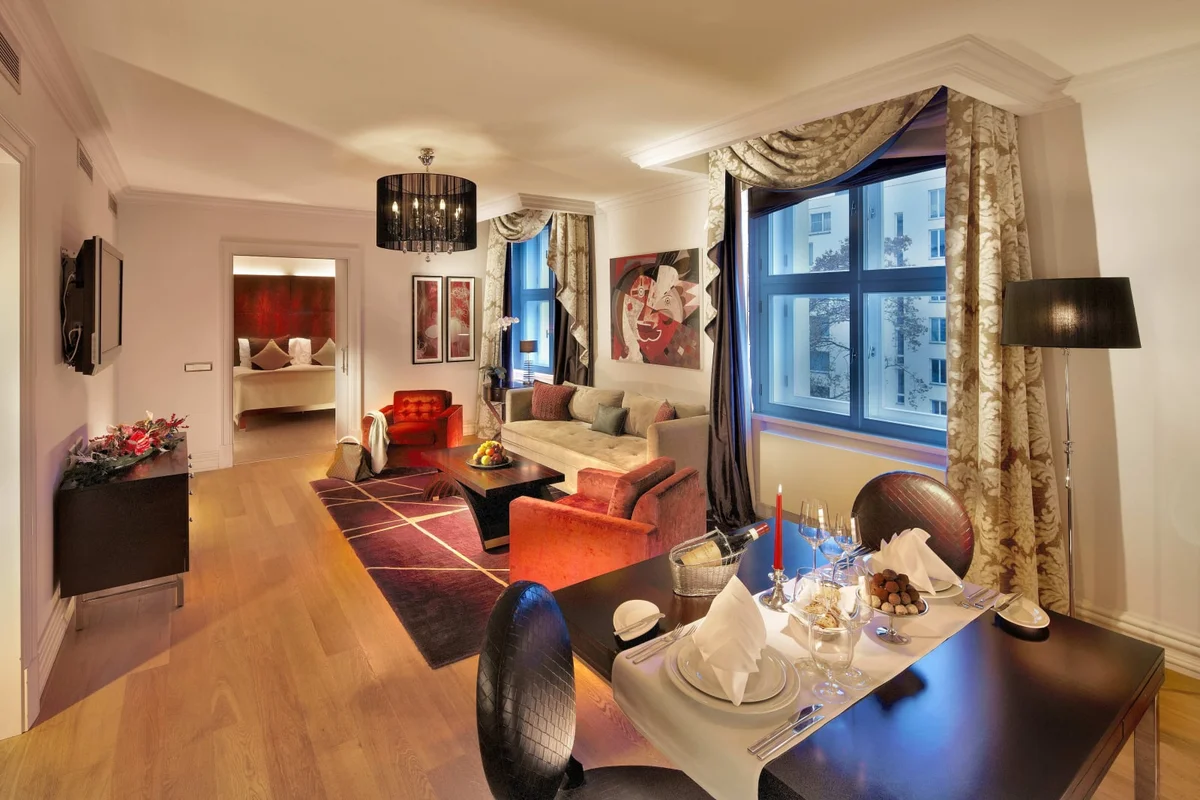
The Grand Mark Prague - The Leading Hotels of the World
When you book The Grand Mark Prague - The Leading Hotels of the World in the Czech Republic through our Leading Hotels of the World partnership, your stay includes daily breakfast. You also receive early check-in and late check-out when available. No premium credit card or membership needed: request a quote and our advisor books it at the same rate as booking direct.
Exclusive Booking Perks
These perks are included with your stay at the same rate as booking direct with the hotel.
- Daily breakfast
- VIP status
- Early check in/Late check out
Guest feedback
9.5/10 from 2,869 guest reviews
By category
Guests liked
- Exceptional service
- Great location
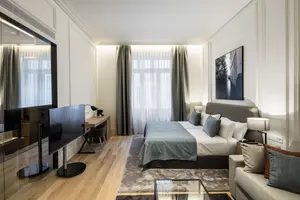
- Clean and spacious rooms
Points to consider
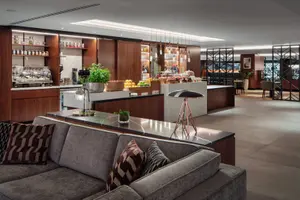
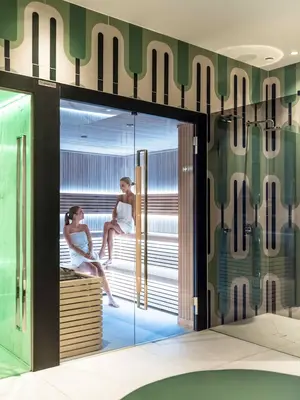
- Limited amenities
- Small gym
- Restaurant menu variety
Location
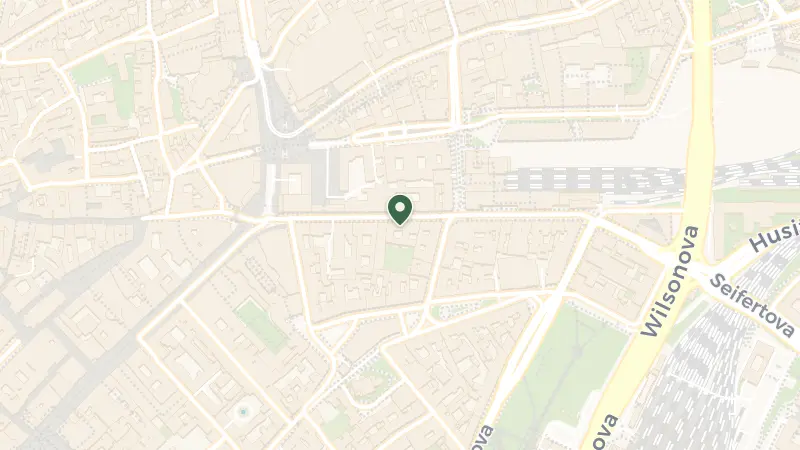
New Town may call itself young, but these streets carry weight. Founded in 1348 by Charles IV, this quarter unfurled eastward and southward from the medieval Old Town's walls, claiming an expanse three times its size. What survives from that century is mostly ecclesiastical: churches that endured wars and occupations while the surrounding buildings cycled through renewal. Today, the district holds a steady hum, a blend of trams rattling over cobblestones, Art Nouveau façades catching afternoon sun, and the scent of trdelník drifting from street corners. Náměstí Republiky, the neighbourhood market, lies just two hundred metres away. Havelské tržiště follows half a kilometre south, its stalls spread beneath the towers of the Old Town.
The Historic Centre of Prague, a UNESCO World Heritage Site inscribed in 1992, encompasses this quarter along with the Old Town and Lesser Town. The assembled cityscape dates from the 11th to 18th centuries, layers of Gothic, Baroque, and Renaissance architecture reflecting the city's pull as a cultural capital across the Hapsburg and Bohemian eras. Charles Bridge crosses the Vltava a kilometre west. Václav Havel Airport Prague sits twelve kilometres northwest, with direct highway access making the transfer straightforward.
La Degustation Bohême Bourgeoise, less than a kilometre from the property, brings contemporary technique to Czech tradition under one Michelin star, its open kitchen visible from the L-shaped dining room housed in a handsome historical building. Book a table at Casa De Carli, where Matteo De Carli and his wife Lenka Hermanová serve Italian cooking refined through global experience, the walk-in wine fridge a theatre of bottles reflecting serious cellar curation. Further afield, Restaurant Papilio in a château nineteen kilometres out transforms former stables into a two-starred dining room with groin-vaulted ceilings painted white, Jan Knedla orchestrating eight or ten courses from the open kitchen.
The city's markets reveal the Czech palate beyond the dining room. Havelské tržiště, eight hundred metres away, spreads fruit, flowers, and smoked meats beneath faded awnings, while Holešovická tržnice to the north fills warehouse halls with vintage dealers and street food vendors. The Vltava offers unexpected immersion: dive operators run excursions beneath Charles Bridge, exploring submerged statues and the river's murky archaeology. River marinas along Rašínovo nábřeží provide gentler escapes, boarding points for cruises past wooded islands and the castle's floodlit silhouette after dark.
Winter settles hard over Prague. January and February hover just above freezing by day, dipping below at night, with frost lacing the cobblestones and chimney smoke hanging in the still air. Snow dusts the rooftops intermittently, but the city rarely sees deep accumulation. The bone-chill is dry, cutting.
Spring arrives slowly. March thaws but remains unpredictable; April opens the cafés onto pavements again. By May, chestnut trees along the Vltava are in full bloom, and temperatures push toward twenty degrees. Summer peaks in July with warmth that never quite becomes oppressive. Evenings stay long and golden, ideal for rooftop dinners or riverside walks. Rain comes in brief, heavy bursts, mostly in late spring and early summer.
Autumn is the city's most elegant season. September offers warm days without the tourist press of high summer, while October brings crisp mornings and that slant of amber light that makes the Baroque façades glow. By November, the air turns sharp again, and the Christmas markets begin their setup.
Frequently Asked Questions

Quotes are personally reviewed by Natasha Hardy, founder of The Uncommon Traveller
5.0 rating · 8 Google reviewsThere is no fee or markup. The hotel pays our commission.
Request a Quote 8 Bib Gourmand