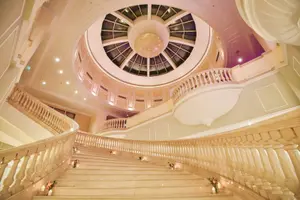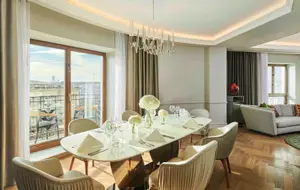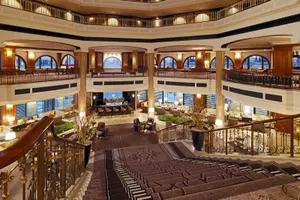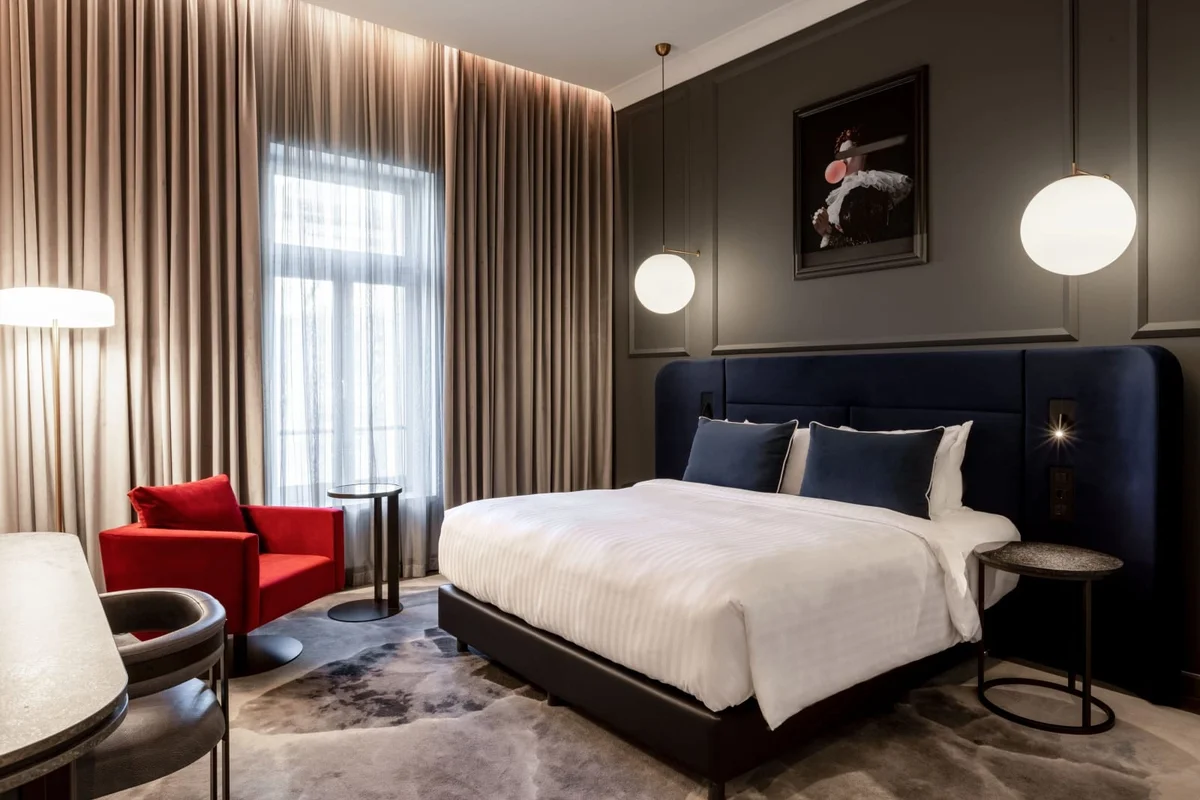
The Marmorosch Bucharest
When you book The Marmorosch Bucharest in Romania through our Marriott Luminous partnership, your stay includes daily breakfast for two and a welcome amenity. You also receive a room upgrade, early check-in and late check-out when available. No premium credit card or membership needed: request a quote and our advisor books it at the same rate as booking direct.
Exclusive Booking Perks
These perks are included with your stay at the same rate as booking direct with the hotel.
- Welcome amenity
- Complimentary breakfast daily for two guests per room
- Early check-in and late check-out (when available)
- Complimentary upgrade (if available at check-in)
Location
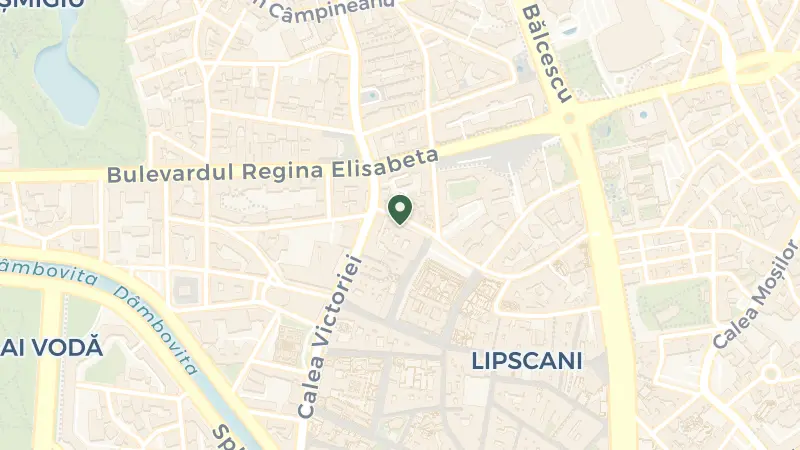
The Marmorosch Bucharest occupies the heart of Centrul Istoric, the Old Town whose Belle Époque grandeur earned the city its "Paris of the East" nickname before war and dictatorship left their marks. Here, the weight of history presses close: the colossal Palace of the Parliament looms nearby, a monument to megalomania visible from blocks away, while the Yeshua Tova Synagogue and Templul Coral recall the once-thriving Jewish quarter that flourished along these cobbled lanes. The Dâmbovița River curves just beyond, its embankments now lined with debarcaders where small boats depart for canal tours through the city's quieter quarters.
Walk these streets and you'll find layers: Art Nouveau façades beside Brutalist concrete, the Crețulescu Palace standing elegant near the National Museum of Art's grand neoclassical halls, the Jewish Museum housed in an 1850 structure chronicling centuries of community life. The neighbourhood hums with the energy of a capital rediscovering its cosmopolitan past, cafes spilling onto pavements, galleries occupying reclaimed industrial spaces.
Henri Coandă International Airport lies fifteen kilometres north, connected by express train and taxi. Băneasa Airport, eight kilometres away, handles regional traffic and private charters.
The Romanian Peasant Museum, founded in 1906, offers a counterpoint to urban grandeur: folk costumes, carved wooden gates, entire farmhouse interiors transported from Transylvanian villages. Walk twelve minutes north to Piața Amzei, a produce market where vendors sell sheep's cheese, mămăligă cornmeal, and seasonal preserves in glass jars hand-labelled in blocky script. The Zambaccian Museum, a private collector's bequest opened in 1947, hangs Impressionist canvases and Romanian modernists in an intimate villa setting. Book a table at one of the Old Town's cellar restaurants serving sarmale (cabbage rolls) and mititei (grilled sausages), dishes that anchor every family gathering across the country.
The Dimitrie Gusti National Village Museum, established in 1936, sprawls across a lakeside park: dozens of authentic rural structures, from thatched-roof cottages to Orthodox wooden churches, reassembled timber by timber. Debarcader Națiunile Unite, a short stroll along the Dâmbovița, launches canal cruises that glide past forgotten neighbourhoods where pre-war villas survive behind overgrown gardens, a quieter perspective on a city still reconciling its many pasts.
Winter descends sharp and grey, temperatures plunging well below freezing from December through February, frost gilding the boulevards and a brittle quiet settling over the Old Town squares. Snow dusts the Palace of the Parliament's endless terraces, and evenings smell of wood smoke from corner braziers. Spring arrives tentatively in March, temperatures climbing through the teens, chestnuts leafing out along the boulevards, and pavement cafes reclaiming their tables.
Summer blazes hot and dry, highs near thirty degrees in July and August, the city emptying for the coast while those who remain seek shade in museum courtyards and the riverside parks. Autumn brings the city's finest light: mild days in the low twenties through September, golden clarity over the neoclassical façades, and a palpable sense of the cultural season resuming.
Frequently Asked Questions

Quotes are personally reviewed by Natasha Hardy, founder of The Uncommon Traveller
5.0 rating · 8 Google reviewsThere is no fee or markup. The hotel pays our commission.
Request a Quote