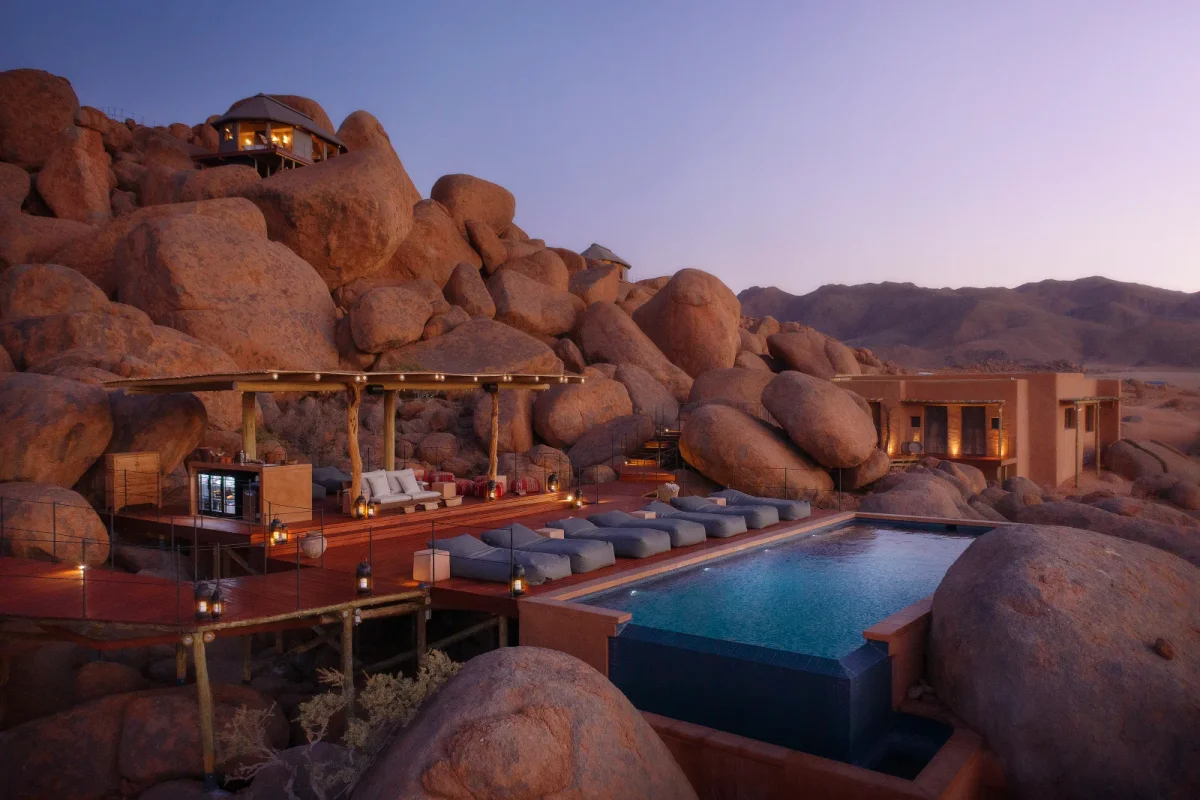
Zannier Sonop
When you book Zannier Sonop in Karas Region, Namibia, through our Fora Rates partnership, your stay includes a welcome treat. You also receive a room upgrade and late check-out when available. No premium credit card or membership needed: request a quote and our advisor books it at the same rate as booking direct.
Exclusive Booking Perks
These perks are included with your stay at the same rate as booking direct with the hotel.
- Full Board
- Guaranteed 2 PM Late Check-Out
- Welcome Treat in Room on Arrival
- $25 Hotel Credit per Person, per Stay (valid towards incidentals)
- Note: Room upgrades are not possible as all room categories are the same.
Location

Zannier Hotels brings its signature philosophy of intimate luxury and environmental integration to one of Africa's most dramatic landscapes: the Namibian desert. This property embodies the brand's commitment to fewer than 40 rooms, locally sourced materials, and architecture that vanishes into the surrounding wilderness rather than dominating it.
The ǁKharas Region is Namibia's largest and least populated territory, a vast expanse of ochre sand dunes, granite outcrops, and silence so complete it becomes its own presence. This is the southern reach of the Namib, the world's oldest desert, where dunes sculpted over millennia meet a sky so clear the Milky Way casts shadows at night. The nearest substantial settlement, Keetmanshoop, lies far to the northeast; out here, the only permanent residents are oryx, springbok, and the occasional desert-adapted elephant.
The NamibRand Nature Reserve stretches across 36 kilometres of protected wilderness to the north, a landscape of shifting sands and ancient mountains. Lüderitz, the colonial-era harbour town on the Atlantic coast, sits 162 kilometres west through terrain that shifts from sand sea to salt pan. Access is via Luderitz Airport, with most guests arriving by light aircraft that skims low over dunes the colour of burnt sienna.
The property sits within walking distance of some of southern Africa's most pristine desert landscapes, where the day's rhythm is dictated by light rather than clocks. Sunrise hikes climb granite kopjes for views across an ocean of sand; the silence at the summit is profound, broken only by wind over stone. The NamibRand Nature Reserve, 36 kilometres north, protects one of the planet's last International Dark Sky Reserves, where guided night walks reveal constellations invisible in the northern hemisphere and the spectacle of planets rising over dunes.
Afternoon game drives track desert-adapted wildlife, oryx and springbok that survive without surface water, their movements dictated by moisture in desert grasses. Book a sundowner drive to watch the dunes shift from gold to crimson as the light drops, a whisky in hand and the temperature plummeting with the sun. Hot air balloon flights launch at dawn, drifting silent over the dune sea while shadows stretch kilometres across the valley floors.
Summer (December through March) brings scorching days above 30 degrees and dramatic afternoon thunderstorms that turn dry riverbeds into temporary torrents, the desert briefly green with life. The air shimmers with heat; wildlife retreats to shade until dusk.
Winter (June through August) sees crystal-clear days around 22 degrees and nights that drop near freezing, the cold so dry it feels sharp in the lungs. This is peak season: the light at dawn and dusk turns the dunes impossibly vivid, and the lack of haze makes stargazing transcendent.
Spring (September through November) offers the ideal compromise, warm days climbing into the high twenties and comfortable nights, the desert at its most photogenic before summer's heat softens the edges.
Frequently Asked Questions

Quotes are personally reviewed by Natasha Hardy, founder of The Uncommon Traveller
5.0 rating · 8 Google reviewsThere is no fee or markup. The hotel pays our commission.
Request a Quote