1 Hotel Copenhagen
When you book 1 Hotel Copenhagen in Denmark through our Enhanced Rates partnership, your stay includes a food and beverage credit of DKK 300. You also receive a room upgrade, early check-in and late check-out when available. No premium credit card or membership needed: request a quote and our advisor books it at the same rate as booking direct.
Exclusive Booking Perks
These perks are included with your stay at the same rate as booking direct with the hotel.
- DKK 300 F&B credit
- Room upgrade, subject to availability
- Early check-in and late check-out, subject to availability
Guest feedback
8.8/10 from 54 guest reviews
By category
Guests liked
- Friendly staff
- Great breakfast
- Stylish decor
Points to consider
- Cleaning issues
- Occasional service lapses
Location
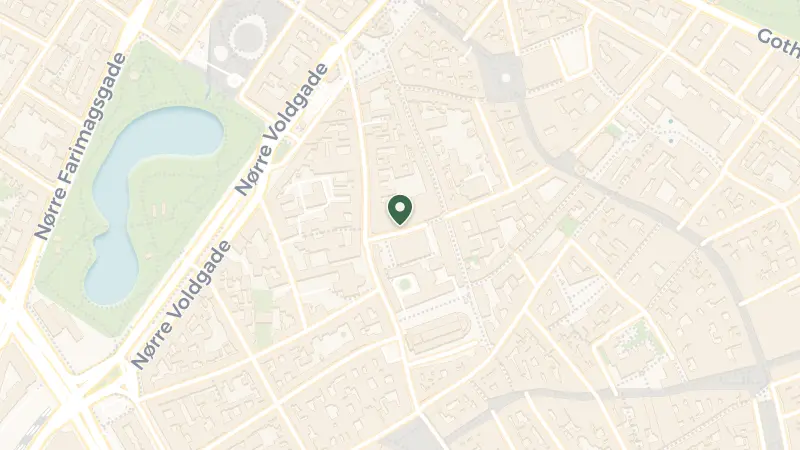
The Nørrevold neighbourhood sits at the northern edge of Indre By, Copenhagen's historic core, where medieval ramparts once defined the city limits. Today, this compact district hums with cafés, independent boutiques, and centuries-old townhouses painted in muted Scandinavian tones. The streets bend and narrow as they follow the ghost of old fortifications, opening onto sudden glimpses of canal water and copper-green spires. Gammel Strand, the Viking fishing village that seeded the city in the 10th century, lies just south; walk ten minutes in any direction and you'll encounter the Renaissance grandeur of Frederiksstaden or the waterfront stretch of Nyhavn with its painted gable houses.
Copenhagen became Denmark's capital in the early 15th century, then served as the seat of the Kalmar Union, governing much of the Nordic region. That legacy persists in the architecture: the Royal Theatre, the Royal Academy of Fine Arts, and the vaulted cellars of medieval merchant houses still anchor the city centre. The Øresund strait glints to the east, with Sweden visible across the water on clear mornings.
Kastrup Airport lies nine kilometres southeast, connected by metro in under fifteen minutes. The city's walkability makes most explorations a matter of bridging canals and crossing cobbled squares rather than hailing cars.
Within a kilometre, Kong Hans Kælder occupies a 12th-century cellar, its vaulted brick arches framing two Michelin stars' worth of modern French cooking delivered by an attentive team. The intimate, candlelit space feels like dining in a wine merchant's vault. For three-star ambition, Geranium commands the eighth floor of Parken Stadium two and a half kilometres north, where Rasmus Kofoed orchestrates luxurious, world-class tasting menus that justify the unlikely setting. Seven and a half kilometres out, Jordnær showcases Eric Kragh Vildgaard's technical prowess in bold, seafood-and-vegetable-forward dishes. Book well ahead for any of these.
The Torvehallerne Street Market, four hundred metres away, channels Copenhagen's obsession with seasonal produce and smørrebrød under glass-and-iron roofs. Nyhavn's postcard marina, just over a kilometre distant, swarms with tour boats and outdoor tables in summer; locals gravitate instead to the grittier creativity of Reffen, a street-food market nearly three kilometres south on Refshaleøen, built from shipping containers and open-air kitchens. For a Nordic rarity, CopenHill offers year-round skiing on a synthetic slope atop a waste-to-energy plant three kilometres away, smoke rings puffing gently from its chimney.
Winter drapes the city in short, pewter-grey days. January and February hover just above freezing, the canals occasionally icing over, the streets glittering with frost under amber streetlamps. Afternoons feel borrowed from twilight by three o'clock.
Spring arrives cautiously in April and May, temperatures climbing into the mid-teens, the city parks flushing green as café tables reappear on cobblestones. By June, the solstice stretches daylight past ten in the evening, and the harbour fills with swimmers braving the Baltic chill.
July and August bring the warmest weather, low twenties and humid, but also the most rain. September holds the sweet spot: mild temperatures, thinner crowds, and the slanting northern light that makes every brick façade glow. Visit then, or in late spring, when the city shakes off its woollens without surrendering its moodiness.
Frequently Asked Questions

Quotes are personally reviewed by Natasha Hardy, founder of The Uncommon Traveller
5.0 rating · 8 Google reviewsThere is no fee or markup. The hotel pays our commission.
Request a Quote 29 Bib Gourmand