Hotel Sanders
When you book Hotel Sanders in Copenhagen, Denmark, through our Virtuoso partnership, your stay includes daily full breakfast for up to two guests and a $100 USD food and beverage credit. You also receive a room upgrade, early check-in and late check-out when available. No premium credit card or membership needed: request a quote and our advisor books it at the same rate as booking direct.
Exclusive Booking Perks
These perks are included with your stay at the same rate as booking direct with the hotel.
- Upgrade on arrival, subject to availability
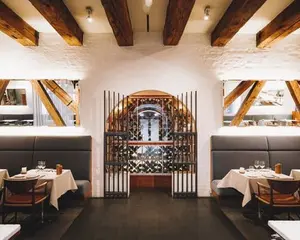
- Daily Full Breakfast for up to two guests per bedroom, served in the restaurant
- $100USD equivalent Food & Beverage credit utilized during stay (not combinable, not valid on room rate, no cash value)
- Early Check-In / Late Check-Out, subject to availability
Guest feedback
9.0/10 from 705 guest reviews
By category
Guests liked
- Great location
- Friendly staff
- Good food quality
Points to consider
- Small rooms
- Expensive for the value
- Some maintenance issues
Location
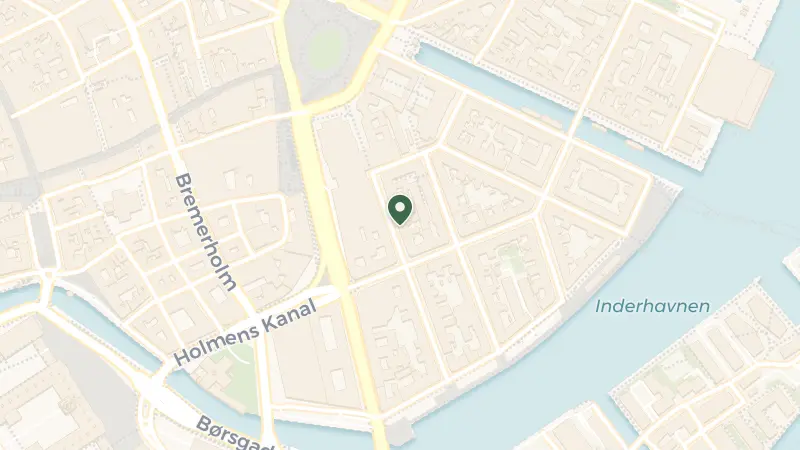
Copenhagen sits at the threshold between land and water, its DNA shaped by canals, bridges, and the Øresund strait that separates Denmark from Sweden. The city began as a 10th-century Viking fishing settlement near what is now Gammel Strand and became Denmark's capital in the early 15th century. The property occupies Gammelholm and Christianshavn, a neighbourhood defined by its nautical character. Christianshavn itself rests on artificial islands built in the early 17th century by Christian IV as an extension of the city's fortifications, modelled after Dutch merchant towns with their canal-lined streets and low-slung buildings. The result is a district that feels distinct from the rest of Copenhagen, quieter and more intimate, with water reflecting the changing northern light at every turn.
Nyhavn, the famously colourful harbour with its gabled townhouses and moored wooden ships, lies 300 metres away. The Royal Danish Theatre anchors the cultural life of the immediate area, its grand façade a reminder of the city's 18th-century flowering as Scandinavia's cultural heart. Walk in any direction and you encounter layers of history: the Renaissance elegance of Frederiksstaden, the medieval origins of Gammel Strand, the modernist confidence of contemporary Danish design shops and bakeries.
Copenhagen Airport sits eight kilometres south, connected by train in under 15 minutes. The Øresund Bridge links the city to Malmö by rail and road, making southern Sweden an easy excursion.
Christianshavn's canals invite slow exploration on foot or by rented kayak, the water reflecting brick façades and wrought-iron balconies. Kadeau Copenhagen, 680 metres away, holds three Michelin stars and translates the wild ingredients of Bornholm into sophisticated plates that feel both grounded and inventive. Book a table at Geranium, three kilometres north on the eighth floor of Parken Stadium, where Rasmus Kofoed's three-star cuisine unfolds in a procession of bold, technically precise compositions. Jordnær, 8.3 kilometres out, offers another three-star experience built on impeccable seafood and vegetables.
Nyhavn's waterfront stretches just beyond the property, its timber ships and outdoor tables alive with chatter in warmer months. Walk 1.3 kilometres to Torvehallerne Street Market for smørrebrød piled with fried fish or pickled herring. The Reffen street food market, 2.2 kilometres southeast, operates in reclaimed shipping containers along the harbour. For a singular Copenhagen oddity, ski or hike the artificial slope at CopenHill, a waste-to-energy plant topped with a dry ski run, 2.2 kilometres west.
Winter settles over Copenhagen with short days and long blue hours. Temperatures hover just above freezing from December through February, and the canals sometimes ice over. The city turns inward: candlelit cafés, woolly layers, the glow of hygge against the dark. Spring arrives tentatively in April and May, when temperatures climb into the mid-teens and daylight stretches. The streets fill with bicycles again, and outdoor café tables reappear.
Summer, from June through August, brings temperatures into the high teens and low twenties. The light lasts until nearly midnight, and the harbour fills with swimmers jumping from the quays. This is peak season, when Copenhagen feels most alive and most crowded.
Autumn cools quickly. September still holds warmth, but by October the air turns crisp and the leaves along the canals turn copper. November brings rain and shorter days, a prelude to winter's arrival.
Frequently Asked Questions

Quotes are personally reviewed by Natasha Hardy, founder of The Uncommon Traveller
5.0 rating · 8 Google reviewsThere is no fee or markup. The hotel pays our commission.
Request a Quote 29 Bib Gourmand