
Admiral Hotel Manila - MGallery Collection
When you book Admiral Hotel Manila - MGallery Collection in the Philippines through our Accor Preferred partnership, your stay includes daily breakfast for two and a $100 USD hotel credit. You also receive a room upgrade, early check-in and late check-out when available. No premium credit card or membership needed: request a quote and our advisor books it at the same rate as booking direct.
Exclusive Booking Perks
These perks are included with your stay at the same rate as booking direct with the hotel.
- Daily complimentary breakfast for 2, per room
- $100 USD credit to be spent on property (conditions defined at check-in)
- Early check-in & late check-out (upon availability)
- Upgrade at time of check-in (upon availability)
Location
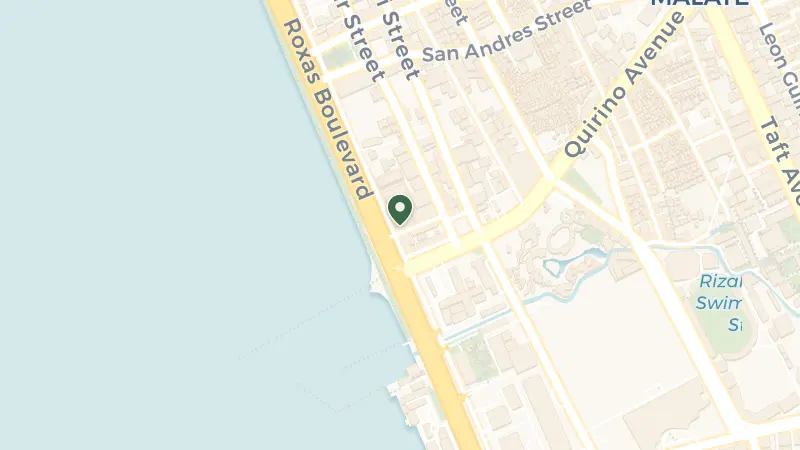
MGallery properties prize local story and architectural character, bringing a sense of place to each stay through design that honours its surroundings. This hotel stands in Malate, a district that shares with neighbouring Ermita the pulse of Manila's commerce and visitor energy. The shoreline of Manila Bay stretches just west, its promenade catching the city's famed sunset light, while the Pasig River winds through the urban fabric to the north. The area hums with street-level commerce, late-night eateries, and the layered textures of a city that has absorbed centuries of influence: Spanish colonial grandeur in nearby Intramuros, American-era boulevards, and the relentless forward momentum of contemporary Southeast Asian urbanism.
Manila's roots reach back to 1258, when a Tagalog polity called Maynila fortified this site. Spanish conquistador Miguel López de Legazpi claimed the settlement in 1571, raising the walled city of Intramuros on the ruins and establishing Manila as the capital of the Spanish East Indies. The galleon trade that followed made this one of the world's first true global cities, linking Asia to the Spanish Americas across the Pacific and completing the planet's first unbroken trade route. That legacy of convergence remains visible in the architecture, the cadence of daily life, and the way Manileños navigate their densely woven, resolutely cosmopolitan home.
Ninoy Aquino International Airport lies seven kilometres southeast, a quick taxi ride through traffic-choked boulevards that ease as you approach the bay.
The dining landscape around this property rewards ambition. Two and a half kilometres north, Celera translates as "appetite" in Malay, and the dimly lit, black-toned space with its open kitchen delivers contemporary Asian cooking that pulls from Japan, China, Singapore, and beyond. Helm, 4.4 kilometres away and holding two Michelin stars, reflects its chef's half-British, half-Filipino heritage through seasonal set menus that range from street-food homage to film-inspired surprises. Kása Palma, 5.3 kilometres distant, wraps diners in straw cloche lamps and shell-lined walls while Chef Isip deploys French technique over wood fire, weaving in Latin American and Southeast Asian notes. Book a table at any of these well in advance.
Beyond the table, Intramuros beckons three kilometres north, where the Baroque Churches of the Philippines (a UNESCO World Heritage designation from 1993) showcase Spanish colonial reinterpretation of European forms under tropical skies. The Manila Yacht Club sits 300 metres from the property, its moorings a gateway to Manila Bay's waterborne rhythm. Weekend markets animate the neighbourhoods: Legazpi Sunday Market (3.8 kilometres) and Salcedo Saturday Market (4.1 kilometres) both draw vendors peddling regional produce, fresh lumpia, and sinigang spices. For those inclined toward quieter pursuits, Hinulugang Taktak waterfall lies 19.9 kilometres northeast, a break from the city's relentless density.
January through March brings Manila's driest, most forgiving weather. Mornings start warm, highs nudging past 30°C by March, and the air holds little threat of rain. Streets buzz without the sodden weight of the monsoon months, and outdoor strolls along the bay feel manageable even at midday.
April and May turn hot and humid, temperatures peaking above 33°C in April before the southwest monsoon arrives in June. From June through September, rain arrives in earnest, drumming on rooftops and pooling in low-lying streets. The city slows slightly, its colours deepening under grey skies, though indoor cultural pursuits and covered markets remain fully accessible.
October through December sees rainfall taper, the city drying out as the year winds down. November and December offer a return to balmy, rain-light days, ideal for exploring Intramuros or catching the bay's celebrated sunsets without the punishing heat of spring or the monsoon's deluge.
Frequently Asked Questions

Quotes are personally reviewed by Natasha Hardy, founder of The Uncommon Traveller
5.0 rating · 8 Google reviewsThere is no fee or markup. The hotel pays our commission.
Request a Quote 19 Bib Gourmand