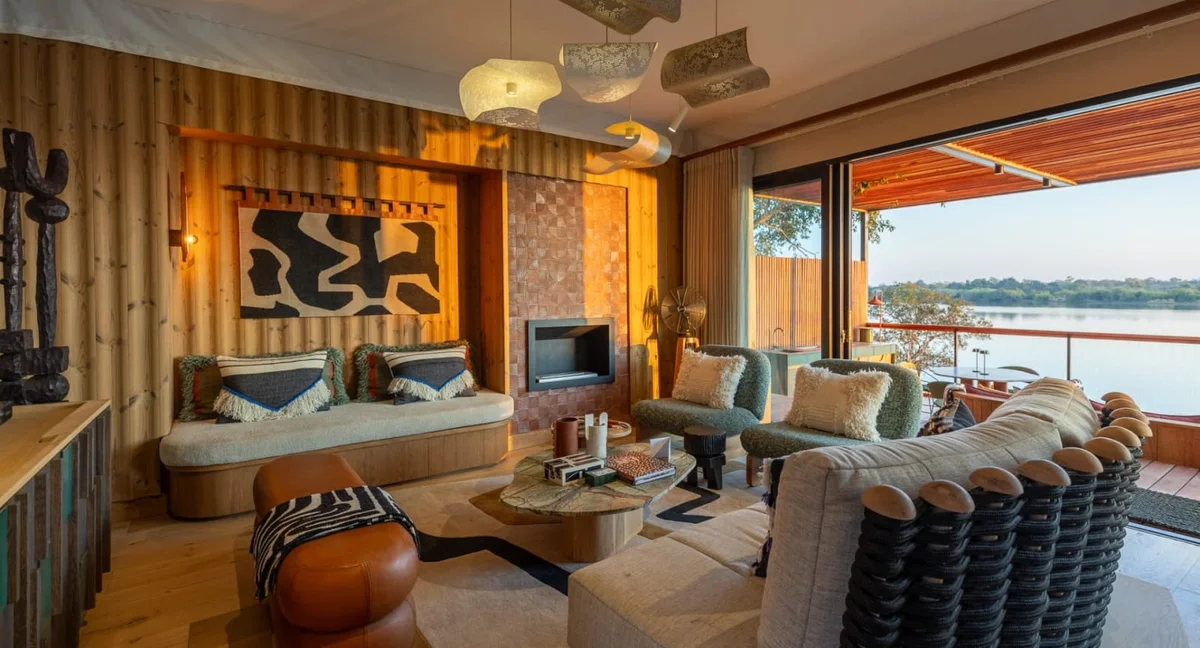
Anantara Kafue River Tented Camp
When you book Anantara Kafue River Tented Camp in Zambia through our Virtuoso partnership, your stay includes daily full breakfast for up to two guests and a personalized welcome gift. You also receive early check-in and late check-out when available. No premium credit card or membership needed: request a quote and our advisor books it at the same rate as booking direct. Plus, for a limited time, a complimentary night is included with your stay.
Special Offer: Free night
+ Complimentary night
Exclusive Booking Perks
These perks are included with your stay at the same rate as booking direct with the hotel.
- Upgrade not applicable for this property
- Daily Full breakfast for up to two guests per bedroom, served in the restaurant and via in-room dining
- Bottle of Champagne and Virtuoso F&B amenities upon arrival
- Personalized welcome gift
- 30 minute Foot Spa Ritual in Villa once per stay
- Daily complimentary wellness activity
- Daily sundowner ritual at 05:45pm
- One romantic bath experience with crafted Sparkling wine in the villa followed by Sleep aromatherapy
- Early check-in / Late check-out, subject to availability
Location
Anantara's name translates to "without end" in Sanskrit, a philosophy that feels especially apt at this remote camp along the Kafue River, where the horizon dissolves into unbroken wilderness and the rhythm of days is dictated by wildlife rather than clocks. The property sits within the vast buffer zone of Kafue National Park, one of Africa's largest protected areas, where the river draws elephants, hippos, and crocodiles to its banks and the acacia woodlands harbor leopards and wild dogs. This is Southern Africa at its most elemental: a landscape of miombo forest and seasonally flooded plains that shifts character with the rains, the air thick with the calls of fish eagles and the rustle of unseen animals moving through tall grass.
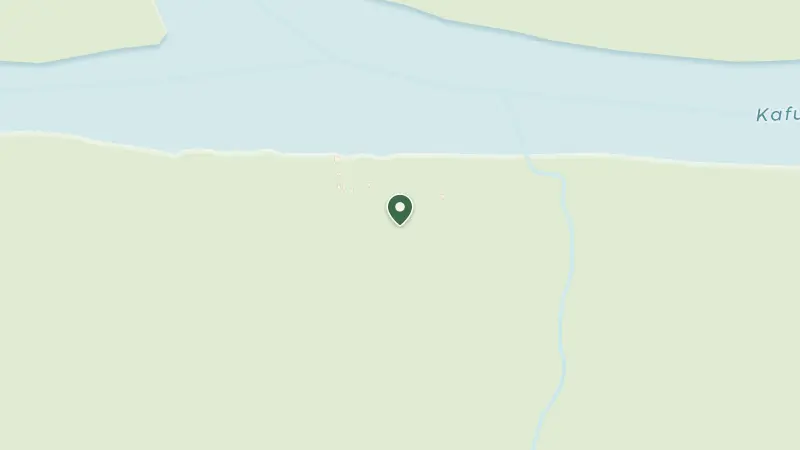
The camp occupies a bend in the Kafue River roughly 250 kilometres northwest of Lusaka, Zambia's capital. Kenneth Kaunda International Airport lies about 256 kilometres to the southeast; from there, the journey typically involves a charter flight or a long drive through rural Zambia, the roads lined with villages and trading posts that thin out as the bush closes in.
The isolation is the point. Here, the currency is the Zambian kwacha, but the true economy runs on light and patience: the patience to sit quietly as a pride of lions crosses the river at dawn, the quality of light that turns the water golden at sunset, the uninterrupted darkness that reveals the Milky Way in its entirety.
Days revolve around wildlife. Morning and afternoon game drives venture into Kafue National Park, the 22,400-square-kilometre expanse that begins just beyond the camp's boundaries, where the density of predators and the sheer variety of antelope species rival better-known reserves. Guided walks along the riverbank offer a slower, more textured encounter: tracking fresh leopard prints in the sand, learning to read the landscape through the eyes of the Lenje people who have lived here for centuries. On the water, boat safaris drift past basking crocodiles and pods of hippos that surface with explosive grunts, their ears twitching at the sound of the engine.
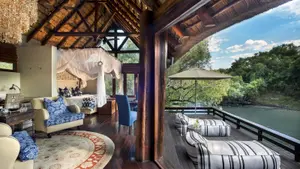
Book a table for a private dinner on the riverbank, where the menu draws on Zambian staples like nshima (a dense maize porridge) and bream pulled fresh from the river. The daily sundowner ritual at 17:45 gathers guests on the deck as the sun sinks behind the trees, the sky cycling through shades of amber and violet while vervet monkeys chatter in the canopy above. Between game drives, the Anantara Spa offers treatments that incorporate local ingredients, and the property's open-sided lounge becomes a forum for swapping sightings over coffee brewed strong and sweet.
The dry season from May through October is the classic safari window, when animals congregate around permanent water sources and the bush thins out enough for easy spotting. Temperatures climb steeply through September and October, the heat shimmering off the ground, before the first rains break in November and the landscape erupts into lush green. Days hover in the mid-twenties Celsius through winter, dropping to cool mornings that require a fleece on early drives.
The wet season from December to March transforms the park into a patchwork of flooded plains and temporary watercourses, the birdlife exploding as migrants arrive from Europe and Egypt. The rain comes in short, violent bursts that leave the air clean and the river running high. While some tracks become impassable, the drama of storm light and newborn animals makes this a compelling time for photographers and those who prefer solitude.
April and November are shoulder months, the rains tapering off or just beginning, the bush still verdant but the game viewing improving as pools dry and animals return to the river. The light during these transitions is exceptional, soft and diffuse, the kind that turns ordinary moments into something worth remembering.
Frequently Asked Questions

Quotes are personally reviewed by Natasha Hardy, founder of The Uncommon Traveller
5.0 rating · 8 Google reviewsThere is no fee or markup. The hotel pays our commission.
Request a Quote