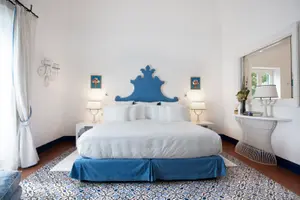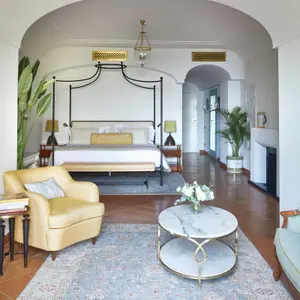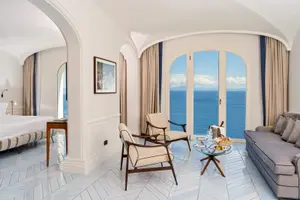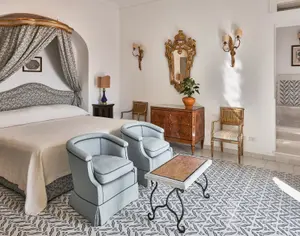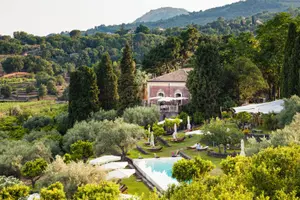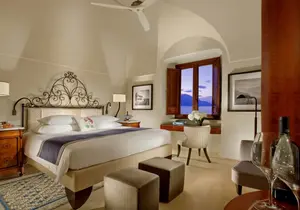
Furore Grand Hotel
When you book Furore Grand Hotel in Amalfi, Italy, through our Virtuoso partnership, your stay includes daily full breakfast for up to two guests and welcome amenities. You also receive a room upgrade, early check-in and late check-out when available. No premium credit card or membership needed: request a quote and our advisor books it at the same rate as booking direct.
Exclusive Booking Perks
These perks are included with your stay at the same rate as booking direct with the hotel.
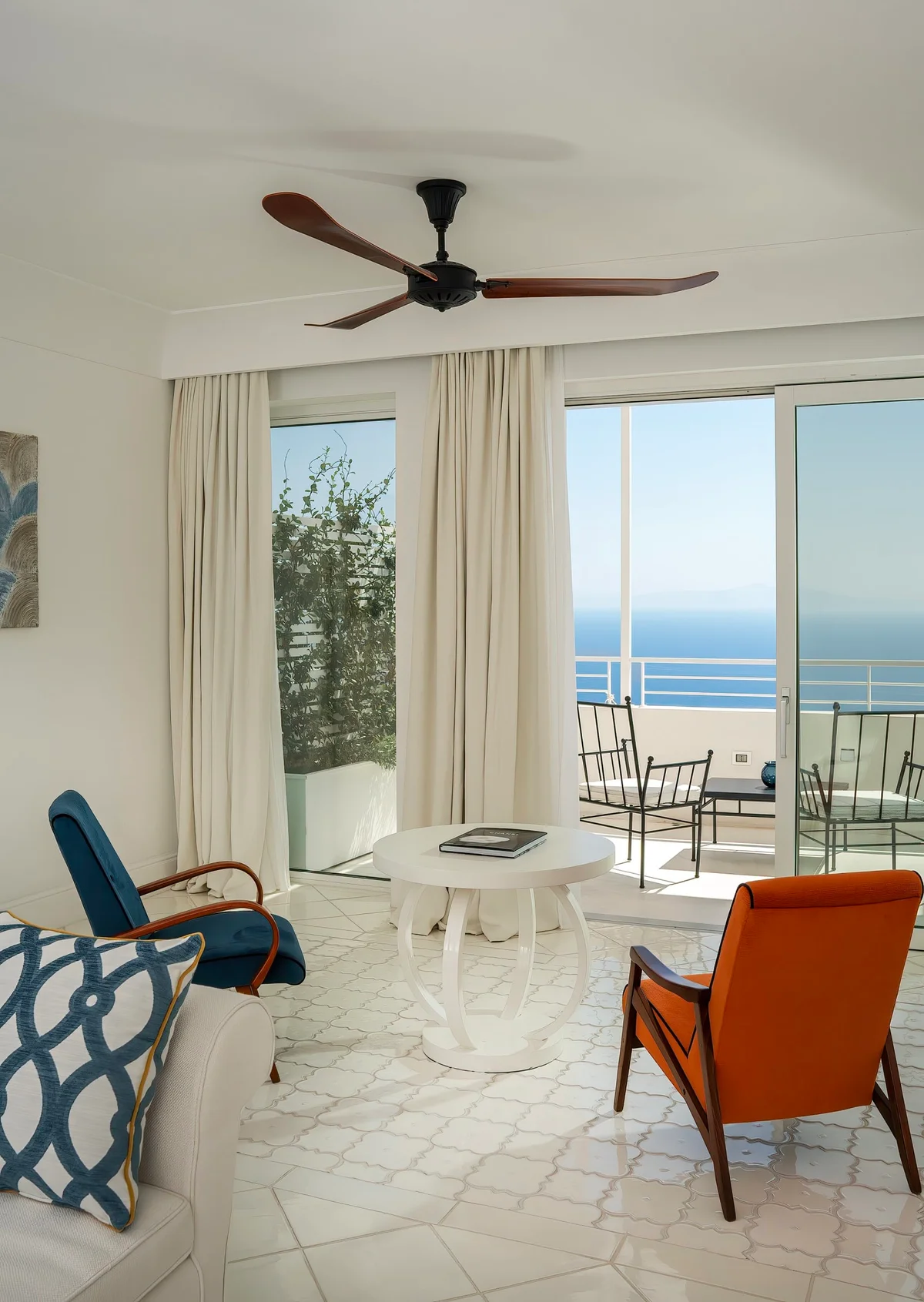
- Upgrade on arrival, subject to availability
- Daily Full breakfast for up to two guests per bedroom, served in the restaurant
- $100 USD equivalent Food & Beverage credit at Bluh Furore Restaurant
- Aperitif at Ria Lounge Bar upon arrival
- Welcome amenities at arrival in room
- Early check-in / Late check-out, subject to availability
Location
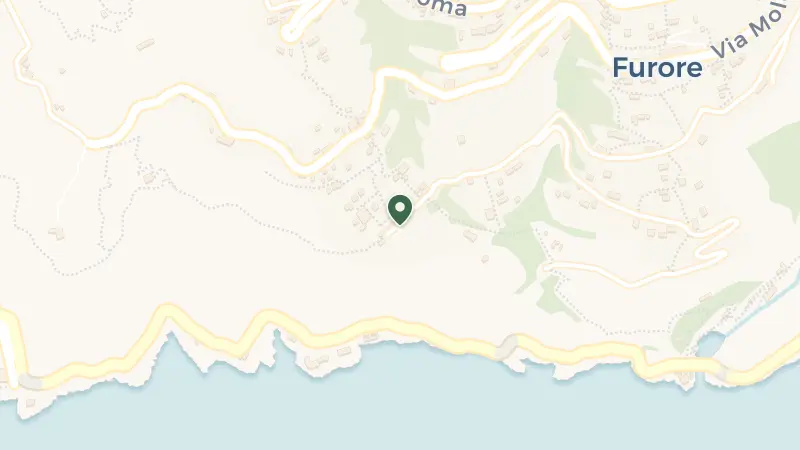
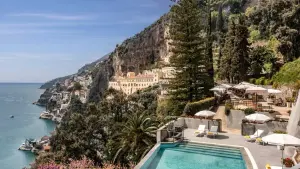
Furore clings to the Amalfi Coast like a secret kept by the cliffs themselves. This is not the parade-ground glamour of Positano or the tourist crush of Amalfi town. The property sits above Marina di Praia, where the Fiord of Furore cuts a narrow blue gash through limestone walls. The fiord, a seawater-filled cleft reached by steep stone steps, draws locals who sunbathe on its pebblestone beach while swallows wheel overhead. This coastline has been settled continuously since the early Middle Ages, when the Duchy of Amalfi ruled Mediterranean trade routes from the ninth century until around 1200. The entire Costiera Amalfitana, inscribed as a UNESCO World Heritage site in 1997, layers physical beauty over centuries of terraced lemon groves, whitewashed fishing hamlets, and monasteries perched on implausible promontories.
Furore itself is scattered across the hillside rather than clustered in a single centro storico. The rhythms here are quieter, the air cleaner, the coastline less trafficked. Amalfi town lies five kilometres southeast along the corniche, its cathedral and medieval arcades still echoing the republic's trading wealth.
Salerno Costa d'Amalfi Airport is 31 kilometres northeast, while Naples International Airport sits 37 kilometres northwest. Both connect to the coast road, a serpentine ribbon carved from cliffside where buses and taxis negotiate hairpin bends above the Tyrrhenian Sea.
The surrounding coastline reveals itself through water and stone. The Fiord of Furore cuts a dramatic slash in the cliffs, its pebbled shore reached by a hundred-step descent. Farther afield, Gavitella beach spreads its sand two and a half kilometres west, while the rocky cove at San Pietro, four kilometres distant, draws swimmers to its clear depths. Above, waterfalls cascade through the mountains: Cascata alta tumbles down nearly five kilometres inland, and Cascata della Marmorata, seven kilometres away, drops in white veils after rain.
Book a table at Piazzetta Milù, eleven kilometres north in Massa Lubrense, where the Izzo family serves two-Michelin-starred creative cuisine with a warmth that makes luxury feel genuinely personal. Torre del Saracino, fifteen kilometres along the coast in Marina di Equa, occupies an old fortified tower steps from the sea, its contemporary cooking rooted in Campanian tradition. Closer still, Amalfi's cathedral presides over the town square, its Arab-Norman facade and bronze doors recalling the maritime republic's medieval reach across the Mediterranean. The archaeological ruins of Pompeii, frozen by Vesuvius in AD 79, wait sixteen kilometres distant for those willing to trade coastal views for a walk through preserved Roman streets.
Winter brings cooler air, January temperatures hovering around 11.5°C. Rain sweeps through frequently, the cliffs darkening under February squalls. The coast empties of crowds, leaving trattorias and steep paths to walkers who don't mind wet stone underfoot.
Spring unfolds slowly, March and April brightening the lemon terraces. May dries out, wildflowers threading the hillsides. By June, temperatures reach the mid-twenties, the sea warming enough for extended swims. July and August blaze, the air thick with cicada song, high-summer heat softened only by evening breezes off the Tyrrhenian.
September holds the best balance: warm water, thinning crowds, the light turning golden over the fiord. October cools gently before November rains return, the season closing as the coast retreats into winter quiet.
Frequently Asked Questions

Quotes are personally reviewed by Natasha Hardy, founder of The Uncommon Traveller
5.0 rating · 8 Google reviewsThere is no fee or markup. The hotel pays our commission.
Request a Quote 9 Bib Gourmand