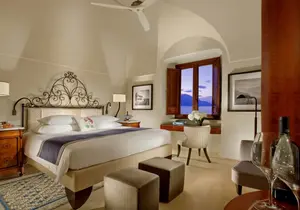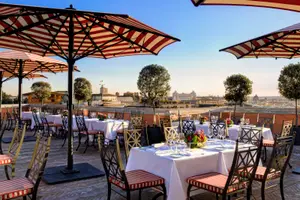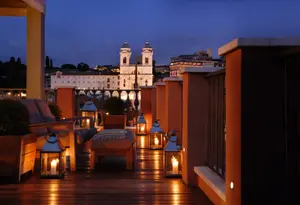
Baglioni Hotel Regina - The Leading Hotels of the World
When you book Baglioni Hotel Regina - The Leading Hotels of the World in Rome, Italy, through our Virtuoso partnership, your stay includes daily full breakfast for up to two guests and a $100 USD food and beverage credit. You also receive a room upgrade, early check-in and late check-out when available. No premium credit card or membership needed: request a quote and our advisor books it at the same rate as booking direct.
Special Offer
Enjoy up to 30% savings, complemented by Virtuoso amenities + Upgrade on arrival, subject to availability + Daily buffet breakfast + $100 USD equivalent Food & Beverage credit to be utilized during stay + Early check-in / Late check-out, subject to availability
Exclusive Booking Perks
These perks are included with your stay at the same rate as booking direct with the hotel.
- Upgrade on arrival, subject to availability
- Daily Full breakfast for up to two guests per bedroom, served in the hotel restaurant
- $100 USD equivalent Food & Beverage credit to be utilized during stay (not combinable, not valid on room rate, no cash value if not redeemed in full)
- Early check-in / Late check-out, subject to availability
Guest feedback
9.1/10 from 867 guest reviews
By category
Guests liked
- Excellent location
- Friendly and helpful staff
Points to consider
- Cleanliness issues reported
- Overpricing concerns
Location
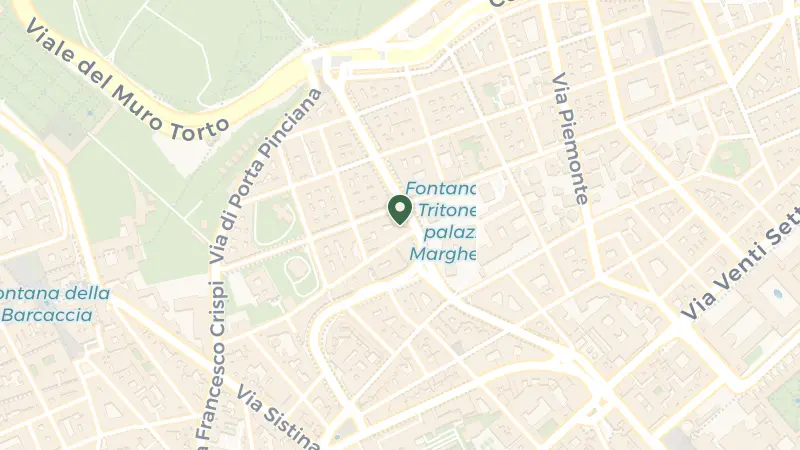
The property sits in Ludovisi, where quiet residential streets lined with umbrella pines give way to the grand sweep of Via Veneto. This is Rome's Belle Époque quarter, where 19th-century palazzi shelter hushed courtyards and Art Nouveau facades catch the morning light. The neighbourhood retains an elegance that feels lived-in rather than staged, a pocket of calm steps from Piazza Barberini and the Spanish Steps.
Walk south and you're at the Trevi Fountain within ten minutes, shouldering through crowds to toss a coin over your shoulder. Continue past shuttered antique shops and caffè with zinc counters toward the Pantheon, its oculus still open to weather and pigeons after nearly two millennia. The Historic Centre of Rome, inscribed as a UNESCO site in 1980, unfolds in every direction: the Roman Forum's broken columns, the Colosseum's travertine arches, the tangle of medieval streets in Trastevere across the Tiber.
Leonardo da Vinci Airport lies 23 kilometres southwest, reached by train or car along the autostrada that cuts through the Campagna Romana's flat stretches of umbrella pines and archaeological rubble.
Just beyond Piazza del Popolo, a twelve-minute walk north, Acquolina holds two Michelin stars for creative Mediterranean cooking in a dining room of understated contemporary design. For Rome's only three-star table, head to La Pergola, nearly four kilometres north, where Mediterranean cuisine unfolds beneath a refurbished interior inspired by Travertine marble and Roman red. Book a table at Enoteca La Torre, two kilometres northwest in Villa Laetitia, a Renaissance-Baroque residence turned Art Nouveau showcase, for contemporary cooking that earned the restaurant its second star.
Closer still, Antica Enoteca stands less than a kilometre away for bottles chosen from small producers across Lazio and beyond. The Mercato di Monti, a kilometre and a half southeast, fills weekend mornings with vintage clothing stalls and artisan leather goods. Don't miss Campo de' Fiori's daily market, just under two kilometres south, where vendors arrange morning pyramids of artichokes and sell bunches of wild chicory. Villa Adriana, 24 kilometres east in Tivoli, spreads Hadrian's second-century vision of classical architecture across terraces and pools that still echo with Imperial ambition.
Summer brings brutal heat. July temperatures climb past thirty degrees, the city empties in August, and shade becomes a strategic consideration. The light turns white and pitiless, bouncing off travertine and cobblestones until the evening passeggiata begins.
Spring and autumn offer gentler weather. April through June sees temperatures in the high teens to mid-twenties, cafés spill onto sidewalks, and wisteria drapes over garden walls in Trastevere. September through October brings cooler mornings, fewer crowds, and that slanted golden light that makes every ruin photogenic.
Winter is mild but damp. Temperatures rarely drop below freezing, but the city feels grey under overcast skies, and December rain slicks the basalt sampietrini until they gleam like river stones. The crowds thin, museum queues shorten, and Rome belongs to the Romans again.
Frequently Asked Questions

Quotes are personally reviewed by Natasha Hardy, founder of The Uncommon Traveller
5.0 rating · 8 Google reviewsThere is no fee or markup. The hotel pays our commission.
Request a Quote 10 Bib Gourmand