Singer Palace Hotel Roma
When you book Singer Palace Hotel Roma in Rome, Italy, through our Virtuoso partnership, your stay includes daily breakfast for up to two guests and a $100 USD food and beverage credit. You also receive a room upgrade, early check-in and late check-out when available. No premium credit card or membership needed: request a quote and our advisor books it at the same rate as booking direct.
Exclusive Booking Perks
These perks are included with your stay at the same rate as booking direct with the hotel.
- Upgrade on arrival, subject to availability
- Daily breakfast for up to two guests per bedroom, served in Hotel Restaurant (already included in property rates)
- $100 USD equivalent Food & Beverage credit to be utilized during stay (not combinable, no cash value if not redeemed in full)
- Bookings in our Suites will also receive a complimentary welcome sweet and savory amenity, fresh flowers, higher value gift at check-out, and a bottle of Prosecco upon arrival
- Early Check-In / Late Check-Out, subject to availability
Guest feedback
10.0/10 from 652 guest reviews
Read what guests commentedBy category
Guests liked
- Excellent hospitality
- Highly professional staff
- Spotlessly clean
Points to consider
- Rooms can be small
- Some discomfort with sofa bed
- Noise from surrounding areas
Location
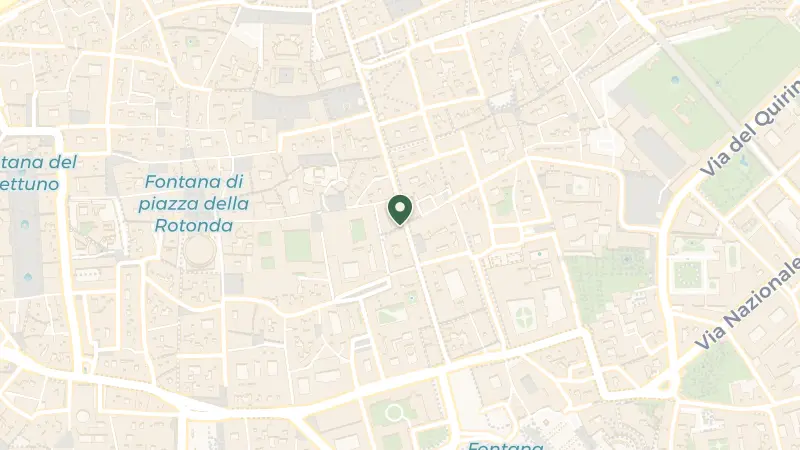
The Pigna quarter sits in the heart of Rome's Municipio I, where the geometry of ancient streets follows the layout marked out nearly three millennia ago. This is the Rome of layered centuries: baroque fountains spill into piazzas paved over imperial baths, Renaissance palazzi rise from medieval foundations, and the morning light catches travertine the colour of honey. The neighbourhood takes its name from the bronze pinecone that once crowned a Roman fountain, now sheltered in the Vatican's Cortile della Pigna. Walk these cobbled lanes and the city reveals itself in fragments: a Corinthian column embedded in a wall, the sudden coolness of a church vestibule, the scent of espresso and baking bread drifting from a corner bar.
The Tiber runs close by to the west, a tawny presence winding through the city's history. Within a kilometre, the Pantheon's perfect dome dominates its piazza, while the UNESCO-listed Historic Centre unfolds in every direction. This is walking Rome, where Bernini and Caravaggio left their marks, where markets have traded since the Renaissance, where the weight of empire and church and republic press into every stone.
Rome Fiumicino airport lies twenty-two kilometres southwest, connected by direct rail to Termini station and onward by taxi or car through the city's famously spirited traffic.
Start your mornings at Campo de' Fiori, seven hundred metres south, where the market has convened since the 1400s. Vendors arrange puntarelle and romanesco in pyramids, call out prices for pecorino and guanciale, drape porcini across wooden crates. The Teatro Argentina, Rome's oldest working theatre, stands nearby on Via dei Barbieri, its neoclassical façade concealing a stage that premiered Rossini's *Barber of Seville*. One kilometre northwest, Il Pagliaccio holds two Michelin stars for Anthony Genovese's globe-crossing cuisine, a gastronomic journey that touches continents while anchoring itself in Roman technique. Book well ahead.
Three and a half kilometres north in the Monti neighborhood, La Pergola commands Rome's only three-star kitchen, newly refurbished in travertine and deep red tones. The Pantheon, a fifteen-minute walk northeast, remains the world's largest unreinforced concrete dome, its oculus open to rain and light for nineteen centuries. Acquolina, just over a kilometre north near Piazza del Popolo, offers two-starred Mediterranean creativity in understated contemporary surrounds. Don't miss the Saturday market at Mercato di Monti, a kilometre east, where local designers and vintage dealers set up under the arches.
July and August blaze with relentless sun, the city emptying of Romans and temperatures climbing past thirty degrees. Shade becomes currency. The ochre walls seem to radiate stored heat well into the evening, when locals emerge for passeggiata and the fountains turn silver under streetlamps.
Spring and autumn bring the city's finest hours. April through June and September through October offer mild days in the low twenties, ideal for walking the seven hills without wilting. The light turns golden in October, slanting low across the Forum's ruins.
Winter is Rome's secret season. January mornings can be crisp, temperatures hovering near three degrees, but days warm to twelve and the museums breathe without crowds. December rains wash the stones clean, and the city's churches glow with devotional warmth against the chill.
Frequently Asked Questions

Quotes are personally reviewed by Natasha Hardy, founder of The Uncommon Traveller
5.0 rating · 8 Google reviewsThere is no fee or markup. The hotel pays our commission.
Request a Quote 10 Bib Gourmand