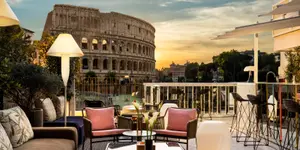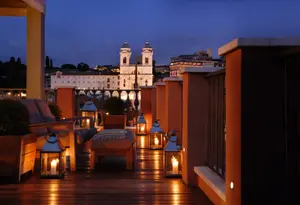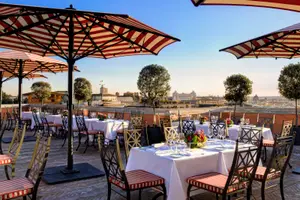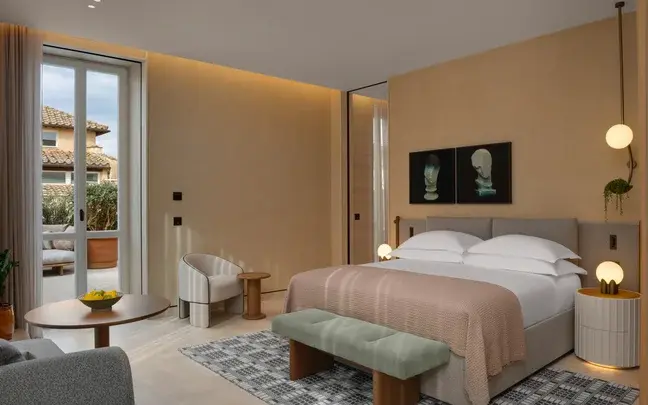
Six Senses Rome
When you book Six Senses Rome in Italy through our Virtuoso partnership, your stay includes daily full breakfast for up to two guests and a $100 USD food and beverage credit. You also receive a room upgrade when available. You continue earning IHG One Rewards points and elite night credits. No premium credit card or membership needed: request a quote and our advisor books it at the same rate as booking direct.
Exclusive Booking Perks
These perks are included with your stay at the same rate as booking direct with the hotel.
- Upgrade on arrival, subject to availability
- Daily Full breakfast for up to two guests per bedroom, served in the restaurant
- $100 USD equivalent Food & Beverage credit to be utilized during stay (not combinable, not valid on room rate, no cash value if not redeemed in full)
- Stays of 7+ nights will receive an additional $200 (for a total of $300 during stay)
- Early check-in / Late check-out, subject to availability
Guest feedback
9.1/10 from 194 guest reviews
Read what guests commentedBy category
Guests liked
- Friendly staff
- Great location
- Incredible amenities
Points to consider
- Noise from the street
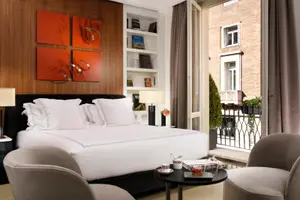
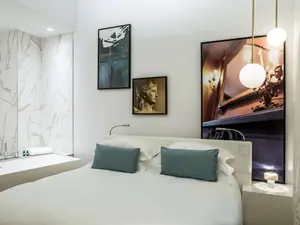
- Small room sizes
- Breakfast quality
Location
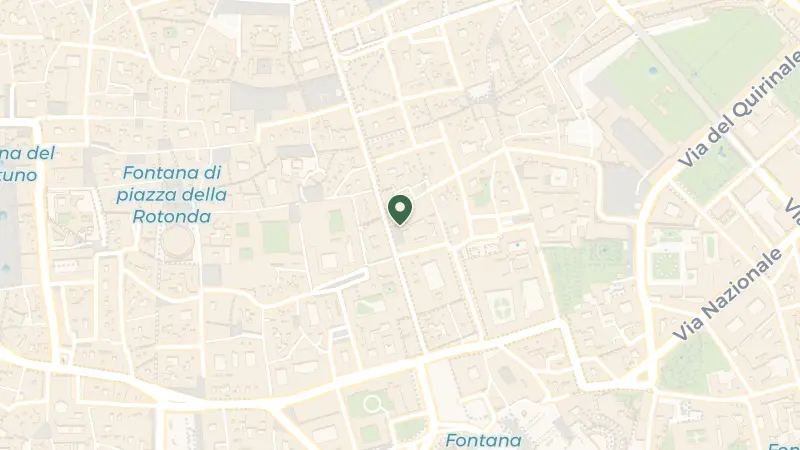
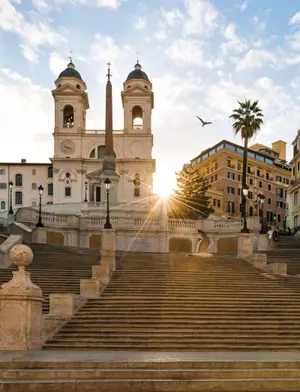
Six Senses brings its ethos of sustainability and wellness to the heart of the Eternal City, where the commitment to organic practices and connection to nature meets 28 centuries of living history. The property sits within Municipio I, Rome's central administrative district, placing you among the historic rioni where the Tiber winds through streets that have witnessed the rise of republic, empire, and papal power. Step outside and the neighbourhood reveals itself in layers: baroque fountains catch afternoon light on honey-coloured travertine, trattorias spill onto cobblestones worn smooth by millennia of footsteps, and the scent of espresso mingles with pine from umbrella trees.
The Historic Centre of Rome, inscribed as a UNESCO World Heritage Site in 1980, begins less than a kilometre away, encompassing the Forum, Pantheon, and a concentration of monuments unmatched anywhere on Earth. Vatican City lies two kilometres west across the river.
Rome's geography of seven hills and the Tiber Valley shapes the rhythm of walking here: sudden vistas, quiet piazzas, the particular quality of Roman light against ochre stucco. Leonardo da Vinci International Airport at Fiumicino sits 22 kilometres southwest, connected by rail and road through the coastal plain.
Rome's culinary heritage runs deep, and from this central position you're within reach of the city's most ambitious tables. Il Pagliaccio, 1.2 kilometres away, holds two Michelin stars for chef Anthony Genovese's globe-spanning vision, while Acquolina, at the same distance near Piazza del Popolo, earns two stars for creative Mediterranean cuisine in understated surroundings. Book a table at La Pergola, three-starred and 3.7 kilometres north, where the dining room's Travertine marble and red tones echo the city itself. The markets tell a different story: Campo de' Fiori spreads its morning chaos of produce and flowers 800 metres west, while Mercato di Monti, a kilometre northeast, offers vintage finds and artisan goods.
Cultural landmarks press in from every direction. The Forum, Colosseum, and Pantheon all lie within easy walking distance, as does the Trevi Fountain. For a break from antiquity, Tivoli's Villa Adriana sits 25 kilometres east, Hadrian's 2nd-century retreat combining the emperor's favourite architectural ideas from across his empire. Start your mornings with cornetto and cappuccino in a local bar, standing at the counter as Romans do.
Rome's seasons shape the experience of walking these ancient streets. Spring (March through May) brings mild days in the mid-teens to low twenties, wisteria draping over walls, and the risk of sudden rain showers that clear as quickly as they arrive. Summer turns fierce: July and August push past 30°C, sending locals to the coast and leaving the centro storico to visitors who navigate shade and siesta rhythms. The light in these months is blinding against marble, the air heavy.
Autumn reclaims the city for Romans, September still warm in the mid-twenties, October cooling to pleasant 20°C days when the quality of light softens and cafés fill again. November brings more persistent rain. Winter (December through February) is quiet and cool, temperatures hovering around 11 or 12°C, occasionally dipping near freezing at night.
Museums and churches offer warm refuge, and the city feels more itself without the summer crush. Spring and autumn remain the ideal windows.
Frequently Asked Questions

Quotes are personally reviewed by Natasha Hardy, founder of The Uncommon Traveller
5.0 rating · 8 Google reviewsThere is no fee or markup. The hotel pays our commission.
Request a Quote 10 Bib Gourmand