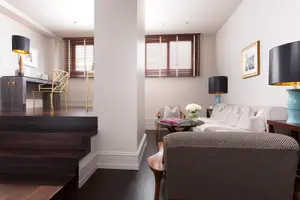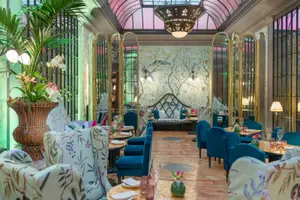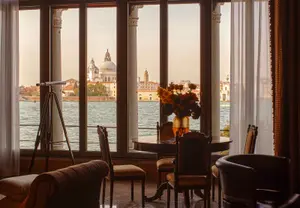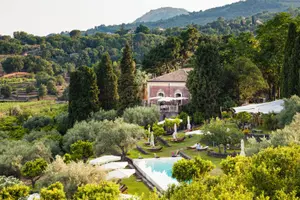
Rocco Forte Hotel de la Ville
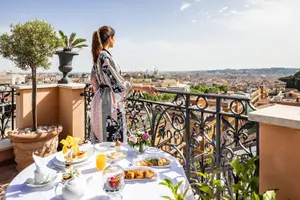
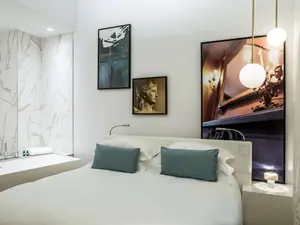
When you book Rocco Forte Hotel de la Ville in Rome, Italy, through our Virtuoso partnership, your stay includes daily full breakfast for up to two guests and a $100 USD food and beverage credit. You also receive a room upgrade, early check-in and late check-out when available. No premium credit card or membership needed: request a quote and our advisor books it at the same rate as booking direct.
Special Offer
Stay a minimum of 2 nights and save up to 15%
Exclusive Booking Perks
These perks are included with your stay at the same rate as booking direct with the hotel.
- Upgrade on arrival, subject to availability
- Daily full breakfast for up to two guests per bedroom, served in the hotel restaurant
- $100 USD equivalent Food & Beverage credit to be utilized during stay (not combinable, not valid on room rate, no cash value if not redeemed in full)
- Early Check-In / Late Check-Out, subject to availability
Guest feedback
10.0/10 from 152 guest reviews
Read what guests commentedBy category
Guests liked
- Cleanliness
- Service
- Location
Location
Rocco Forte Hotels brings a family-run sensibility to European luxury, with interiors shaped by Olga Polizzi's eye and spa programmes built around Sicilian botanicals. The approach prizes warmth and regional character over corporate polish, a philosophy that finds natural expression in Rome, where personal relationships and local pride remain the currency of daily life.
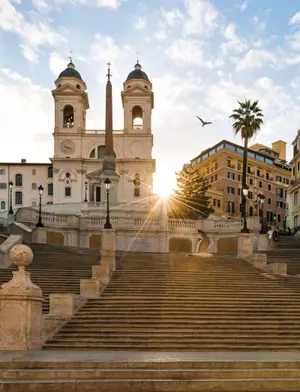
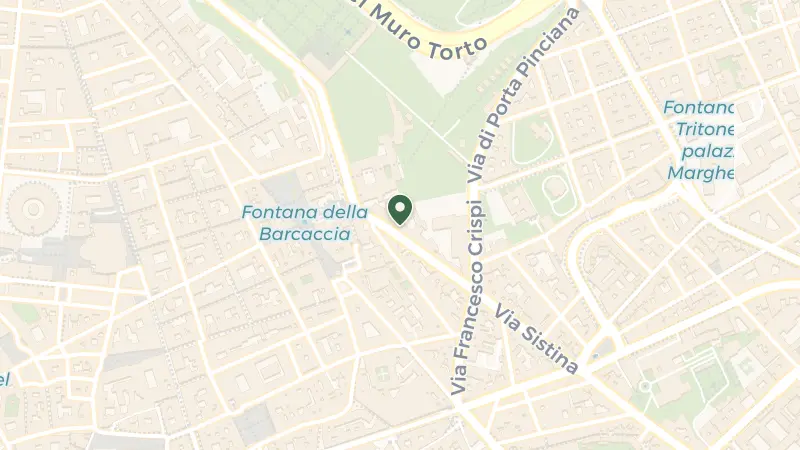
The property sits in Campo Marzio, the storied district that unfolds north of the Pantheon toward the Spanish Steps. Walk these streets in the early morning and you'll hear the clatter of metal grates being rolled up, the hiss of espresso machines in corner bars where Romans take their caffè in one smooth gesture at the counter. The neighbourhood carries traces of its ancient past as the Field of Mars, the military training ground of the Roman Republic, though today its rhythm is set by artisan workshops, family-run trattorias, and the quiet piazzas where light slants golden across ochre facades. The Via del Corso slices south to the monument-strewn heart of the city, while narrow vicoli branch east toward the Tiber, their cobblestones polished by three millennia of footsteps.
Rome sprawls along the Tiber Valley, its seven hills rising from the central-western swath of the Italian Peninsula. The city's mythology claims a 753 BC founding, though settlement here stretches back far deeper, making this one of Europe's oldest continuously inhabited capitals. Fiumicino Airport lies twenty-two kilometres southwest, connected by express rail and taxi.
On-property dining channels the Rocco Forte ethos of regional Italian tradition, though specifics of the hotel's own restaurants are not detailed here. Venture just beyond the threshold and Michelin's map of Roman gastronomy unfolds: ACQUOLINA | Nuova Cucina Mediterranea holds two stars within 800 metres of the hotel, its contemporary dining room a study in restraint and dynamic service. Il Pagliaccio, 1.6 kilometres distant with two stars of its own, orchestrates boundary-crossing menus that range from essential to experimental. Book a table at La Pergola, three-starred and 3.5 kilometres away, where the recently refurbished space now reflects Rome itself through travertine hues and Roman red against views that breathe with the city.
Cultural landmarks crowd the streets: the Trevi Fountain's 1762 baroque cascade commands its piazza, while the Roman Forum spreads its ruins across the valley, a civic space in use since the eighth century BC. The Ara Pacis museum preserves Augustus's Altar of Peace from 9 BC under Richard Meier's controversial glass pavilion. Markets provide ground-level texture: Campo Marzio's namesake market operates 600 metres away, Campo de' Fiori spreads its stalls 1.5 kilometres south. Don't miss Antica Enoteca, a 400-metre stroll, for wines that trace Italy's viticultural spine.
Summer arrives in full force by July, when temperatures climb past thirty degrees and the city empties for ferragosto in mid-August. Mornings shimmer with heat, and the smart traveller follows Roman custom: shutters closed through the afternoon, long dinners taken after nightfall when the streets finally exhale.
Spring and autumn offer the most forgiving conditions, with April and October temperatures hovering in the high teens. The light during these months is exceptional, that soft amber glow that made painters flock here for centuries. Occasional rain sweeps through, but it rarely lingers long enough to disrupt exploration.
Winter sees daytime highs in the low teens, crisp enough for a wool coat but mild compared to northern Europe. Crowds thin considerably, and the city takes on a quieter, more introspective character. December rains can be persistent, but clear days reveal Rome at its most photogenic, the low winter sun carving sharp shadows across ancient stone.
Frequently Asked Questions

Quotes are personally reviewed by Natasha Hardy, founder of The Uncommon Traveller
5.0 rating · 8 Google reviewsThere is no fee or markup. The hotel pays our commission.
Request a Quote 10 Bib Gourmand