Grand Hyatt Seoul
When you book Grand Hyatt Seoul in South Korea through our Hyatt Privé partnership, your stay includes daily full breakfast for up to two guests and a property credit. You also receive a priority room upgrade when available. You continue earning World of Hyatt points and elite night credits. No premium credit card or membership needed: request a quote and our advisor books it at the same rate as booking direct.
Exclusive Booking Perks
These perks are included with your stay at the same rate as booking direct with the hotel.
- Welcome amenity provided to guests upon arrival.
- Daily complimentary full breakfast at a hotel restaurant for up to two guests.
- Property credit (value varies by property).
- Priority for room upgrade (response within 24 hours of booking, subject to forecasted occupancy).
- Early check-in/late check-out/connecting rooms (response within 24 hours of request, subject to forecasted occupancy).
Guest feedback
8.8/10 from 1,589 guest reviews
Read what guests commentedBy category
Guests liked
- Great service
- Excellent amenities
Points to consider
- Room age
- Food quality
Location
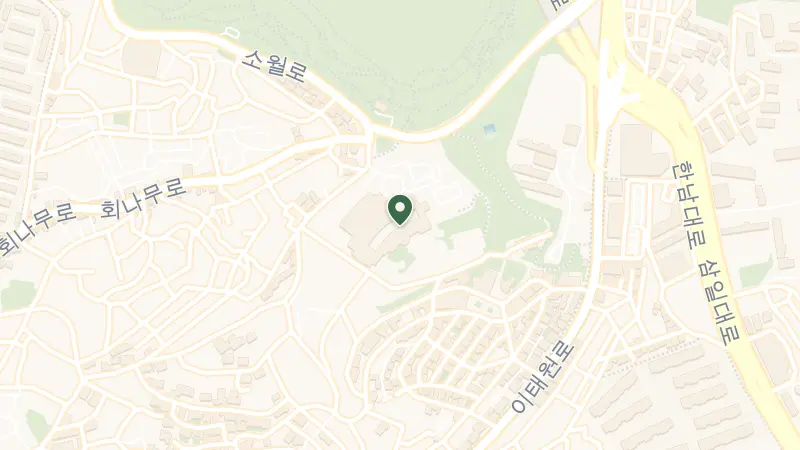
Grand Hyatt hotels deliver scale and substance: multiple dining venues, full-service spas, and contemporary design suited to both business itineraries and longer leisure stays. This property sits on the edge of Gyeongnidan-gil, a compact, atmospheric pocket of Itaewon-dong where narrow lanes fill with independent wine bars, chef-driven restaurants, and cafes that spill onto the pavement. The neighbourhood's character took root from the nearby U.S. military presence, and that international influence persists in the mix of languages overheard and the range of cuisines on offer.
Walk east and you reach the broader Itaewon corridor, a district long known for its cosmopolitan energy and late-night dining culture. Four kilometres north, the Joseon-era splendour of Jongmyo Shrine and Changdeokgung Palace Complex anchors Seoul's historical core, both UNESCO sites that ground the city's identity in Confucian ritual and royal lineage.
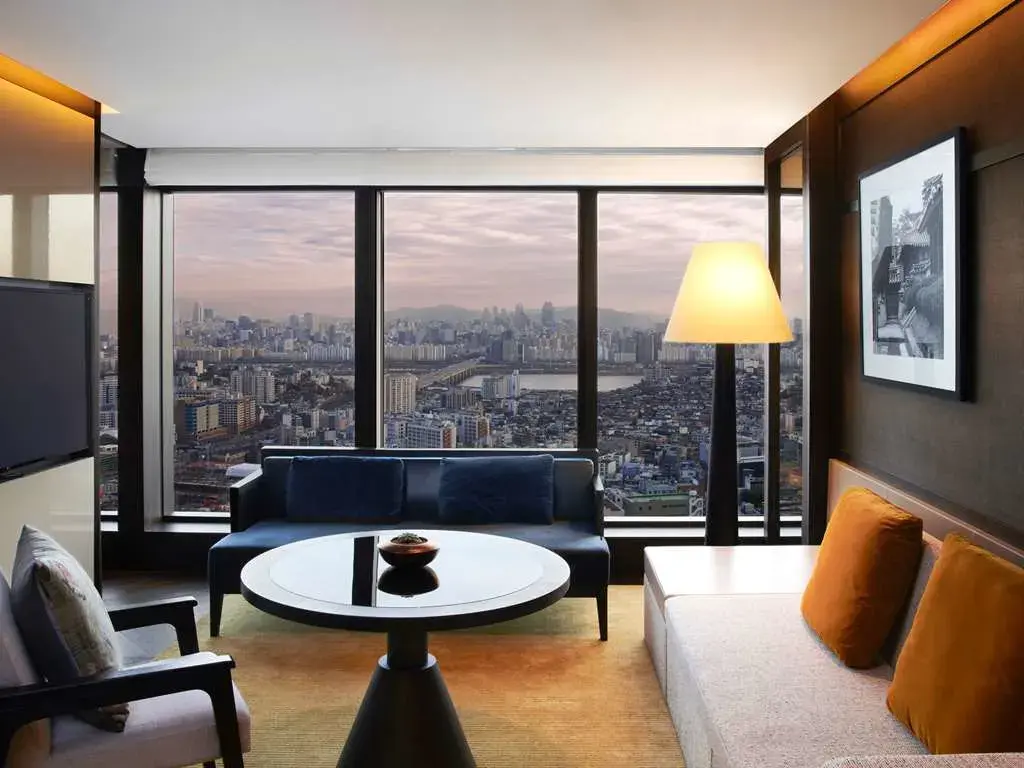
The Han River curves through the southern skyline, visible from elevated vantage points across the city. Gimpo International Airport lies 18 kilometres west, Incheon 49 kilometres beyond that, both connected by subway and express rail.
Start with Mosu, just 200 metres from the property, where two Michelin stars mark a kitchen that prizes imagination and precision over adherence to tradition. Dishes arrive with unpredictable flavour pairings and textures that surprise without grandstanding. For Korean cuisine filtered through a contemporary lens, La Yeon occupies the 23rd floor of The Shilla Hotel less than two kilometres away, its two stars earned through mastery of technique and sourcing alongside panoramic city views. Mingles, 4.4 kilometres south, holds three stars and interprets Korean ingredients through a minimalist aesthetic, its dining room hung with contemporary art and green sightlines. Gyeongnidan-gil itself rewards aimless wandering: wine bars like 기러기둥지 용산 700 metres away stock natural and biodynamic labels, while side-street eateries serve everything from handmade pasta to aged hanwoo beef.
Book a table at Mosu well ahead; reservations open months in advance and fill quickly. Jongmyo Shrine and Changdeokgung Palace Complex, both four kilometres north, offer immersion in Joseon dynasty ritual architecture and Confucian spatial planning, the latter's secret garden a masterclass in controlled naturalism.
Winter brings sharp, dry cold, with January mornings dipping well below freezing and pale sunlight slanting through bare ginkgo branches. The city hums with indoor energy: tea houses, jjimjilbang steam rooms, and heated ondol floors. Spring arrives abruptly in April, cherry blossoms unfurling along the Han River and palace walls, the air warming quickly into the low twenties by May.
Summer, from late June through August, is humid and monsoon-prone, the streets slick with rain and the scent of wet asphalt mingling with grilling meat from open shopfronts. September ushers in the finest weather: temperatures moderate, humidity drops, and the city's mountains glow with rust-coloured foliage.
October holds that clarity through the first half of the month before November's chill returns. Visit in late spring or early autumn for the most comfortable walking weather.
Frequently Asked Questions

Quotes are personally reviewed by Natasha Hardy, founder of The Uncommon Traveller
5.0 rating · 8 Google reviewsThere is no fee or markup. The hotel pays our commission.
Request a Quote 51 Bib Gourmand