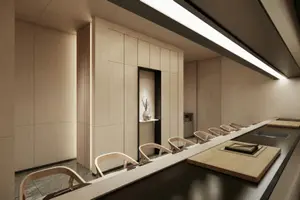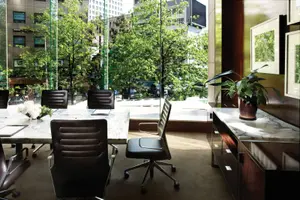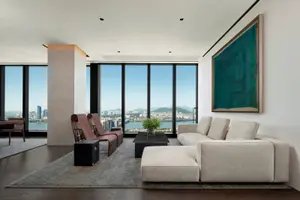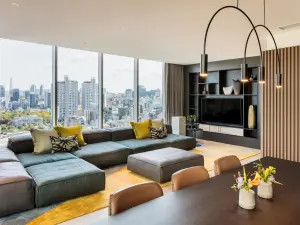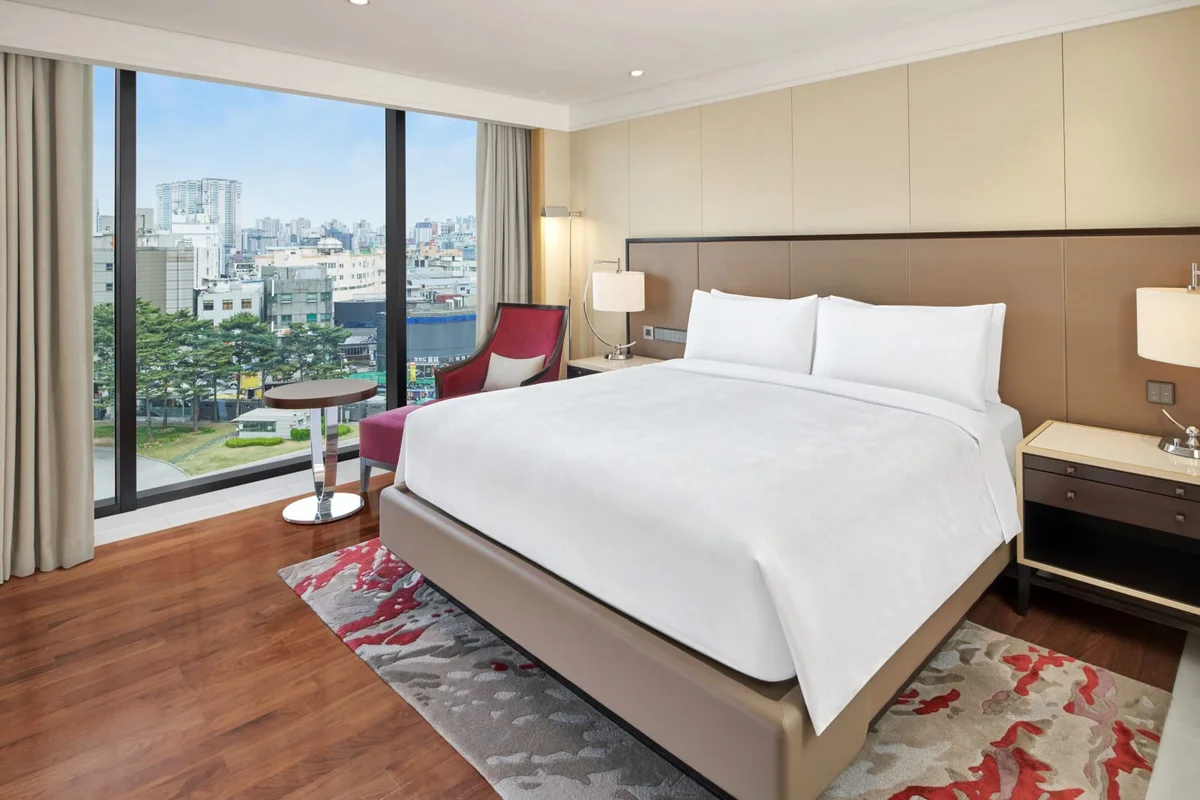
JW Marriott Dongdaemun Square Seoul
When you book JW Marriott Dongdaemun Square Seoul in South Korea through our Marriott Luminous partnership, your stay includes daily breakfast for two and a welcome amenity. You also receive a room upgrade, early check-in and late check-out when available. No premium credit card or membership needed: request a quote and our advisor books it at the same rate as booking direct.
Exclusive Booking Perks
These perks are included with your stay at the same rate as booking direct with the hotel.
- Welcome amenity
- Complimentary breakfast daily for two guests per room
- Early check-in and late check-out (when available)
- Complimentary upgrade (if available at check-in)
Location
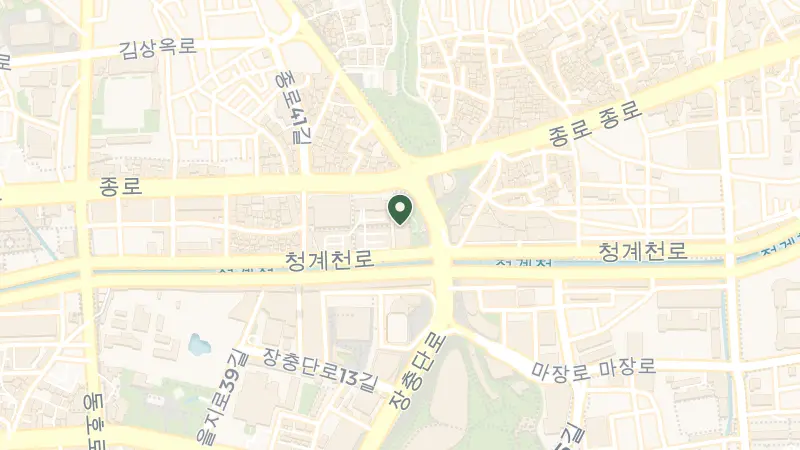
The property stands in Dongdaemun, where Seoul's traditional textile trades meet the restless energy of 24-hour commerce and contemporary design. This neighbourhood runs on parallel time zones: wholesalers unload bolts of fabric at dawn while shoppers prowl neon-lit fashion malls long after midnight. The medieval Heunginjimun gate, one of eight that once guarded the walled city, rises a short walk away, its stone arches framing the district's modern silhouette.
Jongmyo Shrine lies one kilometre west, its austere wooden halls housing the memorial tablets of Joseon dynasty kings in what remains the oldest Confucian royal shrine in continuous use. Walk two kilometres in the same direction and you reach Changdeokgung Palace Complex, where pavilions and gardens unfold according to 15th-century court cosmology. The broader city layers five centuries of Korean history beneath a skin of glass and steel: royal palaces, hanok villages with their curved tile roofs, and the mountain ridges that channelled the capital's growth.
Gimpo International Airport sits 19 kilometres west with subway and bus connections into central Seoul. Incheon International Airport, 50 kilometres away, handles most long-haul traffic and links to the city via express train.
The neighbourhood's night markets deserve exploration after dark. Dongdaemun Shopping Complex sprawls 100 metres from the hotel entrance, its labyrinth of stalls trading everything from zippers to wedding hanbok. Cross into Dongdaemun Baked Fish Alley three blocks north for grilled gulbi (salted corvina) served at plastic tables until dawn. Hwanghakdong flea market, 800 metres south, deals in vintage Korean ceramics and mid-century furniture alongside the expected bric-à-brac.
Book a table at La Yeon, two kilometres west on the 23rd floor of The Shilla Hotel, where two Michelin stars recognize contemporary Korean cooking (think pine mushroom porridge and abalone with fermented soybean) served with views across Namsan's forested slopes. Mingles, a three-star destination six kilometres south in Cheongdam, reinterprets Korean ingredients through French technique. Reserve at least a month ahead for either. Closer to the property, Jongmyo Shrine offers ritual court music performances on the first Sunday of May, when Confucian rites unchanged since the 14th century fill the stone courtyards with silk-robed dancers and the thrum of bronze bells.
January and February bring sharp cold, temperatures dipping well below freezing and the city's palette reduced to grey stone and white breath. Spring arrives abruptly in April when cherry blossoms foam along the Cheonggyecheon stream and temperatures climb into the mid-teens.
Summer means monsoon: July sees the heaviest rains, the air thick and warm, streets slick under sudden downpours. September offers the year's clearest light, warm days cooling to pleasant evenings, the mountains ringing the city turning rust and gold.
December through March sees the fewest crowds at palaces and temples, though indoor heating makes museum days comfortable. Visit in May or October when skies are reliably blue and the humidity relents.
Frequently Asked Questions

Quotes are personally reviewed by Natasha Hardy, founder of The Uncommon Traveller
5.0 rating · 8 Google reviewsThere is no fee or markup. The hotel pays our commission.
Request a Quote 51 Bib Gourmand