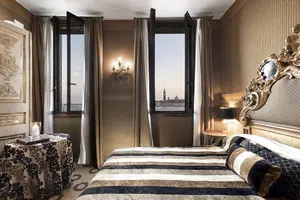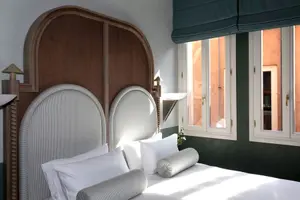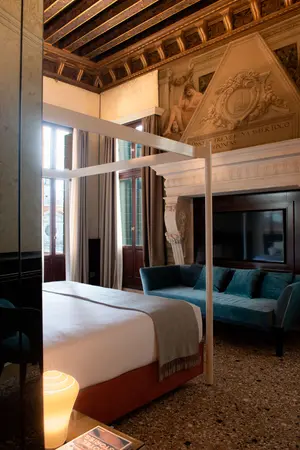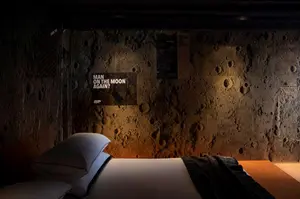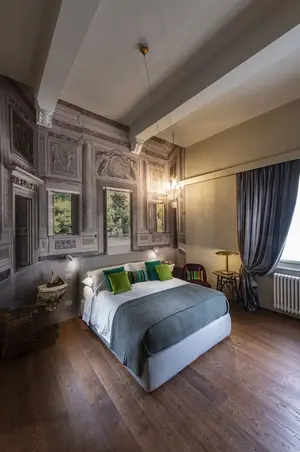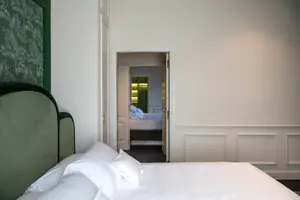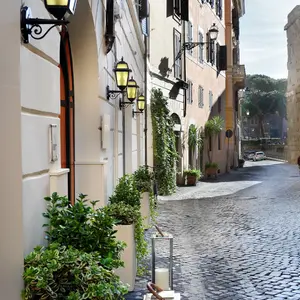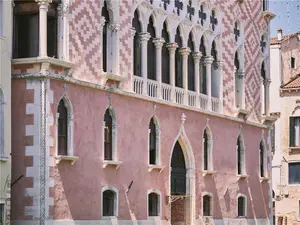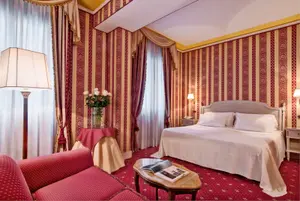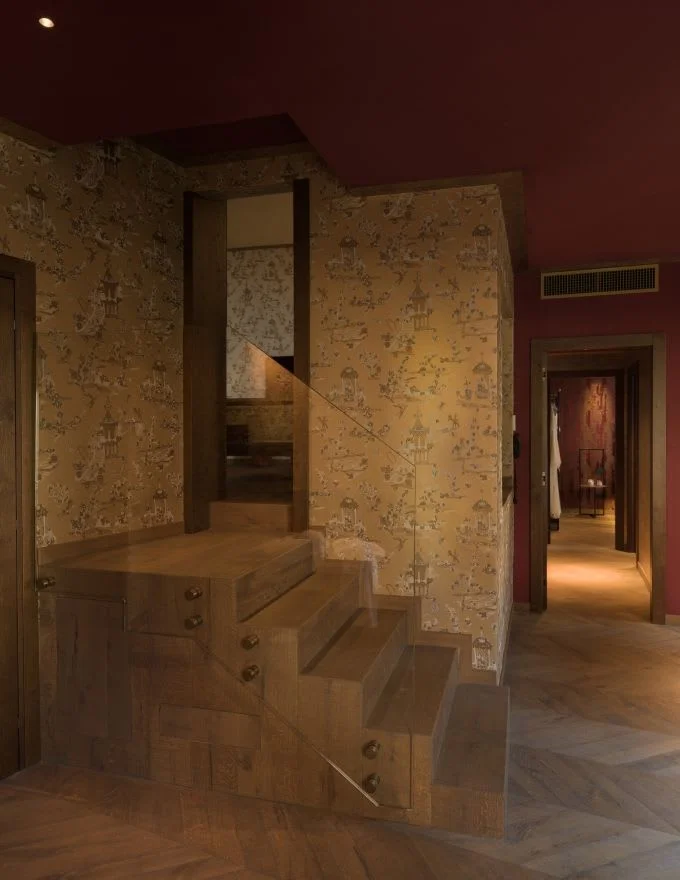
Madama Garden Retreat
When you book Madama Garden Retreat in Venice, Italy, through our Tablet Plus partnership, your stay includes a 25 EUR hotel credit per stay and a welcome treat. You also receive a one-category room upgrade when available. No premium credit card or membership needed: request a quote and our advisor books it at the same rate as booking direct.
Exclusive Booking Perks
These perks are included with your stay at the same rate as booking direct with the hotel.
- Upgrade to next room category, based upon availability at check-in
- Complimentary welcome drink per guest, per stay
- Welcome treat in room on arrival
- 25 EUR hotel credit per room, per stay (valid towards incidentals)
Guest feedback
9.8/10 from 56 guest reviews
By category
Guests liked
- Superb garden
- Delightful breakfast
- Amazing staff (Tonia)
Points to consider
- Room became hot during HVAC transition
- Canal noise may bother light sleepers
Location
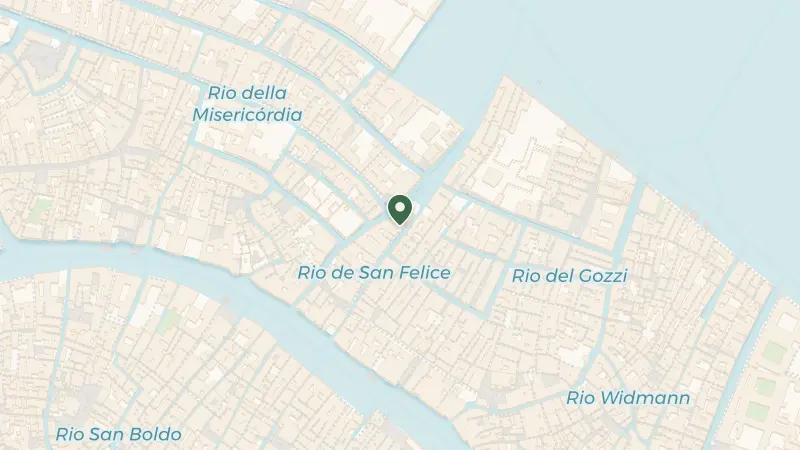
Cannaregio unfolds as Venice's most lived-in sestiere, where washing lines stretch between shuttered windows and local dialects echo off narrow fondamenta. This is the Venice that existed before the tourists, where neighbourhood bakeries still open at dawn and residents queue at market stalls along the Rio della Sensa. The district's northern edge traces the lagoon, offering unobstructed views across slate-grey water toward the distant islands of Murano and San Michele, the historic cemetery island where Venetians have buried their dead since the 19th century.
The city itself rises improbably from 126 islands threaded by canals and linked by 472 bridges, the whole archipelago floating in the shallow Venetian Lagoon between the mouths of the Po and Piave rivers. What began as a refuge settlement in the 5th century became the Republic of Venice, a maritime and financial power that ruled for nearly a millennium until 1797. The medieval republic's wealth, built on silk, grain, spice, and its role as Europe's gateway to the East, left behind a UNESCO-listed cityscape where even the smallest campiello represents an architectural achievement.
Venice Marco Polo Airport sits 7 kilometres across the lagoon, connected by water taxi or bus via the causeway that joins the historic centre to the terraferma mainland, where most of the city's 250,000 inhabitants now live.
Glam Enrico Bartolini holds two Michelin stars inside Palazzo Venart, just 400 metres through Cannaregio's quiet calli. The creative contemporary menu shifts with the lagoon's tides and the seasonal harvest from Veneto's farms. Start with Bartolini's reinterpreted Venetian classics before the kitchen reveals its more ambitious technical work. For a different register of excellence, Antica Osteria Cera commands two stars 17 kilometres away in Lughetto, its seafood-focused menu drawing from the northern Adriatic's daily catch and refining both traditional and modern preparations with each passing season.
Rialto Market opens at dawn 400 metres south, where fishmongers arrange the morning's lagoon harvest on ice-covered stalls and farmers sell white asparagus from Bassano del Grappa in spring, radicchio from Treviso in winter. The Venetian Lagoon itself, inscribed as a UNESCO site in 1987, spreads across 118 islands representing nearly a millennium of maritime engineering and architectural ambition. Book a water taxi to the Lido's sand beaches 5 kilometres southeast when the scirocco wind turns the lagoon glassy, or venture to the Oasi Valle Averto WWF reserve 17 kilometres inland, where wetland trails wind through protected marshes that mirror the lagoon's original ecology.
Summer heat settles over the lagoon from June through August, temperatures reaching the high twenties while afternoon thunderstorms arrive suddenly across the water. The city empties of Venetians in August, leaving the campo to visitors and the heavy scent of algae warming in canals. September brings relief: softer light, cooler mornings, and the return of locals to their routines.
October sees the acqua alta season begin, when spring tides flood the lowest-lying squares and wooden passerelle appear overnight across Piazza San Marco. Rain becomes frequent, but the city takes on a moody, atmospheric quality as fog drifts in from the lagoon. November continues wet and grey, the lagoon turning slate under low skies.
Winter from December through February brings sharp cold, occasional frost, and the clearest light of the year. The city feels most itself when fog obscures the far edges of the lagoon and cafe windows steam against the chill. Spring arrives gradually in March and April, wisteria cascading over canal-side walls as temperatures climb and the rain showers become warmer, longer, more insistent.
Frequently Asked Questions

Quotes are personally reviewed by Natasha Hardy, founder of The Uncommon Traveller
5.0 rating · 8 Google reviewsThere is no fee or markup. The hotel pays our commission.
Request a Quote 5 Bib Gourmand