Matild Palace
When you book Matild Palace in Budapest, Hungary, through our Marriott STARS partnership, your stay includes daily breakfast for two, a $100 USD hotel credit once per stay and a personalized amenity. You also receive a room upgrade, early check-in and late check-out when available. No premium credit card or membership needed: request a quote and our advisor books it at the same rate as booking direct.
Exclusive Booking Perks
These perks are included with your stay at the same rate as booking direct with the hotel.
- Personalized and customized amenity
- Complimentary breakfast daily for two guests per room
- All STARS hotels offer a hotel credit valued at $100 USD (once per stay)
- Early check-in and late check-out (when available)
- Complimentary upgrade (if available at check-in)
Location
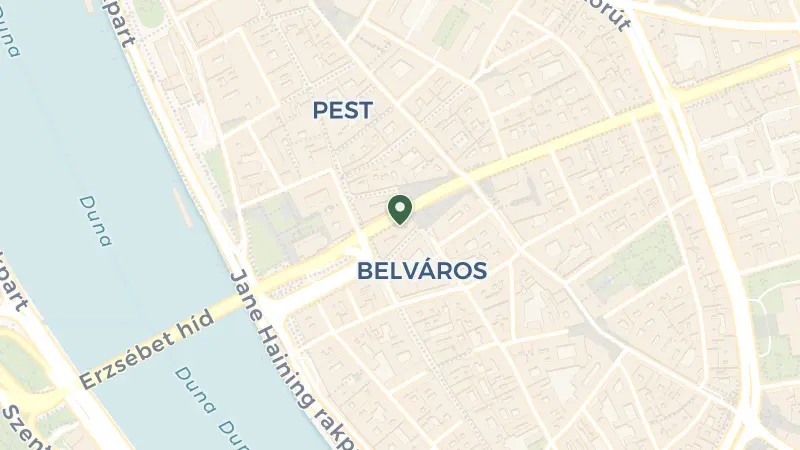
The Matild Palace occupies one of a pair of belle époque palaces built by the Archduchess of Austria, a grand statement on the Pest side of the Danube where the Elizabeth Bridge arches overhead. The neighbourhood pulses with the energy of a capital city where baroque theatres Stand shoulder to shoulder with ruin bars and coffeehouses that date to the Dual Monarchy. Walk in any direction and you encounter layers: Roman Aquincum foundations beneath Gothic castle walls, Art Nouveau facades lining boulevards wide enough to accommodate horse-drawn carriages and modern trams alike.
This is Budapest's heart, where the river bends and the city's twin halves,Buda's hillside calm and Pest's commercial rush,meet at the water. Across the Danube, the Buda Castle Quarter rises on its promontory, a UNESCO site that traces the capital's evolution from medieval stronghold to Habsburg seat. The Parliament's Gothic Revival silhouette dominates the opposite bank, its spires catching the light at sunset.
Within walking distance lies Andrássy Avenue, another UNESCO inscription, where neoclassical mansions give way to the Opera House and the boulevards that made Budapest a rival to Vienna. The city's thermal baths, fed by over a hundred springs, steam year-round in courtyards tucked behind Pest's apartment blocks. Budapest Liszt Ferenc International Airport sits seventeen kilometres southeast, connected by a direct motorway and frequent airport shuttles.
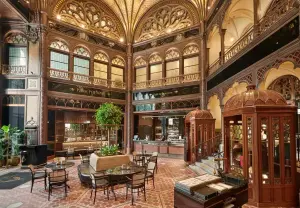
Spago by Wolfgang Puck brings international precision to the property's belle époque dining room, where an Austrian chef leads a kitchen that honours the building's heritage with contemporary technique. Stand, two kilometres north, holds two Michelin stars for its modern Hungarian cooking, served from a central glass-walled kitchen that turns dinner into theatre. Babel, just two hundred metres away, earned its star by balancing tradition with style,the walls still bear scars from the Great Flood of Pest, and owner Hubert's vision, shaped by designer Annamaria Dekany, makes the space feel both historic and immediate.
The Great Market Hall, seven hundred metres south, sprawls beneath a wrought-iron roof where vendors sell paprika by the kilo and lángos sizzles on griddles. Book a table at Stand for the full tasting menu, where Hungarian terroir translates into courses that shift with the season. Szimpla Piac, eight hundred metres northeast, hosts weekend farmers' markets in a ruin-bar courtyard where organic producers spread out preserves, cheeses, and sourdough loaves. The Buda Castle Quarter, accessible via the Chain Bridge or a tram across the Danube, rewards an afternoon of wandering among Gothic cellars and Renaissance arcades.
Summer, from June through August, brings temperatures in the mid-twenties and a city that shifts its rhythm outdoors. Terraces fill along the Danube, thermal baths become social hubs in the long evenings, and the light stays soft until well past nine. May and September offer the most comfortable walking weather, with highs around twenty degrees and streets less crowded than high summer.
Winter settles in cold and dry, with January and February dipping below freezing. The thermal baths become essential, their sulphurous steam rising into grey skies, and Christmas markets fill the squares with mulled wine and chimney cake. Snow dusts the castle district but rarely lingers on Pest's busy boulevards.
Spring arrives tentatively, with March still brisk and April variable, but by May the city blooms along its riverbanks and café tables reappear on every corner. Autumn mirrors this gentleness, with October bringing crisp mornings and the chestnut trees along Andrássy Avenue turning amber before the first frost.
Frequently Asked Questions

Quotes are personally reviewed by Natasha Hardy, founder of The Uncommon Traveller
5.0 rating · 8 Google reviewsThere is no fee or markup. The hotel pays our commission.
Request a Quote 4 Bib Gourmand