Dorothea Hotel, Budapest
When you book Dorothea Hotel, Budapest in Hungary, through our Marriott Luminous partnership, your stay includes daily breakfast for two and a welcome amenity. You also receive a room upgrade, early check-in and late check-out when available. No premium credit card or membership needed: request a quote and our advisor books it at the same rate as booking direct.
Exclusive Booking Perks
These perks are included with your stay at the same rate as booking direct with the hotel.
- Welcome amenity
- Complimentary breakfast daily for two guests per room
- Early check-in and late check-out (when available)
- Complimentary upgrade (if available at check-in)
Location
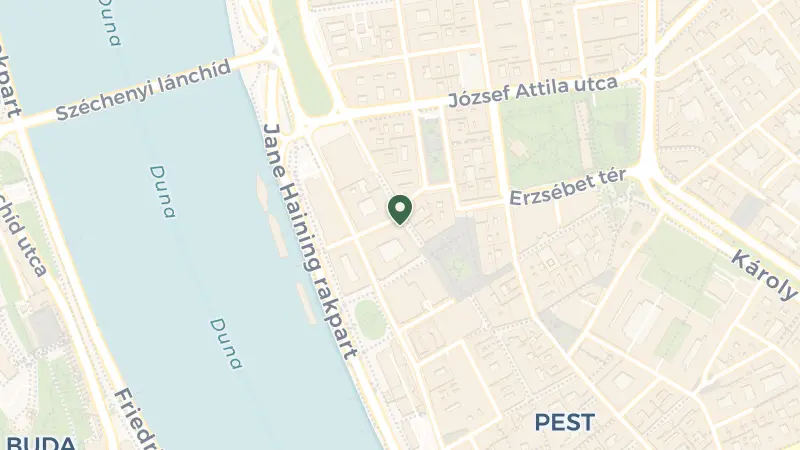
Lipótváros unfolds along the Pest bank of the Danube with a grandeur that speaks to its origins as Budapest's political and financial heart. Parliament's neo-Gothic spires dominate Kossuth Square a short walk north, while Andrássy Avenue, a UNESCO World Heritage corridor lined with townhouses and opera houses, stretches eastward through the city. The neighbourhood emerged in the early 19th century and came into its own when government ministries and banking houses established themselves here in the decades after the 1873 unification that created modern Budapest. Today it remains a district where monumental architecture meets the rhythms of daily life: civil servants crossing squares at midday, trams rattling along the embankment, the scent of lángos drifting from market stalls.
The Danube bisects the city between Buda's hills and Pest's flatter expanse, the riverbanks themselves recognized as a World Heritage Site for the concentration of Roman foundations, Gothic fortifications, and Belle Époque civic buildings that line the water. Walk south from Lipótváros and you reach Belváros, the medieval core of Pest, within minutes.
Budapest Liszt Ferenc International Airport lies 18 kilometres southeast, connected to the centre by taxi, shuttle, or the 100E express bus that terminates near Deák Ferenc tér.
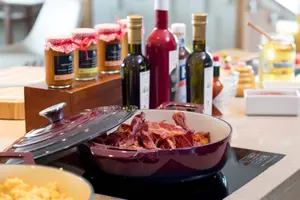
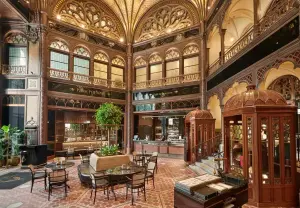
The hotel houses two distinct dining experiences under its roof. Alelí serves Italian cuisine in a high-ceilinged room where romance takes on a formal, old-world register. Take the dedicated lift to the seventh floor for BiBo Budapest, where Spanish contemporary cooking unfolds against views of Buda Castle across the river. For those willing to venture 841 metres north, Stand holds two Michelin stars and centers its modern cuisine around a glass-walled kitchen that commands both dining rooms, the service team maintaining an easy, conversational rhythm throughout.
The city's market culture runs deep. Szimpla Piac, a kilometre east, fills a ruin bar with weekend stalls. The Great Market Hall, 1.4 kilometres south near the Liberty Bridge, remains Budapest's grandest covered market, its neo-Gothic ironwork sheltering produce vendors, spice merchants, and stalls selling lángos, the fried dough that Hungarians eat hot with sour cream and cheese. Book a table at Stand for the full tasting progression, but don't overlook the neighbourhood's café tradition: Hungarian coffee culture favours small, strong espresso and pastry counters piled with rétes, the local strudel.
Summer in Budapest means long evenings when the Danube embankment fills with walkers and the city holds its warmth past sunset, temperatures climbing into the mid-twenties Celsius. Outdoor terraces stay animated through September, though afternoon thunderstorms arrive without much warning in May and June.
Winter brings grey skies and temperatures that dip well below freezing, the city wrapped in a quiet that suits its thermal baths and covered market halls. Snow softens the baroque lines of Buda's hillside palaces but rarely lingers long on Pest's streets.
Spring and autumn offer the most temperate conditions for walking: March sees the city shake off its winter pallor, while October's cooler air and thinning crowds make it ideal for unhurried exploration of museums and riverside promenades before the Christmas markets begin their setup.
Frequently Asked Questions

Quotes are personally reviewed by Natasha Hardy, founder of The Uncommon Traveller
5.0 rating · 8 Google reviewsThere is no fee or markup. The hotel pays our commission.
Request a Quote 4 Bib Gourmand