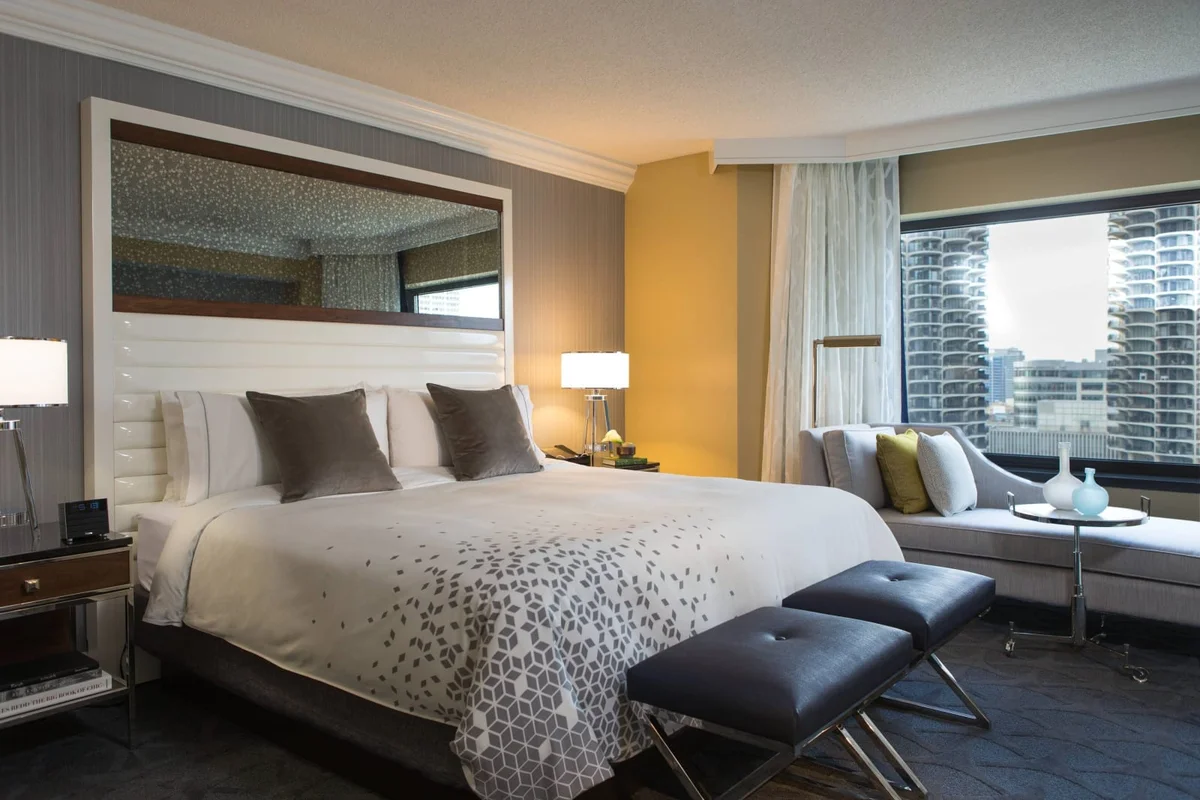
Renaissance Chicago Downtown Hotel
When you book Renaissance Chicago Downtown Hotel in the USA through our Marriott Luminous partnership, your stay includes daily breakfast for two and a welcome amenity. You also receive a room upgrade, early check-in and late check-out when available. No premium credit card or membership needed: request a quote and our advisor books it at the same rate as booking direct.
Exclusive Booking Perks
These perks are included with your stay at the same rate as booking direct with the hotel.
- Welcome amenity
- Complimentary breakfast daily for two guests per room
- Early check-in and late check-out (when available)
- Complimentary upgrade (if available at check-in)
Location
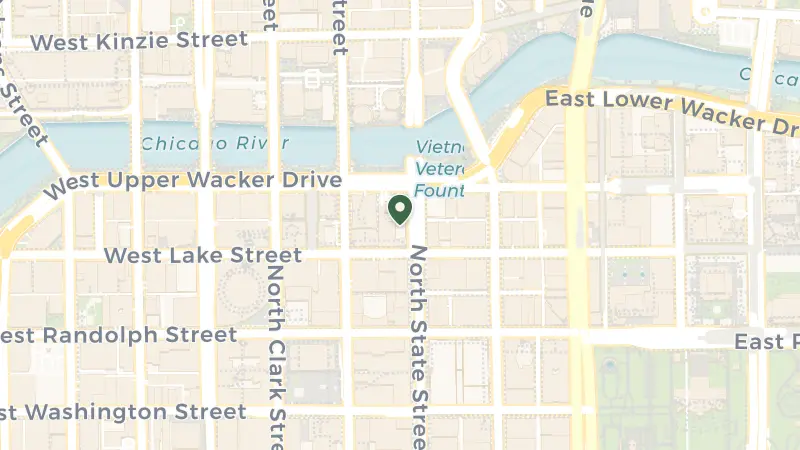
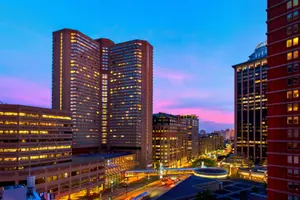
The property sits at the intersection of Chicago's cultural and commercial heart, where the Loop's canyon of skyscrapers meets the Theatre District's illuminated marquees. Step outside and you're in the current of a city that rebuilt itself from ashes to become the architectural laboratory of America. The Chicago River curves past art deco towers and Miesian glass boxes, its bridges lifting to let barges through while commuters stream across. Within a few blocks: the Art Institute's Impressionist galleries, Millennium Park's reflective Cloud Gate sculpture, and State Street's historic theatre facades still glowing in terracotta and gilt.
The neighbourhood pulses with contradictions: finance executives in wool overcoats, theatre-goers in evening dress, students sketching the Picasso sculpture in Daley Plaza. The L train rattles overhead on century-old elevated tracks, its metallic shriek as much a part of the soundscape as the snap of flags along Wacker Drive. Walk east and you hit the lakefront, where the city's grid surrenders to the blue infinity of Lake Michigan.
Both Midway and O'Hare airports connect the city to the world, Midway fifteen kilometres southwest, O'Hare twenty-five kilometres northwest, each accessible by train or car depending on your tolerance for traffic along the Kennedy Expressway.
Oriole sits 1.4 kilometres west in the West Loop, its two Michelin stars earned through Chef Noah Sandoval's technique-driven tasting menus served in a converted warehouse space that feels like a dinner party in an art collector's loft. The dishes arrive as small sculptures, each one a study in texture and restraint. Further west, both Smyth and Ever hold court in Fulton Market, each bearing their own culinary philosophy: Smyth's three-starred boldness from Chefs John and Karen Urie-Shields, working with produce from their own garden, and Ever's two-starred precision under Curtis Duffy, who runs his dining room like a controlled experiment in beauty.
Closer in, the Christkindlmarket transforms Daley Plaza each December into a German holiday village scented with glühwein and roasted almonds. The Loop's architecture tells Chicago's story better than any guidebook: Sullivan's ornamental ironwork on the Carson Pirie Scott building, the Rookery's light court redesigned by Frank Lloyd Wright, the Monadnock's load-bearing masonry walls thick as a fortress. Book a table at one of the Michelin-starred West Loop restaurants well ahead; they fill weeks in advance.
Winter locks the city in cold that penetrates wool and leather, temperatures hovering near freezing from December through February, the lake wind cutting down Michigan Avenue like a blade. This is when Chicagoans retreat to restaurants and concert halls, when the Christkindlmarket's lights feel necessary rather than decorative.
Spring arrives reluctantly, April bringing rain and tentative warmth, May finally coaxing the city back outdoors. Summer transforms Chicago into a festival ground: temperatures climbing into the high twenties, lakefront beaches packed, outdoor concerts in Millennium Park, the whole populace making up for six months indoors. July and August are peak, though afternoon thunderstorms build over the prairie to the west.
Fall is Chicago's gift to visitors: September and October deliver mild days and cool nights, the light turning golden across the lake, the architectural facades sharpening in the clear air. The theatre season opens, restaurants debut autumn menus, and the city feels like it belongs to those who know it best.
Frequently Asked Questions

Quotes are personally reviewed by Natasha Hardy, founder of The Uncommon Traveller
5.0 rating · 8 Google reviewsThere is no fee or markup. The hotel pays our commission.
Request a Quote 32 Bib Gourmand