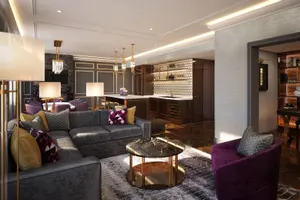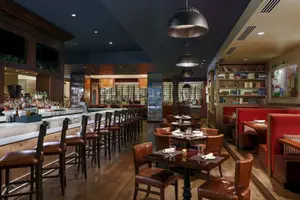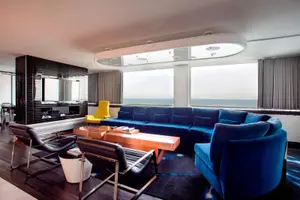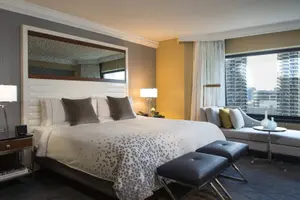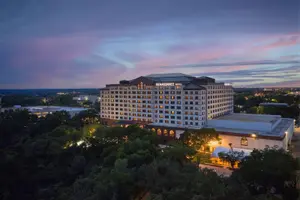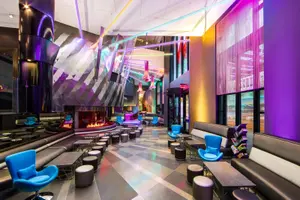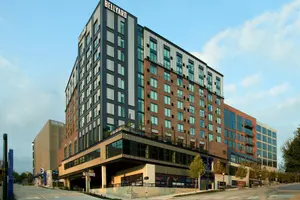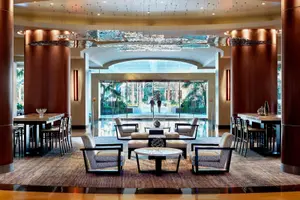
The Blackstone
When you book The Blackstone in Chicago, USA, through our Marriott Luminous partnership, your stay includes daily breakfast for two and a welcome amenity. You also receive a room upgrade, early check-in and late check-out when available. No premium credit card or membership needed: request a quote and our advisor books it at the same rate as booking direct.
Exclusive Booking Perks
These perks are included with your stay at the same rate as booking direct with the hotel.
- Welcome amenity
- Complimentary breakfast daily for two guests per room
- Early check-in and late check-out (when available)
- Complimentary upgrade (if available at check-in)
Location
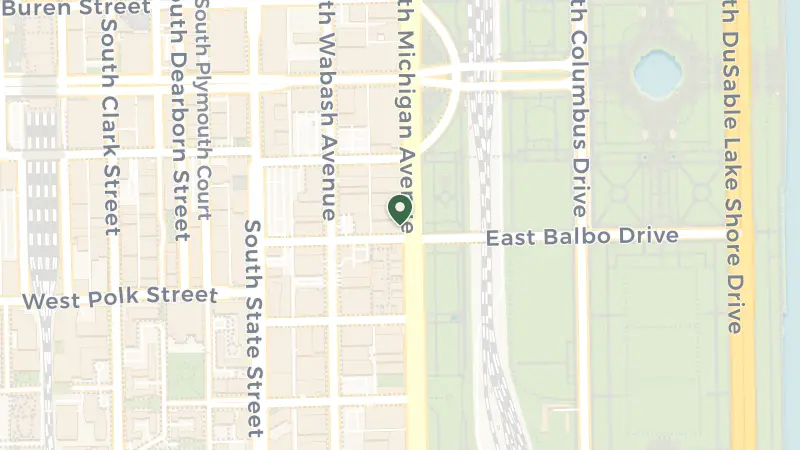
The Blackstone stands in Printer's Row, where cast-iron facades and converted loft buildings trace the outlines of Chicago's late-19th-century printing industry. The Loop hums around you: elevated trains clatter overhead on the iconic 'L' tracks, office towers rise in tight clusters, and the energy is relentlessly urban. This is downtown Chicago at its most concentrated, the second-largest business district in North America, where theater marquees glow along Randolph Street and State Street's department stores anchor a grid laid out with ruthless precision. Lake Michigan stretches east, its shoreline punctuated by parks and museums that soften the city's hard edges.
Walk south into Printer's Row and the tempo slows slightly. Converted warehouses house independent bookstores and bistros; Dearborn Station, the oldest surviving passenger rail terminal in Chicago, anchors the neighbourhood with its Romanesque clock tower. Grant Park unfolds a few blocks east, its formal lawns and Buckingham Fountain providing the city's front lawn. The Art Institute commands Michigan Avenue, its collection spanning centuries and continents.
Midway International sits 14 kilometres southwest, O'Hare 26 kilometres northwest. Both connect via rail and taxi, threading through neighbourhoods that shift from industrial grit to leafy residential blocks as you approach the Loop's steel-and-glass core.
The Loop's dining scene swings between power-lunch institutions and envelope-pushing kitchens in nearby corridors. Venture west into Fulton Market for Ever, where Chef Curtis Duffy orchestrates a two-Michelin-starred experience in near-monastic calm, or Oriole (two stars, 2.2 kilometres northwest), accessed through a converted freight elevator and crowned by a striking collage ceiling above the open kitchen. Smyth (three stars, 3.3 kilometres west) showcases Chefs John Shields and Karen Urie-Shields' bold, boundary-pushing approach to seasonal produce, much of it grown in their own garden. Book a table at any of these well in advance.
Daytime diversions pull you into the city's layered history. The Art Institute's holdings include Grant Wood's American Gothic and Seurat's Sunday afternoon pointillism; Millennium Park's Cloud Gate sculpture draws crowds year-round. Maxwell Street Market (1.6 kilometres southwest) sprawls with food vendors and vintage finds on Sundays. In warmer months, head to 12th Street Beach, a sand stretch just under two kilometres south, or catch a water taxi from River City Marina (900 metres west) for a perspective shift along the Chicago River's industrial canyons.
Winter locks the city in subfreezing stillness from December through February, with highs barely cresting zero and lake winds cutting through layered wool. Snow muffles street noise; the 'L' tracks frost over. Spring arrives grudgingly in March and April, the city thawing into a wet, unpredictable season of sudden warm spells and lingering chill.
Summer transforms Chicago into an outdoor stage: festivals colonize Grant Park, rooftop bars fill by sundown, and temperatures climb into the high twenties. July and August are the city's brief reprieve, when humidity hangs heavy but Lake Michigan offers relief. This is peak season for a reason.
Fall arrives with October's crisp light, the skyline etched sharply against blue skies, and the city settles into a golden interlude before winter returns. November's grey skies and bare trees mark the descent back into cold, but the theatres and museums hit full stride.
Frequently Asked Questions

Quotes are personally reviewed by Natasha Hardy, founder of The Uncommon Traveller
5.0 rating · 8 Google reviewsThere is no fee or markup. The hotel pays our commission.
Request a Quote 32 Bib Gourmand