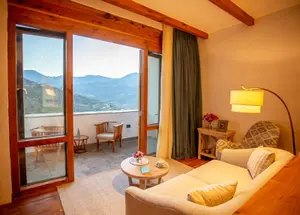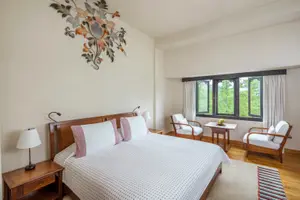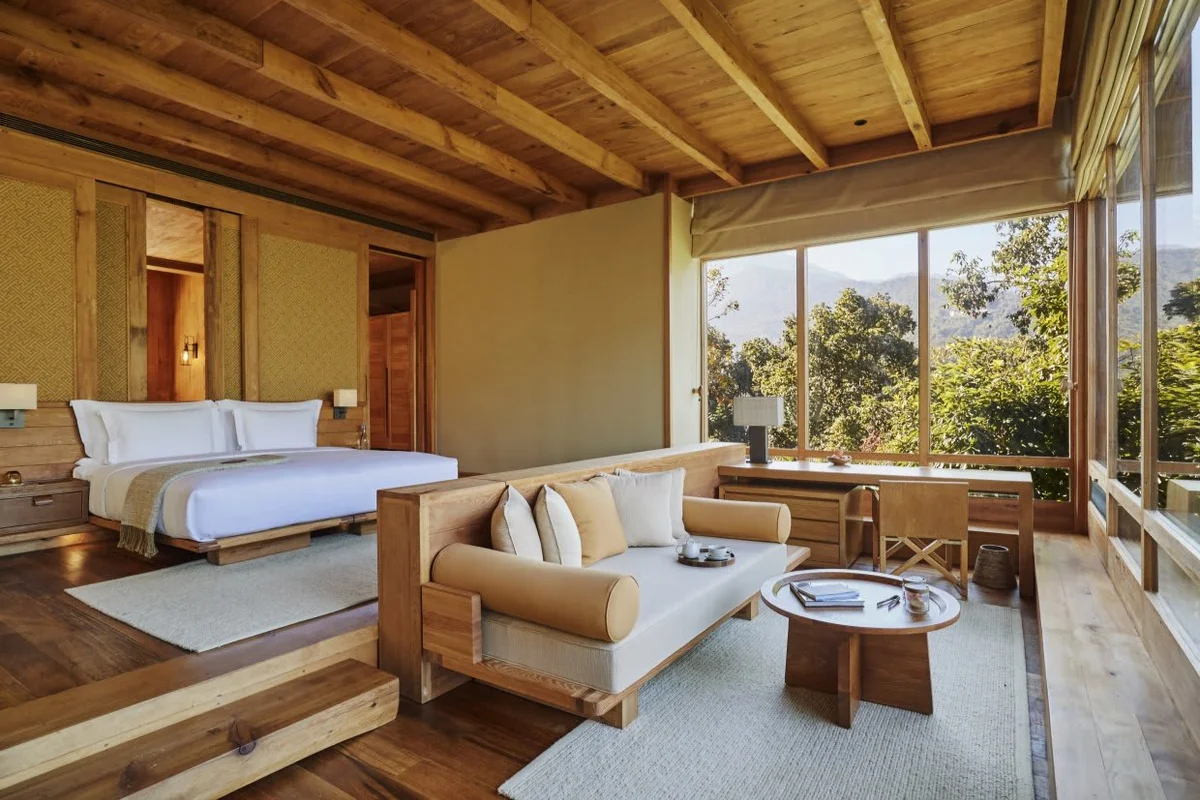
Six Senses Bhutan
When you book Six Senses Bhutan through our IHG Destined partnership, your stay includes daily breakfast for two, a $100 USD hotel credit per stay and a welcome amenity. You also receive a room upgrade, early check-in and late check-out when available. You continue earning IHG One Rewards points and elite night credits. No premium credit card or membership needed: request a quote and our advisor books it at the same rate as booking direct.
Exclusive Booking Perks
These perks are included with your stay at the same rate as booking direct with the hotel.
- $100 USD (or local currency equivalent) hotel credit per stay
- Daily complimentary breakfast for 2 guests (full or continental, depending on the hotel)
- Complimentary room upgrade (subject to availability)
- Local welcome amenity
- Early check-in / late check-out (subject to availability)
Location
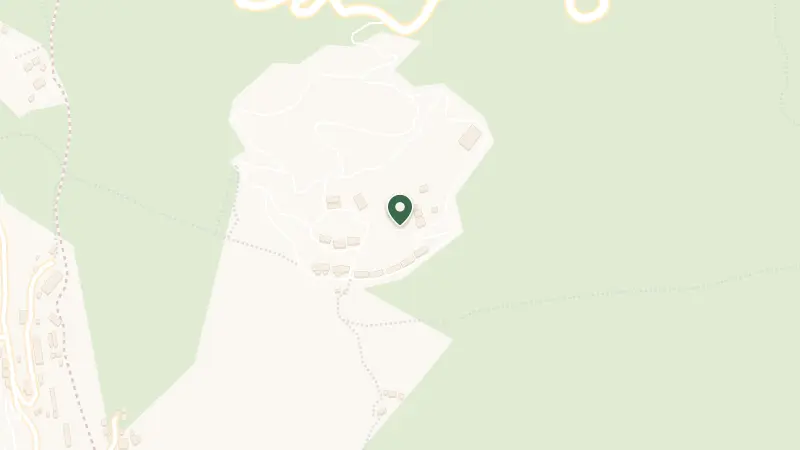
Six Senses approaches Bhutan with its signature commitment to sustainability and wellness, weaving organic gardens and spa traditions into a kingdom where environmental conservation is written into the constitution. The brand's philosophy finds natural resonance here, in a country that measures prosperity not in GDP but in Gross National Happiness. This collection of five lodges spans Bhutan's western and central valleys, each positioned to reveal a different facet of the kingdom's character while maintaining the intimate scale that defines Six Senses properties worldwide.
The lodges anchor themselves in the subtropics of the southern lowlands and climb toward the Eastern Himalayan peaks that wall the northern frontier. Gangkhar Puensum, the world's highest unclimbed mountain, dominates the horizon at over 7,000 metres, a reminder that some summits remain sacred and untouched. The capital Thimphu lies within reach, where dzongs (fortress monasteries) and prayer wheels turn beneath the gaze of the Great Buddha Dordenma, but the valleys between lodges hold smaller treasures: the Punakha Valley's winter warmth, the Paro Valley's monastery cliffs, the temperate forests where golden langurs swing through the canopy.
Paro International Airport sits 24 kilometres from the nearest lodge, the only entry point to a kingdom that limits tourist arrivals to preserve its cultural integrity. The flight path threads between peaks, a descent that orients travelers immediately to Bhutan's verticality and isolation. From touchdown, the journey continues overland, across suspension bridges strung with prayer flags and through villages where traditional dress remains daily wear, not tourist performance.
The lodges function as a circuit rather than a single destination, encouraging movement through the valleys that define Bhutanese geography and history. Each property cultivates its own organic garden, supplying kitchens that interpret Bhutanese staples like ema datshi (chilli cheese) and red rice alongside international menus informed by seasonal harvest. The signature spa treatments draw from Traditional Chinese Medicine and Himalayan healing practices, with therapists trained to guide multi-day wellness journeys between lodges. Start your mornings with silent meditation in dedicated spaces that face toward mountains considered sacred by Vajrayana Buddhists, the school of Buddhism that spread here from Bengal's Pala Empire in the first millennium.
Beyond the properties, the kingdom unfolds through guided cultural immersion rather than independent exploration. Visit the Punakha Dzong, winter seat of Bhutan's monastic body, where Zhabdrung Ngawang Namgyal unified these valleys into a single state during the 16th century. Trek to Taktsang Palphug Monastery, the Tiger's Nest clinging to a cliffside 900 metres above the Paro Valley floor. Book time at the Royal Thimphu Golf Club, eight kilometres from the capital, where the course plays at altitude beneath pine forests. The Babesa and Lungtenphu vegetable markets within a few kilometres of Thimphu reveal the agricultural rhythms that still govern daily life, even as the capital modernises.
The monsoon governs Bhutan's calendar, drenching the southern valleys from May through September with rains that feed terraced rice paddies and turn mountain streams into torrents. June, July and August see the heaviest precipitation, the air thick and green, cloud cover obscuring the peaks for days at a stretch.
October and November bring the clearest skies of the year, temperatures cooling to a comfortable range as prayer flags snap in dry mountain winds. The light turns crystalline, peak views extending for hundreds of kilometres. Spring (March through May) offers a second window of clarity before the monsoon builds, with rhododendrons blooming across the temperate forests, though afternoon clouds gather unpredictably.
Winter settles cold and dry from December through February, daytime temperatures in Thimphu barely reaching double digits while valleys frost overnight. The sun feels fierce at altitude, warming sheltered courtyards even as wind cuts through the passes. This season concentrates visitors in the lower Punakha Valley, where subtropical warmth persists and citrus trees fruit against a backdrop of snow.
Frequently Asked Questions

Quotes are personally reviewed by Natasha Hardy, founder of The Uncommon Traveller
5.0 rating · 8 Google reviewsThere is no fee or markup. The hotel pays our commission.
Request a Quote