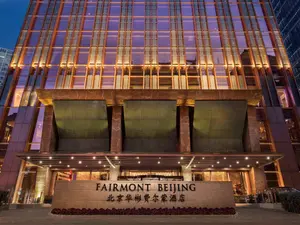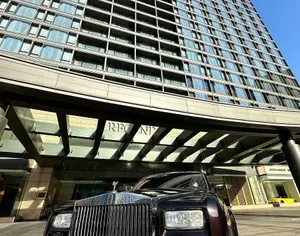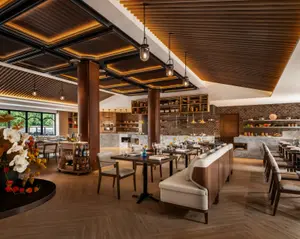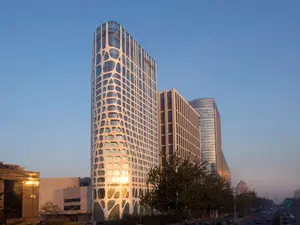
Sofitel Beijing Central
When you book Sofitel Beijing Central in China through our Accor Hera partnership, your stay includes daily breakfast for two and a $100 USD hotel credit. You also receive a room upgrade, early check-in and late check-out when available. You continue earning ALL Accor points and elite night credits. No premium credit card or membership needed: request a quote and our advisor books it at the same rate as booking direct.
Exclusive Booking Perks
These perks are included with your stay at the same rate as booking direct with the hotel.
- Daily complimentary breakfast for 2, per room
- VIP Welcome
- $100 USD credit to be spent on property (conditions defined at check-in)
- Early check-in & late check-out (upon availability)
- Upgrade at time of check-in (upon availability)
Guest feedback
9.8/10 from 277 guest reviews
By category
Guests liked
- Good location
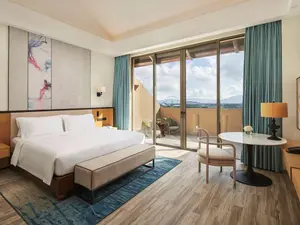
- Comfortable rooms
- Friendly service
Points to consider
- Cleanliness issues
- Language barriers
- Outdated facilities
Location
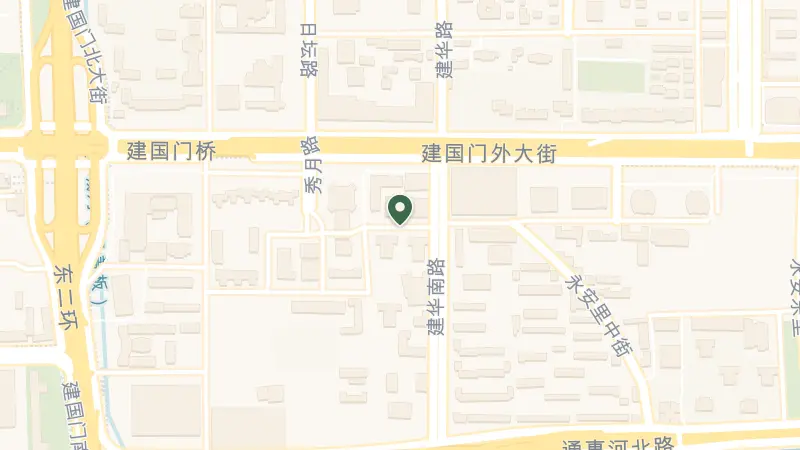
Sofitel brings its signature blend of French refinement and local artistry to Beijing, a city where dynasties rise in layers beneath every street corner. The property sits in Jianwai, a western slice of Chaoyang District whose name recalls its position just beyond the Jianguomen gate of the old city wall, a fortification that once marked the boundary between imperial enclosure and the world beyond. This is modern Beijing's business and diplomatic corridor, where glass towers stand on ground that remembers emperors.
Walk west and you trace the route toward the Beijing Central Axis, a UNESCO-inscribed ensemble of palaces, altars, and ceremonial gardens that runs like a spine through the historical heart of the capital. The axis, only recognized in 2024, represents the ideal cosmological order of Chinese imperial planning: symmetry, hierarchy, heaven aligned with earth. The Temple of Heaven lies seven kilometres south, its circular prayer hall surrounded by ancient pines where Ming and Qing emperors once performed elaborate rites for good harvests.
The neighbourhood hums with the energy of contemporary China, restaurants spilling light onto pavements, the particular crispness of northern air. Beijing Capital International Airport connects the city to the world 23 kilometres northeast; the newer Daxing hub sits 45 kilometres south. Both are reachable by express rail and taxi, though arrival times shift with Beijing's famously unpredictable traffic flows.
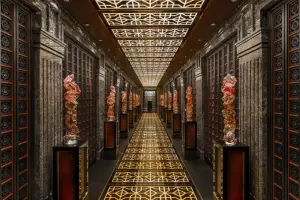
Chaoyang District holds some of the finest Chaozhou and Shandong cooking in the capital. Chao Shang Chao, just over two kilometres east, reimagines the delicate seafood-driven cuisine of Guangdong's Chaozhou region with three Michelin stars and a hallway lined with premium dried fish maws that signal the kitchen's commitment to luxury ingredients. Closer still, Lu Shang Lu earns two stars for its Shandong specialties, particularly Confucius cuisine and sea cucumber shipped daily from the Jiaodong peninsula. The chef hails from Yantai and brings an insider's understanding of his province's robust, wheat-and-seafood traditions. Book a table at Xin Rong Ji on Xinyuan South Road for Taizhou cooking and East China Sea fish prepared with three-star precision in modern Chinese surrounds.
The Summer Palace spreads its gardens and pavilions 25 kilometres northwest, a masterpiece of landscape design first built in 1750, destroyed by foreign forces in 1860, and meticulously restored. Sanyuanli Market, five kilometres north, offers a morning immersion in Beijing's food culture: vendors hawking seasonal vegetables, live fish in plastic tubs, the sharp smell of pickled mustard greens. For those drawn to deeper history, sections of The Great Wall climb the mountains an hour north, their watchtowers dissolving into mist on humid days.
Winter arrives sharp and unforgiving. January temperatures plunge below freezing, the air dry and still, the sky often a pale ceramic blue that makes distant buildings appear etched in ink. This is Beijing at its most austere, when locals bundle in dark coats and breakfast means steaming bowls of zhou. Spring and autumn bracket the year with brief windows of near-perfect weather: March through May and September through October bring mild days, blossoming trees, and that particular golden light that photographers prize.
Summer turns humid and unpredictable. July and August bring most of the year's rain in sudden downpours, temperatures hovering around thirty degrees, the air thick enough to taste. Thunderstorms roll across the North China Plain without warning, clearing the pollution and leaving the city washed clean for a few hours.
September and October remain the most comfortable months for exploring, when heat relents but cold has not yet clamped down. The air sharpens, persimmons ripen on market stalls, and the ancient pines at the Temple of Heaven glow gold against grey stone.
Frequently Asked Questions

Quotes are personally reviewed by Natasha Hardy, founder of The Uncommon Traveller
5.0 rating · 8 Google reviewsThere is no fee or markup. The hotel pays our commission.
Request a Quote 26 Bib Gourmand