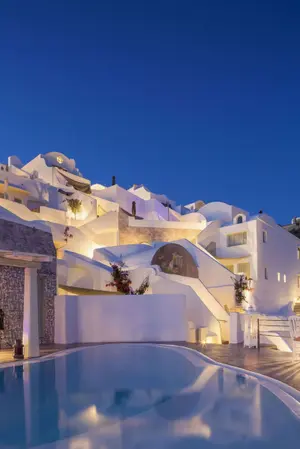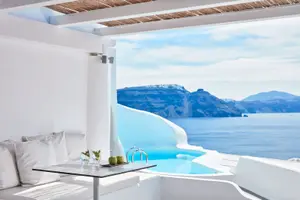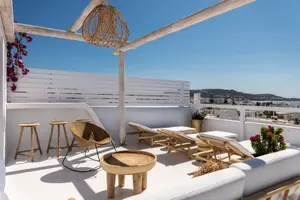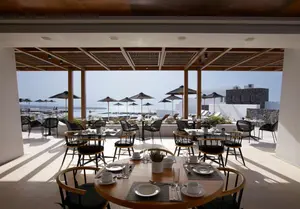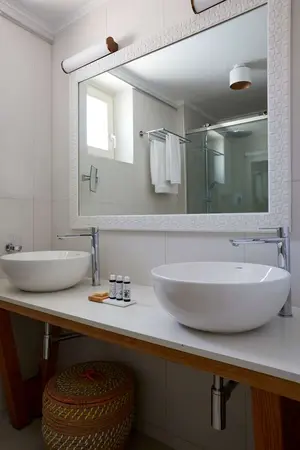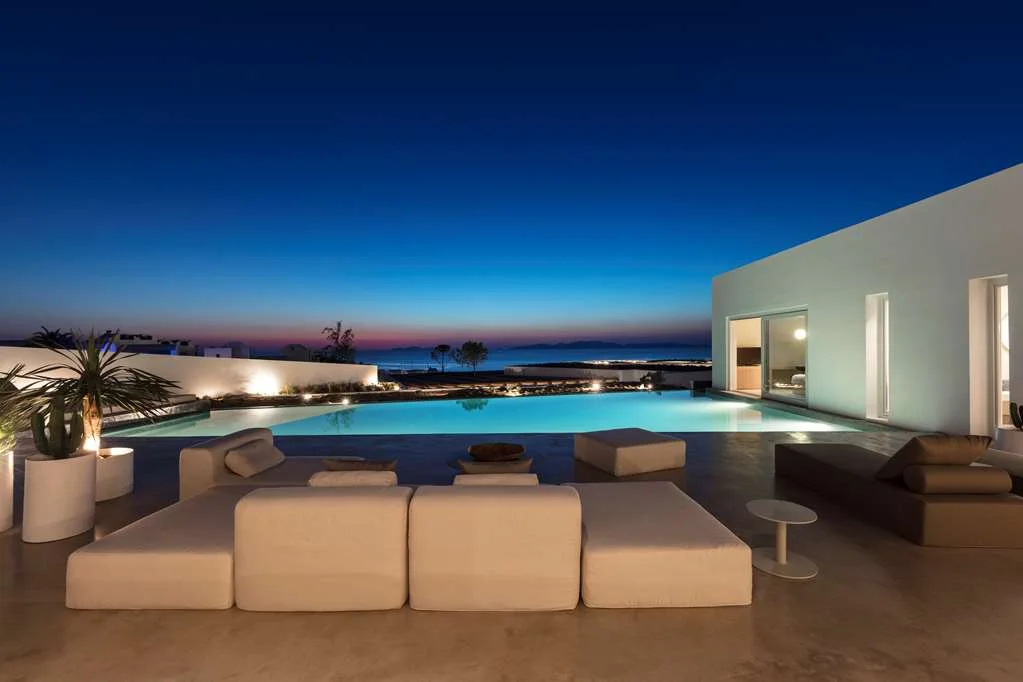
Andronis Arcadia Hotel
When you book Andronis Arcadia Hotel in Santorini, Greece, through our Fora Rates partnership, your stay includes daily breakfast, a 150 EUR resort credit and welcome amenities. You also receive a room upgrade, early check-in and late check-out when available. No premium credit card or membership needed: request a quote and our advisor books it at the same rate as booking direct.
Exclusive Booking Perks
These perks are included with your stay at the same rate as booking direct with the hotel.
- 150 EUR Resort credit
- Complimentary bottle of wine and champagne
- Welcome amenities
- Daily breakfast
- Early check in and late check out subject to availability
- Complimentary room upgrade upon availability
Location
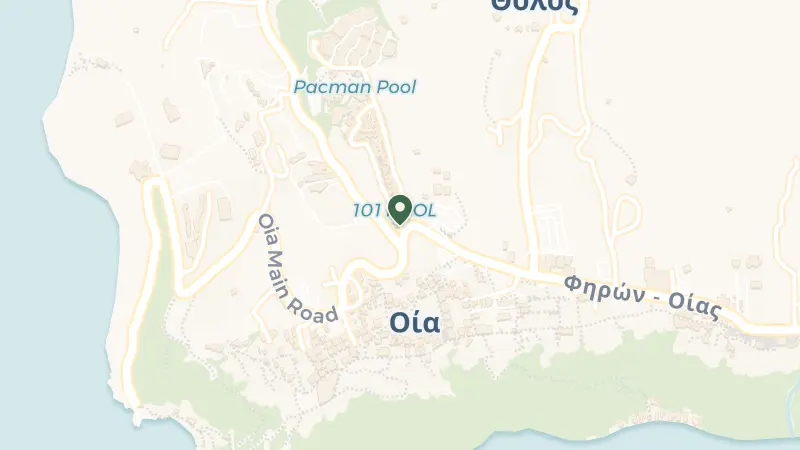
The Andronis Arcadia sits in Ormos Ammoudiou, a quieter stretch along Oia's northern coast where the drama of Santorini's caldera gives way to black sand and uninterrupted Aegean views. This is the island shaped by fire: three and a half millennia ago, one of history's most violent volcanic eruptions tore the centre from what was once a single landmass, leaving behind the crescent of cliffs and ash-covered slopes that define Santorini today. The caldera's rim, draped with whitewashed villages, traces the outline of that ancient cataclysm.
Oia itself clings to the northwestern tip of the island, a cascade of cave houses and blue-domed churches carved into volcanic rock. The light here feels different, a function of latitude and geology: mornings arrive soft and golden, evenings blaze apricot and rose across the water. Katharos beach lies less than a kilometre down the coast, its dark pebbles a reminder that this is still an active volcanic landscape, not a postcard abstraction.
Santorini International Airport sits twelve kilometres south, a twenty-minute drive through terraced vineyards and the island's arid, windswept interior. The Aegean surrounds everything, salt-sharp and relentless, shaping the rhythm of life here as it has for millennia.
Domaine Sigalas Winery, less than two kilometres inland, presses grapes from vines trained low against the wind, producing crisp Assyrtiko that tastes of volcanic minerality and sea spray. The island's wineries occupy an ancient viticultural tradition: Assyrtiko, Aidani, and Athiri grapes have grown in this ash-rich soil since antiquity, and a tasting at Gavalas or Canava Roussos (both around eleven kilometres away) reveals how the terroir imprints itself on every glass. Book a sunset tour through the vineyards for the full sensory effect.
The coastline here invites exploration: Katharos beach offers black sand and relative solitude, while Baxedes Beach, less than three kilometres north, remains largely undiscovered by the caldera-chasing crowds. Dive sites dot the submerged volcanic slopes offshore, accessible through centres like Aegean Divers in Fira or Mediterranean Dive Club near Akrotiri, where underwater lava formations and marine life thrive in the clear, deep water. The island's weekly market, seven kilometres south, pulls locals and visitors alike for produce, olive oil, and honey harvested from thyme-covered hillsides.
Summer arrives bone-dry and brilliant: July and August see no rainfall, temperatures climbing to the mid-twenties, the meltemi wind cutting the heat. The sun bleaches white walls whiter, and the island pulses with visitors chasing that legendary light. September softens slightly, still warm but quieter as the summer crush recedes.
Spring and autumn frame the high season with milder, more variable weather. April through June brings wildflowers to the terraced slopes, temperatures hovering in the mid-to-high teens, the Aegean still cool but swimmable by late May. October offers warmth without the crowds, though occasional rain returns.
Winter turns introspective: December through February sees the island's true character emerge, temperatures dipping to the low teens, rain sweeping in from the sea. Many properties close, but the volcanic landscape reveals itself without the veil of peak-season sun.
Frequently Asked Questions

Quotes are personally reviewed by Natasha Hardy, founder of The Uncommon Traveller
5.0 rating · 8 Google reviewsThere is no fee or markup. The hotel pays our commission.
Request a Quote