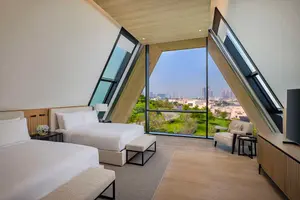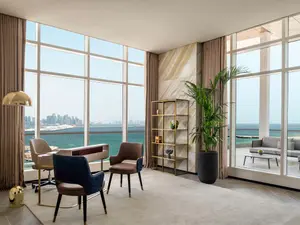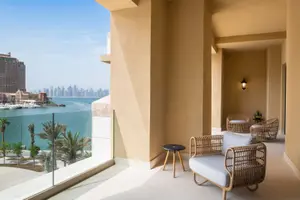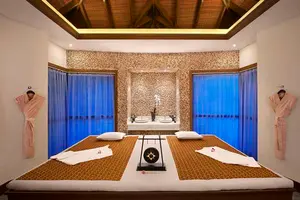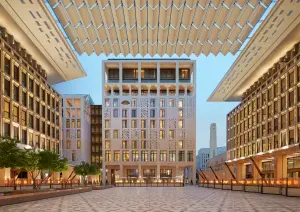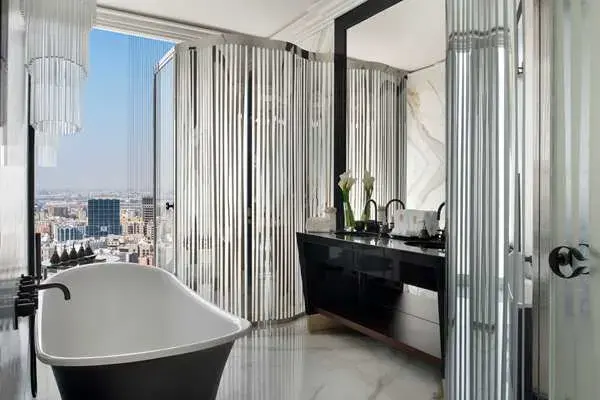
Banyan Tree Doha at La Cigale Mushaireb
When you book Banyan Tree Doha at La Cigale Mushaireb in Qatar through our Accor Hera partnership, your stay includes daily breakfast for two and a $100 USD hotel credit. You also receive a room upgrade, early check-in and late check-out when available. No premium credit card or membership needed: request a quote and our advisor books it at the same rate as booking direct.
Exclusive Booking Perks
These perks are included with your stay at the same rate as booking direct with the hotel.
- Daily complimentary breakfast for 2, per room
- $100 USD credit to be spent on property (conditions defined at check-in)
- Early check-in & late check-out (upon availability)
- Upgrade at time of check-in (upon availability)
Guest feedback
9.6/10 from 1,814 guest reviews
By category
Guests liked
- Clean and modern facilities
- Spacious rooms
Points to consider
- Unorganized service
- Breakfast options limited
Location
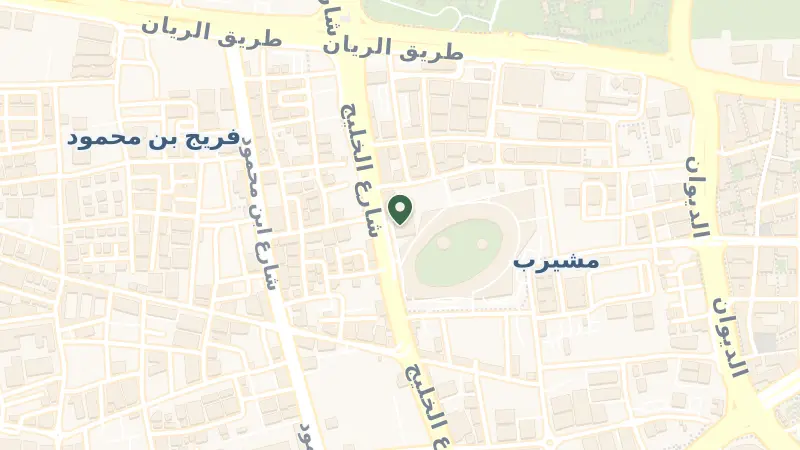
Banyan Tree brings its Asian-rooted sustainability ethos and spa heritage to the heart of Doha's oldest quarter. Mushayrib, one of the city's original neighbourhoods, sits where the capital's modern skyline meets its pearl-trading past. Al Kahraba Street, the country's first fully electrified thoroughfare, runs through this district, a reminder of the dramatic transformation from Bedouin settlement to one of the Gulf's emergent financial centres. The neighbourhood pulses with a sense of renewal: heritage buildings stand alongside new construction, and the air carries the salt tang of the Persian Gulf just beyond the Corniche.
Walk fifteen minutes west and you reach Souq Waqif, a sprawling traditional market where the scent of cardamom and frankincense drifts through alleyways stacked with spices, textiles, and falconry equipment. The souq's mud-rendered shopfronts and wooden beams evoke pre-oil Qatar, even as the city's gleaming towers rise in every direction. The Museum of Islamic Art commands the waterfront two and a half kilometres northeast, its limestone geometry a statement of cultural ambition.
Hamad International Airport lies nine kilometres southeast, a straightforward drive along the coast. The older Doha International, now largely cargo-focused, sits six kilometres northeast.
The Michelin-starred dining scene radiates outward from here. IDAM by Alain Ducasse occupies the top floor of the Museum of Islamic Art, where floor-to-ceiling windows frame the bay and French technique meets Gulf ingredients. Book a table at sunset when the light turns the water amber. Four kilometres southwest, Jamavar at the Sheraton Grand serves regional Indian cuisine with the precision that earned it a star, its menu tracing Kashmir to Kerala. Further afield, Alba at Raffles Katara, nearly twelve kilometres north, centres its Italian menu on white truffles in season, its vaulted dining room intimate despite the opulent setting.
Souq Waqif, barely a kilometre and a half away, demands hours: haggle for saffron and oud, watch trainers work with hooded falcons at the Falcon Souq, or settle into a low cushioned seat at a traditional café for qahwa served with dates. The Corniche stretches along the bay for seven kilometres, ideal for early morning walks when the heat relents. Wadi Al Sail Natural Reserve, under three kilometres west, offers a rare patch of desert scrub within city limits, quiet and unexpected.
December through March brings the most forgiving weather, daytime temperatures in the low twenties, evenings cool enough for outdoor dining along the Corniche. The light is crystalline, the Gulf a brilliant blue. Spring arrives abruptly in April, heat climbing into the low thirties, bougainvillea blooming against pale stone walls.
Summer, from May through September, is uncompromising. Temperatures routinely exceed forty degrees, the air thick and still. The city retreats indoors to air-conditioned museums, malls, and restaurants. Streets empty by midday, life resuming only after sunset when the souq stirs back to movement.
Autumn begins in October with a gradual softening, the worst of the heat breaking by November. This second shoulder season offers pleasant conditions before the winter high season begins, fewer crowds at cultural sites, and warmth without the summer's oppressive weight.
Frequently Asked Questions

Quotes are personally reviewed by Natasha Hardy, founder of The Uncommon Traveller
5.0 rating · 8 Google reviewsThere is no fee or markup. The hotel pays our commission.
Request a Quote 8 Bib Gourmand